
Make a cappuccino quickly
Wants to make a cappuccino with minimal effort after getting home. The Dutch Consumers’ Association highlights ease of use when making cappuccino and cleaning milk components as points to consider.


If you want to make a cappuccino with minimal effort when you get home, choose a bean-to-cup machine with an automatic milk function. If you prefer to prepare the espresso and milk yourself, opt for a manual espresso machine with a steam wand. A capsule machine with a milk function could suit you if you want a simple way to make your drink, but you’ll be tied to the capsule system used by that model. The Dutch Consumers’ Association advises weighing up not only convenience but also the cost of coffee and the maintenance required for milk components.
Wants to make a cappuccino with minimal effort after getting home. The Dutch Consumers’ Association highlights ease of use when making cappuccino and cleaning milk components as points to consider.
Wants to prepare the espresso and milk themselves and is happy to put in a few extra steps for more control over the process. The De’Longhi Dedica Style EC685.W EX:4 is an example of a manual espresso machine with a milk frother.
Wants to know whether the machine will fit on the worktop and how the cost of coffee compares with expected use. The Dutch Consumers’ Association lists budget, available space and the number of cups as factors to consider when choosing.
Best for: anyone who wants to make a cappuccino with just a few steps after getting home.
Keep in mind: milk components and the brew group need cleaning. Check that the exact model has a cappuccino programme.
Best for: anyone who wants to prepare their own espresso and frothed milk, and is willing to practise the process.
Keep in mind: you’ll need to froth the milk by hand. Also check how you’ll get your ground coffee.
Best for: anyone who wants a simple way to make their drink and can choose a suitable capsule system.
Keep in mind: you’ll need capsules that work with the system, and milk drinks mean extra cleaning afterwards.
| What to consider | What to look for when buying | Who should pay extra attention? |
|---|---|---|
| Fewer steps to make your drink | Check that the exact model has both a cappuccino programme and automatic milk preparation. | If I want to make a cappuccino quickly after getting home, I look at how many steps the machine requires. Around 37% of consumers put convenience first. |
| Cleaning after milk drinks | Check which milk components can be removed and what cleaning the manual recommends for the model. | After my cappuccino, I want to know how much cleaning there is to do. Around 27% of consumers put cleaning first. |
| Frothing milk yourself | Check whether it has a steam wand and which steps you’ll need to do yourself. | If I’d rather prepare the espresso and milk froth myself, having control over the process matters more to me than one-touch convenience. Around 18% of consumers prioritise manual control. |
| Space and overall costs | Measure the space available and compare coffee and maintenance costs based on the same expected usage. | I want to check in advance whether the machine will fit on my worktop and how my usage will affect the costs. Around 18% of consumers put space and overall costs at the top of their list. |
Milk components need cleaning after use. A bean-to-cup machine also needs maintenance beyond the milk system.
Read the cleaning instructions for the specific milk system and machine before choosing a model.
The Dutch Consumers’ Association says capsule machines can generally be cheaper to buy, while coffee beans cost less than capsules. So the cost comparison also depends on how much you use the machine.
Compare beans or capsules over the same period and for the same number of cappuccinos.
Remember to factor in ongoing coffee costs, as well as milk and the maintenance required for your chosen model.
A difference in the model code may mean you’re looking at a different version. For example, the De’Longhi Dedica Style EC685.W EX:4 isn’t necessarily the same as a model listed simply as EC685.W.
Check the full model code and the included accessories on the retailer’s product page.
The 5500 Series EP5549/70 we reviewed is a bean-to-cup machine with LatteGo. This description applies to this model only, not automatically to other Philips models.
The models we reviewed offer two different ways to make coffee: the Dedica Style EC685.W EX:4 is manual, while the Magnifica Start ECAM220.60.B is described as a bean-to-cup machine.
The Lattissima One we reviewed is a capsule machine with a milk function from the Original system.
This selection includes bean-to-cup machines with automatic milk preparation, as well as machines where you prepare the espresso or milk yourself. Choose based on how many steps you’re happy to do, the maintenance required and the space you have available.
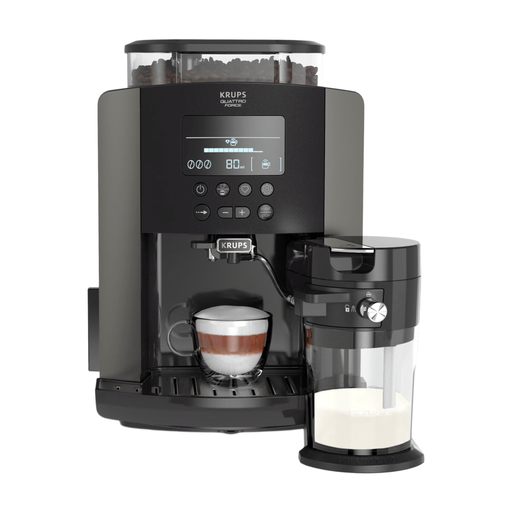 No image available
Best for anyone who wants to make a cappuccino in just a few steps.
According to the product information, the brew group is not removable.
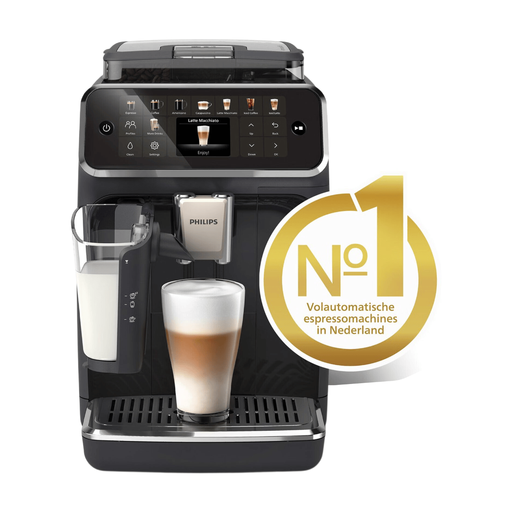 No image available
Best for anyone looking for a bean-to-cup machine with LatteGo for cappuccino and other coffee drinks.
The product name lists 20 drinks, a ceramic grinder, 12 grind settings and a 1,8 l tank.
 No image available
Best for anyone who wants to make a cappuccino with minimal effort.
The product name lists an Advanced Milk Frother and a Touch Display.
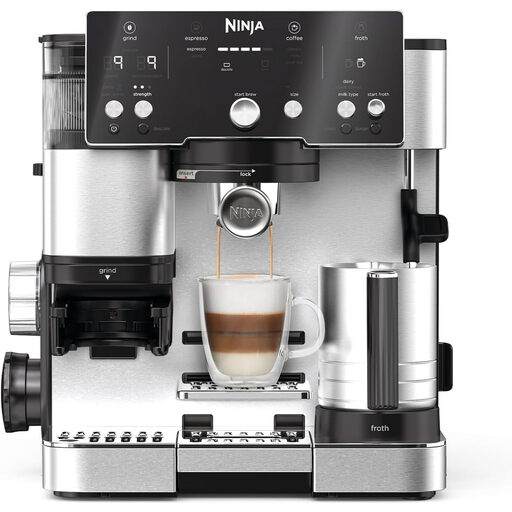 No image available
Best for anyone who wants to prepare their own espresso and milk froth.
The product name lists a grinder and milk frother with two froth settings. According to the product information, you need to fill and tamp the portafilter; wipe the steam wand clean after use.
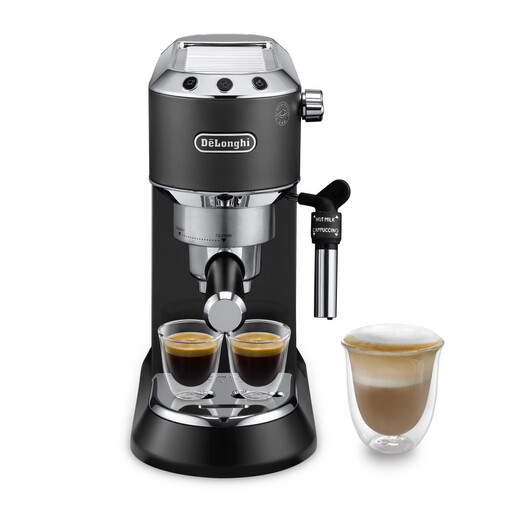 No image available
Best for anyone who wants to froth milk themselves and is looking for a slim machine.
The stated width is 14,90 cm. Milk is frothed manually; according to the product information, a separate filter, available to buy separately, is needed for E.S.E. pods.
No, you don’t. A steam wand lets you froth milk yourself, while an automatic milk function can make preparation easier and involve fewer steps. Check which features the exact model has.
Follow the instructions for the milk system and store milk according to the label. The Dutch Nutrition Centre advises returning products labelled ‘Keep refrigerated’ to the fridge as soon as possible and gives 4 °C as the recommended fridge temperature.
There may be, for example for the cleaning or descaling products specified by the manufacturer. Check the model’s manual. If you’re considering a capsule machine, compare the ongoing cost of capsules with that of beans based on how you’ll use it.
No. According to the Dutch government, there’s no fixed period for the statutory guarantee in the Netherlands: you’re entitled to a product that meets the standards you can reasonably expect. If a product is faulty, the retailer is your point of contact; any manufacturer’s guarantee is in addition to this.
According to the Dutch government, for many applicable distance sales you have a 14-day cooling-off period. Check the terms of your agreement, as this rule doesn’t apply to every type of contract.