What should you consider when choosing?
Fully automatic machine with an automatic milk system
A good fit if: you want to make cappuccino for several people with minimal effort.
The trade-off: automatic systems still need cleaning. Also check whether the model is practical for preparing drinks one after another.
Espresso machine with a portafilter and steam wand
A good fit if: you prefer to grind, brew and froth the milk yourself.
The trade-off: serving several cappuccinos involves more steps. Check whether the specific model has a built-in grinder.
Pod machine with a milk function
A good fit if: you make cappuccino occasionally and want a compact, straightforward solution.
The trade-off: according to the Consumers’ Association, pods cost more than ground coffee. A milk container also needs cleaning after use.
When you’re making cappuccinos after a meal with friends or family, your choice comes down to serving convenience, milk-system maintenance, control and running costs. The Consumers’ Association points out that pods cost more than ground coffee, so compare the costs over the period you expect to use the machine.
| What to consider |
What should you check? |
Who should pay particular attention? |
| Serving several cappuccinos |
Check the cappuccino programme, the steps involved for each cup and what the manufacturer says about preparing drinks one after another. Two coffee spouts don’t prove that the machine can make two cappuccinos at once. |
If I’m serving several guests after dinner, I want to keep the steps for each cup to a minimum. Around 33% of consumers prioritise serving several guests quickly. |
| Milk preparation and cleaning |
Compare the cleaning steps for the milk jug, hose or steam wand. Check whether rinsing is enough or if separate cleaning is also needed. |
After a meal, I want to know how much work the milk components need and how to store milk safely. Around 27% of consumers prioritise milk-system maintenance. |
| Controlling the espresso and milk yourself |
Check whether the model has a grinder and steam wand, and how many steps are involved in making several cups. |
If you want to prepare the espresso and milk yourself, you may be happy to take the extra steps. Around 20% of consumers give manual control top priority. |
| Cost and available space |
Compare the cost of coffee or pods over the same period of use, and measure the space available for the machine and milk preparation. |
If I only make cappuccino occasionally, I take ongoing costs and worktop space into account. Around 20% of consumers put these considerations first. |
Joybuy cappuccino machines
This selection features fully automatic machines with automatic milk preparation. If you’re serving several guests, check how many drinks the machine can make per cycle and what steps are involved for each cappuccino.
 No image available
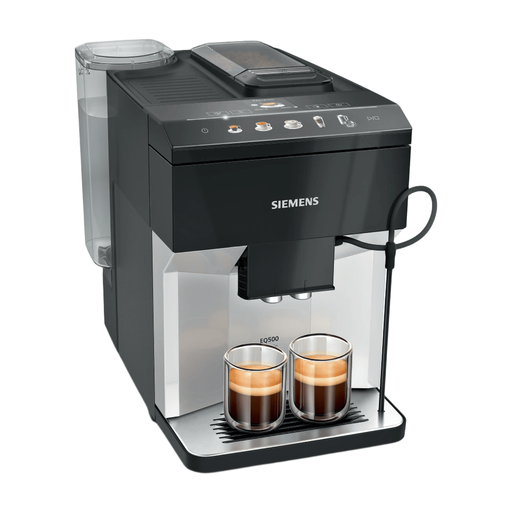
Siemens EQ500 TP511R01, light silver
A good choice if you want to make cappuccino with minimal hands-on effort; the product information mentions oneTouch preparation.
The product description lists adjustable coffee strength, temperature and serving size. The milk system and cappuccinatore need cleaning after use.
View at Joybuy
 No image available
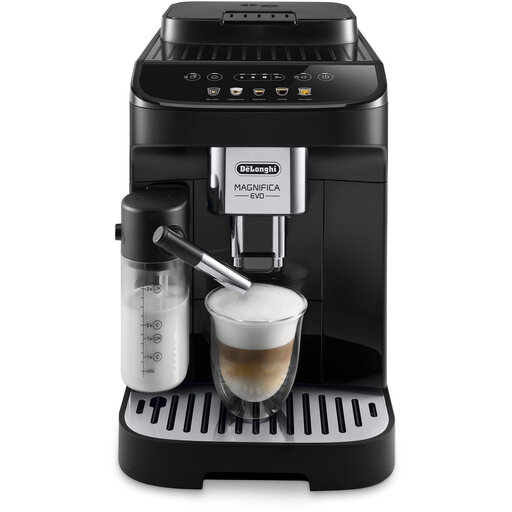
De’Longhi ECAM290.61.B Magnifica Evo
A good choice if you want automatic cappuccino preparation instead of frothing milk manually with a steam wand.
The product description lists an integrated milk container and five one-touch drinks, including cappuccino.
View at Joybuy
 No image available
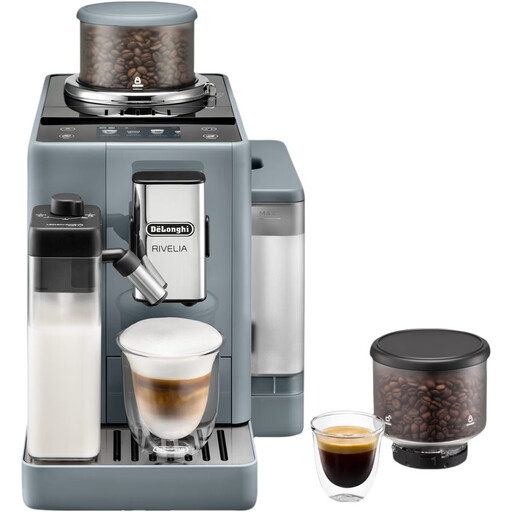
De’Longhi Rivelia EXAM440.55.G, Pebble Grey
A good choice for a group who want automatically prepared cappuccinos; the product information says it can make two milk-based drinks at once.
The product description lists LatteCrema Hot, two interchangeable bean hoppers and Bean Adapt Technology.
View at Joybuy
 No image available
Philips 5500 Series EP5547/90 LatteGo
The title lists a fully automatic machine with LatteGo, but the product description gives a different model code. Check the specification and features before ordering.
View at Joybuy
 No image available
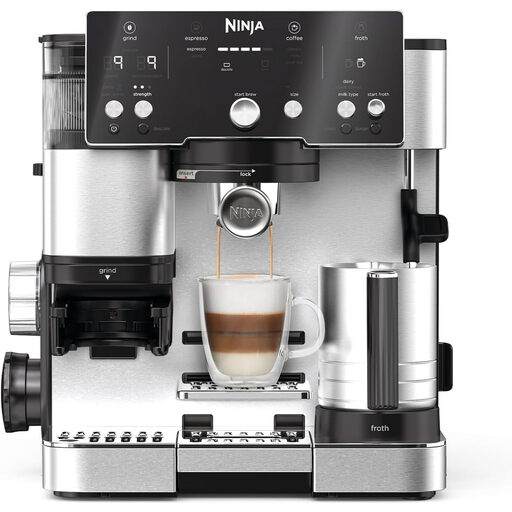
Ninja ES501EU Luxe Café
The product information lists one-touch cappuccino preparation and automatic milk frothing.
There are two milk-frothing settings and 25 grind settings. According to the product details, the steam wand has an automatic rinse function. The information states that it makes one cup per cycle.
View at Joybuy
Frequently asked questions
Can a machine with two coffee spouts make two cappuccinos at once?
Only if this is confirmed for the exact model. Making two espressos at once doesn’t automatically mean the machine can make two milk-based drinks at the same time. Check the cappuccino programme and the manual for the model you’re considering.
What should you do with milk left in the milk system after dinner?
Return perishable milk to a fridge set to 4 °C as soon as possible. The Netherlands Nutrition Centre advises not leaving milk out of the fridge for more than two hours. Also follow the cleaning instructions for the specific milk jug or system.
When do the ongoing costs of pods become more significant?
It depends on how many cups you make and which machines you’re comparing. The Consumers’ Association says pods cost more than ground coffee, and that the break-even point comes sooner when you make more cups. Compare your expected usage with actual prices.
Do you need to buy extra cover for an espresso machine in the Netherlands?
No. When you buy a product, you’re covered by the statutory guarantee, which means you’re entitled to a product that works properly. According to the Dutch government, you should contact the seller if there’s a problem. Additional cover may give you extra rights, but it doesn’t replace your statutory rights.
Do online purchases in the Netherlands always come with a 14-day cooling-off period?
No. The Dutch government says that a 14-day cooling-off period applies to many distance sales, but there are exceptions. Check the terms of the specific purchase and who the seller is.


