
Vandaag of morgen in huis

Kwaliteit gegarandeerd

Welkomstaanbiedingen ontgrendelen: GRATIS bezorging | Tot 80% korting | Gratis 30 dagen JoyPlus-proefperiode
Download de app
A cantilever umbrella, also known as an offset or hanging umbrella, is an elegant solution for shading a large area in your garden or on your patio. Unlike a traditional centre-pole umbrella, the mast is positioned to the side, leaving the space under the canopy completely unobstructed. This makes it ideal for placing over a lounge set or a large dining table.
However, the market is flooded with options, and not every umbrella is worth its price. Many models look appealing at first glance but fail to withstand a single season of typical weather conditions. Let's review the most common pitfalls to help you avoid a costly mistake.
To avoid these problems, it's crucial to focus on a few concrete specifications. These aren't just marketing terms but verifiable facts that determine the lifespan and usability of your umbrella.
A full aluminium umbrella frame is the standard for a durable model. Aluminium is lightweight, strong, and does not rust. Check that not only the mast but also the ribs (the 'spokes' of the umbrella) are made of aluminium. A good model also offers flexibility. A tilting umbrella allows you to adjust the shade to a low-hanging sun, while an umbrella that rotates 360 degrees enables you to move the shade throughout the day without shifting the heavy base. This is especially useful for a patio umbrella intended to serve multiple seating areas.
The quality of the canopy is often expressed in grams per square meter (g/m?). A fabric of 250 g/m? or more indicates a sturdy, durable material. Also, look for the following terms:
A 3x4 metre cantilever umbrella is a popular size, offering a generous shade area of 12 m?, perfect for a complete lounge set or a dining table for 6-8 people. This size makes it an excellent large garden umbrella for both private and professional use, such as a commercial-grade umbrella.
Based on these objective criteria, we have selected a number of products that suit different user profiles.
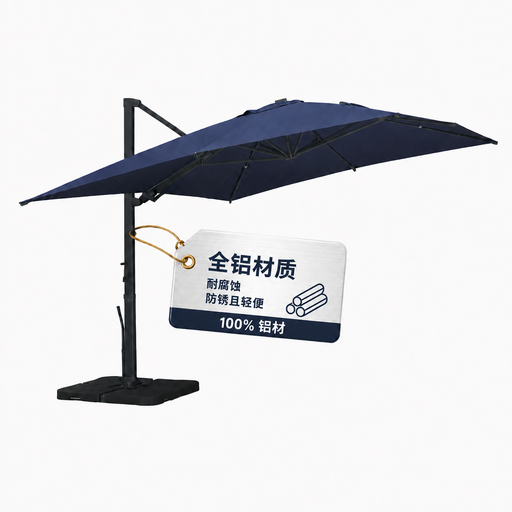
Why This Fits Their Persona: This model is designed for intensive use. The large 3x4 metre canopy and robust construction make it ideal for covering a commercial patio or a very spacious garden lounge.
The full aluminium frame with 8 ribs prevents rust and bending. The 280 g/m? yarn-dyed canopy with a PA coating resists fading and is water-repellent.
The combination of 360° rotation and a left/right tilt function provides complete control over the shade throughout the day.
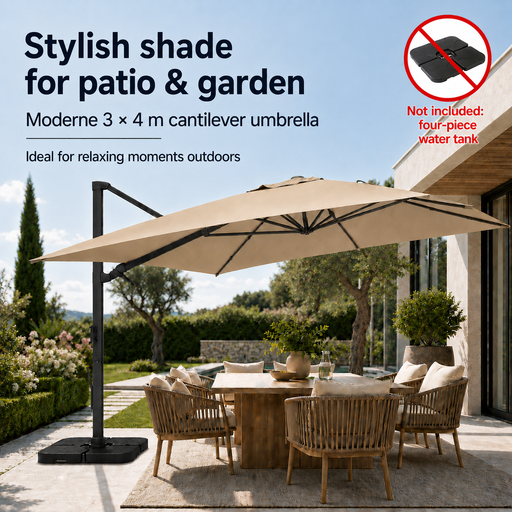
Why This Fits Their Persona: For those who want to combine functionality with a modern aesthetic. The sleek taupe colour and full aluminium frame fit perfectly into a contemporary garden design.
The specifications are clear: a full aluminium frame and a 280 g/m? yarn-dyed canopy. This prevents the disappointment of a rusting frame or a faded canopy after just one summer.
Comes with a cross base included, which clarifies the required foundation. The colour fastness (tested up to 1000 hours according to the manufacturer) ensures the aesthetic is preserved.
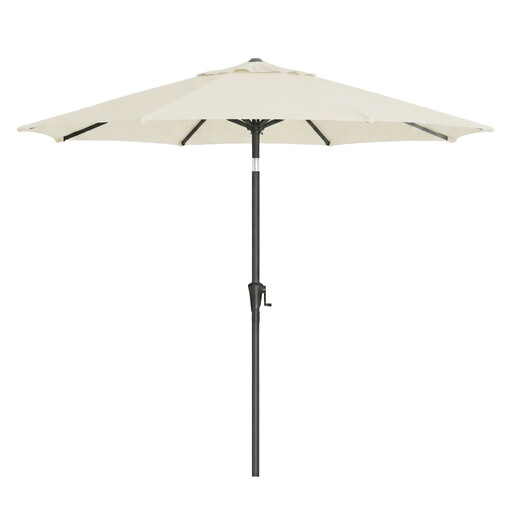
Why This Fits Their Persona: For those seeking a large shaded area without the complexity and price of a cantilever umbrella. This traditional centre-pole model offers ample shade with its 3.3m diameter at a more accessible price point.
This model avoids the pitfall of an unstable cantilever design in a lower price segment. A centre-pole umbrella is inherently more stable and simpler, providing a robust solution at an affordable price.
Simple operation with a crank handle and a tilt mechanism. A straightforward and cost-effective way to shade a large area, without the need for a heavy and complex base structure.
We have compiled a complete, up-to-date list of products that fully meet these strict selection criteria and safety standards.
This depends on the size of the canopy and its exposure to wind. As a rule of thumb, a 3x4 metre cantilever umbrella requires a ballast of at least 90 to 120 kg for a safe and stable setup. This weight can be achieved with special umbrella pavers, an in-ground base, or a base that can be filled with water or sand. Always check the manufacturer's recommendations.
A high-quality aluminium umbrella is designed to withstand a normal breeze. However, no garden umbrella is intended for use during high winds or storms. It is essential to close the umbrella when not in use or when strong winds are forecasted. This prevents damage to the mechanism, ribs, and canopy.
Polyester is the most common material for umbrella canopies, often with a PA or PU coating for water repellency. Yarn-dyed polyester offers significantly better colour fastness. Olefin is another synthetic material known for its superior colour fastness and resistance to stains and mildew. Olefin is typically found in a higher price segment. The choice depends on your budget and how intensively the umbrella will be exposed to direct sunlight.
