
Parents baking a cake or brownies together
If the recipe calls for cocoa powder mixed into the batter, you can choose the other ingredients yourself. Fairtrade Original suggests brownies and mug cakes as ways to use its cocoa powder.


Choose your ingredient to suit the recipe: cocoa powder to mix into the batter, or a chocolate bar if you need chunks or melted chocolate. Check the Fairtrade labelling and allergens on the product you choose. A canoe biscuit is a ready-made filled biscuit, not a direct substitute for cocoa or chocolate in a baking recipe.
If the recipe calls for cocoa powder mixed into the batter, you can choose the other ingredients yourself. Fairtrade Original suggests brownies and mug cakes as ways to use its cocoa powder.
You’ll need a bar for chocolate chunks or melted chocolate. Before choosing one for your recipe, compare the cocoa percentage, Fairtrade labelling and allergens listed for that particular bar.
If someone has a food allergy, the ingredients and warnings on the current packaging are what matter most. The Netherlands Nutrition Centre also advises against letting children taste raw dough or batter.
First, check whether the recipe calls for powder, chocolate chunks or melted chocolate. Then check the packaging of the exact product you plan to use.
| What to consider | What to check when buying | Who it matters to |
|---|---|---|
| Ingredient for the recipe | Check whether the recipe calls for cocoa powder or chocolate; you can’t swap one for the other without adapting the recipe. | When I’m making brownie or cake batter, I want a powder I can mix in; for chunks or melted chocolate, I’m looking for a bar. For around 40% of consumers, the ingredient’s role in the recipe would come first. |
| Allergens and safe baking | Read the current allergen information, including any warnings about cross-contamination. Don’t let children taste raw dough or batter. | When I’m baking with a child who needs to avoid certain ingredients, I want to be able to check the packaging and make sure they can help safely. For around 40% of consumers, this would be their first concern. |
| Flavour and Fairtrade labelling | Compare the type of chocolate and cocoa percentage, and look for the Fairtrade labelling on the specific product. | If the children will be eating the chocolate too, I want to choose a flavour they’ll enjoy and that suits the recipe, without losing sight of the Fairtrade requirement. Around 20% of consumers would weigh this up first. |
Albert Heijn describes its Roomboter kano’s as filled biscuits with almond paste and almonds. The product name alone doesn’t mean it’s Fairtrade-certified.
If Fairtrade is a requirement, look for the labelling on the packaging of the exact product you’re buying.
Verkade states that its Puur contains at least 52% cocoa; the PLUS bar described contains 70% cocoa solids. They’re different bars, and you can’t use a bar instead of cocoa powder without adapting the recipe.
Use the ingredient form the recipe calls for. If you’re using chocolate, choose a flavour everyone eating it will enjoy.
Fairtrade labelling doesn’t tell you which allergens a product contains. The PLUS bar described contains soya and may also contain milk and nuts, among other allergens.
Read the ingredients and allergen information on the current packaging, especially if you’re baking for someone with an allergy.
According to the Netherlands Nutrition Centre, raw eggs and flour in dough or batter can contain harmful bacteria. This can make young children ill more quickly.
Wait until the bake is thoroughly cooked before letting children taste it.
One option if you’re looking for a chocolate bar to chop or melt.
A cocoa powder option for recipes that call for powder mixed into the batter.
An own-brand example of a dark chocolate bar labelled as containing Fairtrade cocoa.
A range of chocolate bars for anyone who wants to compare flavours.
An example range if you’re looking for a dark chocolate bar.
This cocoa powder suits recipes where you mix cocoa into brownie or mug cake batter. For chunks or melted chocolate, the recipe calls for a different form of ingredient.
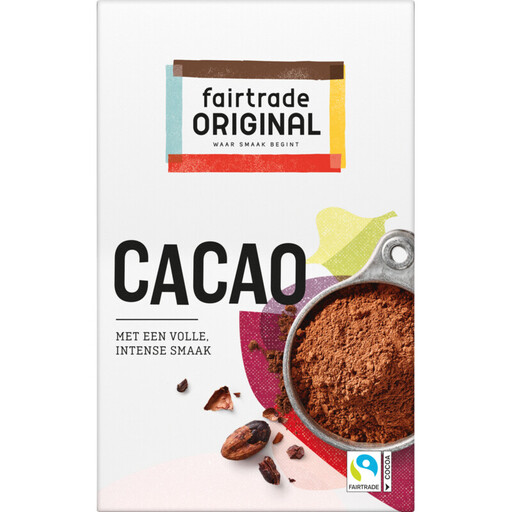 Image unavailable
The product description suggests using it in brownies and mug cakes. Check the Fairtrade labelling, ingredients and allergens on this product’s packaging; it hasn’t been confirmed that this is the same cocoa powder as the one from Fairtrade Original.
Not as a direct substitute in a baking recipe. Albert Heijn describes its Roomboter kano’s as ready-made filled biscuits with almond paste and almonds. You can serve them as a separate treat if you like, but check the packaging if Fairtrade is a requirement.
No. The Netherlands Nutrition Centre advises against tasting raw dough or batter because it may contain harmful bacteria from raw eggs or flour. Wait until the bake is thoroughly cooked before letting children eat it.
Yes. Fairtrade labelling doesn’t mean a product is suitable for people with allergies. Read the ingredients and allergen warnings on the current packaging; the Netherlands Food and Consumer Product Safety Authority explains the mandatory labelling requirements for 14 allergens.
Not necessarily. Fairtrade Original says that, under the mass balance principle, Fairtrade cocoa in its cocoa powder may be mixed with or replaced by non-certified cocoa. If physical separation matters to you, check the product information before making your choice.