
Tea drinkers who want to prioritise less sugar
You’re happy to choose a different biscuit if it means you can have one with your tea that has a lower listed sugar content per 100 g.


If you’re set on having a canoe biscuit with your tea, compare the sugar content of products in that category: Jumbo, Aviateur at PLUS and PLUS list 36.8 to 38.9 g of sugars per 100 g for three standard canoe biscuits. If a much lower listed sugar content matters more than having a canoe biscuit, Verkade San Francisco Zero is a different type of biscuit, with 1.7 g of sugars per 100 g according to Verkade. It contains maltitols, so check the ingredients, allergens and warnings on the packaging as well as the nutritional information.
You’re happy to choose a different biscuit if it means you can have one with your tea that has a lower listed sugar content per 100 g.
You want to stick with almond paste filling and the familiar canoe shape. In that case, compare the sugar content of canoe biscuits with one another, without mistaking a small difference for a significant reduction.
As well as sugars, certain allergens or sweeteners matter to you. So check the current packaging before choosing a canoe biscuit or an alternative.
First decide whether you want a filled canoe biscuit. Then compare the sugars per 100 g and check the ingredients and allergens on the packaging.
A good choice if: almond paste and the canoe shape matter more to you than a significant reduction in listed sugars.
The trade-off: the values listed by Jumbo and PLUS for the three standard canoe biscuits range from 36.8 to 38.9 g of sugars per 100 g.
A good choice if: a lower listed sugar content matters more than having a filled canoe biscuit; Verkade lists 1.7 g of sugars per 100 g for San Francisco Zero.
The trade-off: it isn’t a canoe biscuit and contains maltitols. Albert Heijn warns that this product may have a laxative effect if consumed in excess.
| What to consider | What to check when buying | Who it matters to |
|---|---|---|
| Listed sugars | Compare ‘of which sugars’ per 100 g; don’t mistake a claim about no added sugars for a figure for total sugars. | If I mainly want to eat less sugar with my tea, my biscuit can be a different type. A lower listed sugar content is the deciding factor for around 50% of consumers. |
| Canoe biscuit and portion | Compare canoe biscuits with one another per 100 g, and also consider how much you actually eat at a time. | If you want to stick with the filling and shape of a canoe biscuit, a different biscuit may not suit you as well; around 30% of consumers prioritise that canoe-biscuit experience. |
| Ingredients and allergens | Check the current allergen information and, for a biscuit containing maltitols, look out for the warning on the packaging too. | If I need to avoid a particular ingredient, the label determines whether the biscuit is right for me. Checking this first is the top priority for around 20% of consumers. |
Jumbo and PLUS list values of 36.8 to 38.9 g of sugars per 100 g for the three standard canoe biscuits compared here. The lowest figure in this group doesn’t automatically make a canoe biscuit a low-sugar product.
Decide whether you want to stick with a canoe biscuit. If the sugar content matters more, compare other types of biscuits per 100 g too.
‘No added sugars’ doesn’t mean a product contains no sugars. Verkade still lists 1.7 g of sugars per 100 g for San Francisco Zero.
Check the nutritional information per 100 g, then look at the ingredients list and allergen information.
Verkade San Francisco Zero contains maltitols. Albert Heijn warns that consuming this product in excess may have a laxative effect.
Read the warning on the packaging and take it into account if maltitols are relevant to you.
The ingredients and allergens listed vary from one biscuit to another. A lower sugar content doesn’t tell you whether a product is suitable for someone with an allergy.
Check the allergen information on the current packaging before eating, and don’t choose based solely on an image or product title.
San Francisco Zero is a tea biscuit, not a filled canoe biscuit.
AH Roomboter kano’s are an option if you specifically want to compare filled canoe biscuits.
Jumbo Kano’s met Roomboter are a traditional canoe biscuit filled with almond paste.
PLUS Roomboter kano’s and Aviateur Kano’s are both worth comparing at PLUS.
These products are alternatives for anyone considering an oat biscuit or biscuit bar with their tea instead of a filled canoe biscuit. Compare the latest nutritional information and ingredients before choosing.
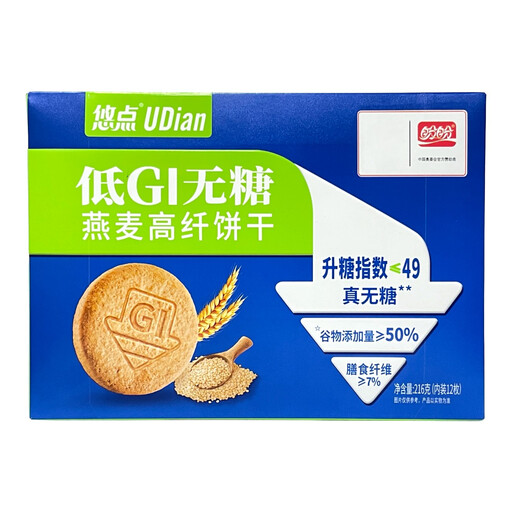 No image available
A biscuit option if you don’t need the canoe shape. Check the sugars per 100 g on the current packaging: ‘Sugar-Free’ in the original product name is no substitute for the nutritional information table. Also check for maltitol (E965) and the allergen information.
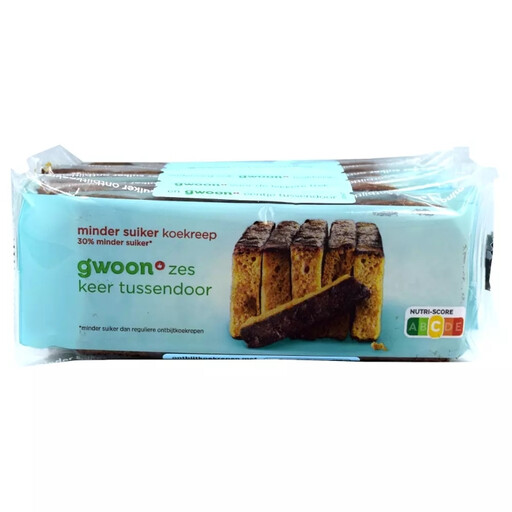 No image available
A biscuit bar to enjoy with your tea if you’re not looking for a filled canoe biscuit. Check the sugars per 100 g on the current packaging rather than relying on the ‘Less Sugar’ label alone; also read the ingredients and allergen information.
The listed values don’t support choosing these three standard canoe biscuits as low-sugar options. Jumbo lists 36.8 g of sugars per 100 g; PLUS lists 37.6 g per 100 g for Aviateur Kano’s and 38.9 g per 100 g for PLUS Roomboter kano’s. Compare them within the canoe-biscuit category if you want to stick with this type of biscuit.
No. A product with no added sugars may still contain sugars. Verkade lists 1.7 g of sugars per 100 g for San Francisco Zero. So whenever you see this type of claim, check ‘of which sugars’ in the nutritional information table.
First compare the listed sugars per 100 g, so different portion sizes don’t skew the comparison. Then consider how much you eat and check the ingredients. Don’t use Nutri-Score as the deciding factor when comparing different types of biscuits: the Dutch government advises comparing scores within the same type of product.
Check the allergens and ingredients on the current packaging for the specific biscuit. Jumbo lists almond, egg, gluten, milk and soya among the allergens in its canoe biscuits; for Verkade San Francisco Zero, Albert Heijn lists wheat, milk, soya and maltitols, among other ingredients, and warns of a possible laxative effect if consumed in excess.
Use the current packaging for your final check of nutritional values, ingredients and allergens. Product information can change, which is especially important if you need to avoid a particular ingredient.