Who is this buying guide for?

Quick threshold cleaner

You simply want to clear dry debris from a threshold edge or gap between work sessions, and are mainly looking for a narrow nozzle that can reach the spot. Consumentenbond lists cleaning gaps and skirting boards as separate test areas.

Cleaner working across several sites

You move your vacuum regularly, so you’re considering its weight, cord reach and how you’ll store the hose and attachments. Kärcher and Numatic, for example, list cord and weight specifications for the versions mentioned here.

Worker dealing with fine dust

You want to find out what kind of dust the task will generate and what controls are needed before choosing a machine. Arboportaal explains that exposure to silica dust must be assessed.

What should you look for when choosing?

Canister vacuum for ordinary dry debris

Choose this option: if you’re picking up loose debris by a threshold between work sessions and need a suitable nozzle.

Keep in mind: check which attachments are included; a floor nozzle won’t necessarily reach into a narrow gap.

Professional dry vacuum for regular cleaning

Choose this option: if you clean up ordinary dry debris in several places and need to consider cord reach, portability or accessory storage.

Keep in mind: check the accessory kit and weight for each version. A HEPA exhaust filter does not confirm a dust class for hazardous work dust.

Dust extractor suited to the work dust

Choose this option: if a task could generate hazardous fine dust and requires a suitable dust class or tool connection.

Keep in mind: Festool states that the CTL MIDI I is dust class L; this does not automatically make the machine suitable for every type of dust. Arboportaal explains that exposure to silica dust must be assessed and appropriate measures taken.

What to consider What should you check? Who is this most important for?
Reaching thresholds and gaps Check that the nozzle fits into the gap and is included with the version you choose. Also check whether the connection is compatible with any separate attachment you may need. If I mainly need to reach narrow edges, I want to know whether the nozzle will fit by my threshold. Around 36% of consumers say reaching thresholds and gaps is their top priority.
Easy to grab and put away Compare the cord reach with the distance to the socket, and check where you’ll store the vacuum, hose and attachments. Check whether the stated weight includes accessories. If I move the vacuum between short cleaning sessions, reach and storage matter. Around 29% of consumers prioritise easy moving and storage.
Filter and type of dust Establish where the debris comes from. If the work dust could be hazardous, have the required control measures and dust class determined for the specific task; don’t rely on a HEPA label alone. If dust is generated while working with materials, I first want to know what dust controls are appropriate. Around 21% of consumers say suitability for the type of dust is their top priority.
Bag, filter and maintenance Check which replacement bag and filter fit the exact model, and see what maintenance instructions apply. If I use the vacuum regularly, I want to know which bags and filters I’ll need later. Around 14% of consumers prioritise maintenance and running costs.

Common buying mistakes

  • Focusing only on motor power

    The wattage doesn’t tell you whether the nozzle can reach the threshold or how well the vacuum picks up debris from gaps. Consumentenbond assesses cleaning gaps and skirting boards as separate test areas.

    Start by considering the type of dust, reach and intended use. Don’t rely on the stated wattage as your only measure of suitability.

  • Assuming a HEPA exhaust filter makes a vacuum suitable for all work dust

    A filter label alone doesn’t confirm that the complete machine and working method are suitable for the dust generated by a task. If there’s a possibility of exposure to silica dust, the employer must assess the exposure, according to Arboportaal.

    First establish the material, working conditions and necessary control measures. Then choose the machine and filter combination.

    Some tasks may require additional control measures or a machine with a different classification. Determine what’s needed for the work you actually do.

  • Assuming every attachment shown is included

    An accessory shown in a product image may not be included with that version. This matters if you need a narrow nozzle for a threshold.

    Check the contents list for the exact version and make sure any separate attachment you need fits the connection.

    You may need to buy a suitable nozzle separately.

Brands to consider

Kärcher

Kärcher describes the T 7/1 Classic as a professional dry vacuum for everyday dry cleaning tasks.

  • Kärcher lists a 7.5 m cord and a weight of 3.5 kg without accessories for the T 7/1 Classic.
  • The official contents list doesn’t include a crevice nozzle. Check whether you need to buy this attachment separately.

Nilfisk

Nilfisk describes the VP300 HEPA EU2 as a model for light to medium-duty commercial cleaning, such as in offices and shops.

  • Nilfisk lists a standard HEPA H13 exhaust filter for the VP300 series.
  • An exhaust filter doesn’t confirm a dust class for hazardous work dust. Also check whether the specific version includes the crevice nozzle you want.

Numatic

According to Numatic, the NVR160-11 is a professional dry vacuum for regular cleaning, with a choice of accessory kits.

  • Numatic lists a 10 m cord and a 6 l capacity.
  • The stated weight of 7.5 kg is for the machine plus kit. Check which kit comes with the version you choose.

Miele

Miele describes the Guard S1 Parquet Flex as a household canister vacuum for hard floors and hard-to-reach areas, among other uses.

  • Miele lists a flexible crevice brush, a parquet brush and a 10 m operating radius for this model.
  • These product features don’t show that the version is suitable for hazardous work dust.

Festool

According to Festool, the CTL MIDI I is a mobile dust extractor for applications where dust class L is suitable.

  • Festool lists dust class L, an automatic tool socket and manual filter cleaning.
  • The stated class doesn’t mean it’s suitable for all material dust. First establish the requirements of the task.

Canister vacuums for dry debris by thresholds

These Joybuy products are canister vacuums for ordinary dry debris and quick cleaning by thresholds. Check that the attachments and usage conditions listed for each version suit your task.

Philips 2000 Series XD2142/12 bagged vacuum cleaner

Philips 2000 Series XD2142/12

One option to compare for quick clean-ups of ordinary dry debris by a threshold.

The product name lists 800 W and a 9-metre operating radius.

View at Joybuy

Rowenta RO3927 Compact Power canister vacuum cleaner

Rowenta RO3927 Compact Power

Worth considering for quick clean-ups of ordinary dry debris; the product information says it’s for dry vacuuming only.

The product name lists 750 W, a 3 l dust bag, a metal telescopic tube and automatic cord rewind.

View at Joybuy

Miele Guard S1 Parquet Flex canister vacuum cleaner

Miele Guard S1 Parquet Flex

An option for ordinary dry debris if a canister vacuum for hard floors and hard-to-reach areas suits your needs.

The product name lists 890 W, a 3.5 l dust bag and a 10 m operating radius. The product information warns against fine dust such as plaster or cement dust.

View at Joybuy
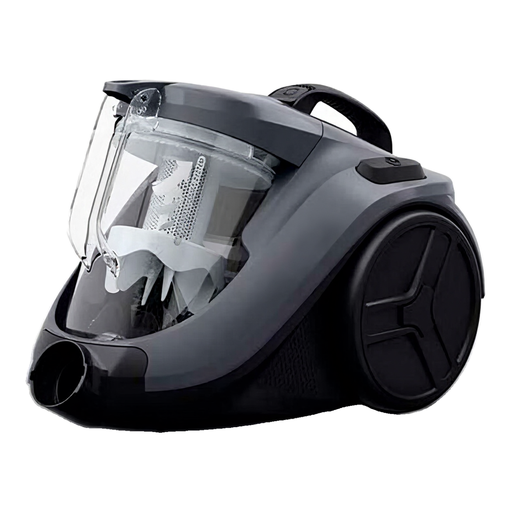
Rowenta RO3726EA Compact Power Cyclonic canister vacuum cleaner

Rowenta RO3726EA Compact Power Cyclonic

Worth considering for quick clean-ups of ordinary dry debris; the product information specifies dry vacuuming only.

The product name lists 800 W.

View at Joybuy

Frequently asked questions

Can I use the same floor nozzle for every threshold?

Not always. Check that the nozzle can reach the threshold and that the version includes a suitable crevice nozzle. Miele lists a flexible crevice brush for the Guard S1 Parquet Flex; the official contents list for the Kärcher T 7/1 Classic doesn’t include a crevice nozzle.

What should I check before a quick clean-up?

Check your version’s manual and contents list to make sure you have the right nozzle, bag and filter. Don’t use a dry vacuum for liquids or materials that the manufacturer says it isn’t suitable for.

Is a HEPA exhaust filter enough for dust from sawing or sanding?

No. A HEPA label alone doesn’t show that the complete machine and working method are suitable for the dust being generated. First establish the type of dust and the control measures required. If there’s a possibility of exposure to silica dust, the employer must assess the exposure, according to Arboportaal. It lists cleaning with the right vacuum and filter as one of the control measures.

Which ongoing costs and warranty rights should I distinguish between?

Check which replacement bags and filters fit the exact model. For consumer purchases in the Netherlands, the Dutch Government describes statutory guarantees alongside any manufacturer’s or seller’s guarantee; if a product is faulty, the seller is your point of contact. These consumer rules don’t necessarily apply to business purchases.

Is CE marking required for an electric vacuum cleaner in the Netherlands?

CE marking is required for electrical products that fall under the applicable rules. The Netherlands Food and Consumer Product Safety Authority describes low-voltage rules for electrical equipment with a nominal AC voltage of 50–1000 V. CE marking doesn’t prove that a particular vacuum is suitable for your debris and working method.
