What should you look for when cleaning dust around table legs?
Start by checking that the nozzle fits the space and suits your flooring. Then compare what matters most for your quick cleans: getting the vacuum out easily, making less noise while you work, or deciding how to dispose of the collected dust.
| What to consider |
What to look for |
Who might value this most? |
| Reaching around table legs |
Check whether the supplied crevice tool fits alongside and between your table legs. Also make sure the floorhead is suitable for the flooring around the table. |
If you mainly want to clean narrow edges and don’t want to keep manoeuvring a wide floorhead around the legs, reaching into tight spaces should be your top priority. Around 33% of consumers prioritise access around table legs. |
| Quick to get out and put away |
Check the dimensions, where the attachments are stored and how far the vacuum can reach from the socket you use. |
For quick cleans, you’ll want to minimise the steps before and after vacuuming and have a dedicated place to store the appliance. Around 27% of consumers prioritise being able to get the vacuum out, use it and put it away quickly. |
| Noise while you work |
Compare the stated dB(A) figures, but bear in mind that the room and the setting you use can also affect how loud the vacuum seems. |
If other people are working in the same room, you’ll want to keep disruption to a minimum. Around 20% of consumers say noise during work sessions is their main consideration. |
| Disposing of dust |
Check whether the appliance has a dust bag or a dust container, and how to empty or replace it. |
If you want to limit contact with collected dust, the way it’s disposed of is an important consideration. The Consumers’ Association explains that replacing a dust bag generally involves less contact with dust than emptying a dust container. Around 13% of consumers prioritise limiting contact with dust. |
| Ongoing supplies |
For a bagged model, check which replacement bags it takes. With a bagless model, emptying the dust container is part of using it. |
If you don’t want to buy replacement bags, the dust disposal system matters more; a bagless model still needs to be emptied. Around 7% of consumers prioritise avoiding repeat purchases of dust bags. |
Joybuy products for tackling dust around table legs
This Joybuy selection focuses on canister vacuum cleaners with a crevice tool for tackling dust alongside and between table legs, with options including a compact model and attachments that help you reach further.
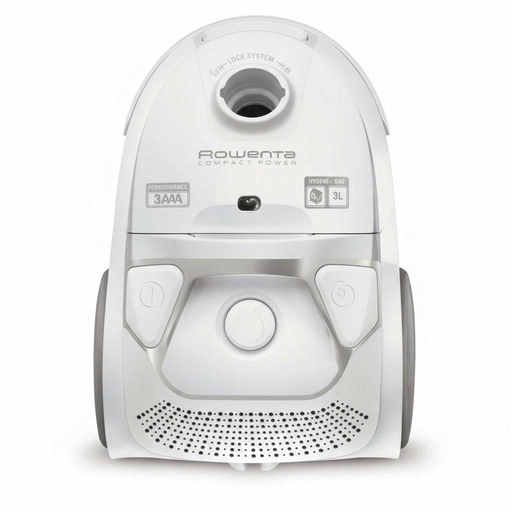 Image unavailable
Rowenta RO3927 Compact Power
This compact bagged model, supplied with a crevice tool, is an option for quick cleans around table legs.
The product name lists a motor power of 750 W and a 3 L dust bag. This model uses a dust bag that needs replacing.
View at Joybuy
 Image unavailable
Miele Guard S1 Parquet Flex
The listed crevice tool and extra-long, flexible crevice tool are worth considering if dust is hard to reach. The product information also mentions a Parquet Twister floorhead for hard floors.
The product name lists an operating radius of 10 m and a 3,5 L dust bag. The bag needs replacing and, according to the product information, is not reusable.
View at Joybuy
Frequently asked questions
Which attachment should you use right next to a table leg?
Use a suitable crevice tool for the narrow gap. For the open floor around it, use a floorhead that suits your flooring. Check which attachments come with the version you’re considering.
How can you keep your vacuum ready for a quick clean?
Keep the right crevice tool with the appliance and follow the instructions for emptying or replacing the dust collector. The correct method depends on the model and whether it has a dust bag or container.
Do you need to buy extra cover in the Netherlands?
Not necessarily. According to the Government of the Netherlands, purchases are covered by the statutory guarantee, and the seller must offer a solution if the product doesn’t meet what you could reasonably expect. There is no fixed statutory guarantee period in the Netherlands. When considering paid extra cover, check what additional rights it gives you.
Does a new canister vacuum need an EU energy label?
No. The European Commission says that the energy labelling rules for vacuum cleaners have been annulled, and these products no longer have an energy label. So don’t use an old energy label as a current, mandatory basis for comparison.
Where can you take an old vacuum cleaner in the Netherlands?
According to the Government of the Netherlands, you can take an old household appliance to the shop or online retailer where you buy a new, similar appliance, to a collection point or to your local council recycling centre.


