What should you look for when buying?
Start with the tool and the space behind the radiator. Then choose a dust-bag system that suits whoever empties and maintains the vacuum at home. Noise is another factor to consider when housemates are in.
| What to consider |
What to look for |
Who might care most? |
| Reach behind the radiator |
Check the shape, width and flexibility of the tool, its connection and whether it’s included. Measure the gap at home. |
If I mainly want to reach the narrow or deep space behind a radiator, I’ll start by checking the tool and the gap. Around 36% of consumers say reach is their top buying priority. |
| Dust contact when emptying |
Find out how to remove the bag or dust container and what maintenance the model needs. |
If you want to minimise direct contact with vacuumed dust when emptying, pay particular attention to the system. Around 29% of consumers say this is their top priority. |
| Noise when sharing the space |
Check the noise rating for the exact model and the setting it applies to. |
If housemates are working, studying or relaxing at home, noise could be the deciding factor between suitable options. Around 21% of consumers put this consideration first. |
| Running costs and maintenance |
Check which type of bag or filter is needed and what the manual says about emptying and maintenance. |
If you want to keep repeat purchases and maintenance to a minimum, consider both the supplies you’ll need and the effort involved in emptying it. Around 14% of consumers put running costs and maintenance first. |
Joybuy product picks
These canister vacuums have a dust bag and a listed crevice tool. Check whether the shape of the tool supplied with each model fits the gap behind your radiator.
 No image available
Philips 2000 Series XD2142/12
An option if you’re looking for a bagged vacuum cleaner with an integrated crevice tool for tight spaces.
800 W; 9 m operating radius; HEPA filter system; 3 l dust-bag capacity; integrated 2-in-1 crevice tool. The product description lists Philips S-Bags as replacement bags.
Joybuy
 No image available
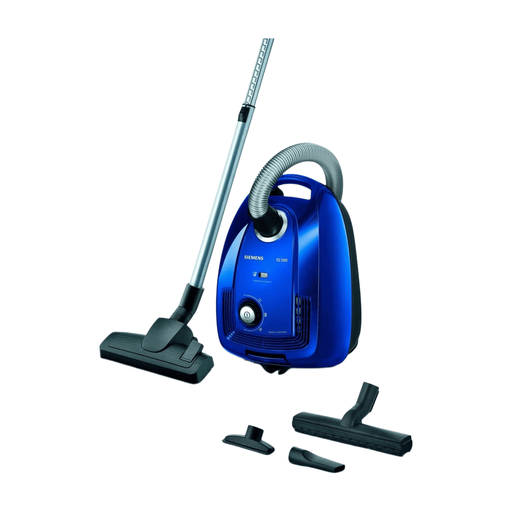
Siemens iQ300 VSC3320 Allergy Plus
An option if a dust bag and an included crevice tool suit your maintenance preferences.
Washable 4 l dust bag; telescopic tube; HEPA filter; crevice tool included and filter-change indicator. Let the washed dust bag dry completely before putting it back.
Joybuy
 No image available
Rowenta RO3927 Compact Power
An option if you want to pair a bagged vacuum cleaner and telescopic tube with an included crevice tool.
750 W; 3 l dust-bag capacity; telescopic metal tube; automatic cord rewind. Dust bags are an ongoing consumable.
Joybuy
 No image available
Miele Guard S1 Parquet Flex
An option if you’re looking for a flexible XL crevice tool for deep gaps and narrow spaces; check that it fits behind your radiator.
890 W; 3,5 l dust-bag capacity; 10 m operating radius; flexible XL crevice tool. Dust bags are an ongoing consumable.
Joybuy
Frequently asked questions
Do you need a special vacuum cleaner for dust behind a radiator?
Not necessarily. Start by checking whether there’s a suitable narrow, flexible or telescopic tool for your canister vacuum. Miele and AEG describe specific accessories for hard-to-reach areas; check the connection and measure the gap.
Is a bagged vacuum cleaner more practical than a bagless model?
It depends on your preferences for emptying and ongoing supplies. According to the Consumers’ Association (Consumentenbond), a dust bag is thrown away with the dirt, while you have to empty a bagless container yourself. When emptying it, you come into more direct contact with the dirt.
How do you keep a vacuum cleaner in good working order in a shared home?
Agree on who replaces the bag or empties the container, and who checks the filters. The Consumers’ Association (Consumentenbond) warns that a full bag or container and clogged filters can reduce suction power; follow the model’s manual for maintenance.
Can you vacuum up building dust or liquids from behind the radiator with a standard vacuum cleaner?
Don’t use a standard household vacuum cleaner for this. The Consumers’ Association (Consumentenbond) distinguishes between household dust and building dust, coarse debris or liquids, and recommends using a suitable wet and dry vacuum for those jobs.
Does a new vacuum cleaner need an EU energy label?
No. The European Commission says the former EU energy label for vacuum cleaners no longer applies; the rules behind that label have been annulled. This is separate from ecodesign requirements. An old label is therefore not a current basis for comparing vacuum cleaners.


