
Online shop photographer
You want to photograph several candlesticks with consistent framing against a clean white background. Canon Europe describes a tripod as a useful way to keep the background consistent across a series of product photos.


For wide shots of candlesticks, a compact camera with a fixed lens may be enough if its focusing range suits your products. A mirrorless camera gives you the option to choose a different lens later, but you’ll need to check the lens and the complete kit. If you want to capture small engravings or embellishments in close-up, focus on the magnification and working distance of the specific lens. A stable setup and suitable lighting also matter: a different camera body won’t automatically prevent reflections on glass or shiny metal.
You want to photograph several candlesticks with consistent framing against a clean white background. Canon Europe describes a tripod as a useful way to keep the background consistent across a series of product photos.
You want to bring details such as engravings or edges closer. Check the magnification and working distance of the lens you plan to use.
You want to take wide shots without changing lenses. Check that the fixed lens’s focusing range suits the size of your candlesticks; the Dutch Consumers’ Association describes a compact camera as a camera with a fixed lens.
A good fit if: you mainly photograph the whole candlestick and would rather not change lenses.
The trade-off: you can’t simply choose a different lens later, so check the focusing range for small products before you buy.
A good fit if: you photograph candlesticks in different sizes and may want to use another lens later.
The trade-off: a standard zoom isn’t automatically a macro lens, so check the magnification of the lens supplied.
A good fit if: you want to show engravings, edges or small embellishments in close-up.
The trade-off: the lens must fit the mount; a short working distance can limit the space available for lighting.
| What to consider | What to check before buying | Who it’s for |
|---|---|---|
| Reflections and a white background | Assess the lighting and reflections using the lamps, background and diffuser you plan to use; check that the outline of the candlestick remains visible. | If glass or shiny metal needs to stand out clearly against white, I want to see how the lighting works with my product first. Around 33% of consumers put controlling reflections first. |
| Small details | Compare the maximum magnification, focusing distance and working distance of the exact lens; check the lens mount too. | If I want to show an engraving or edge in close-up, the lens needs to focus close enough without compromising the space available for lighting. Around 25% of consumers prioritise small details. |
| Consistent product photos | Check that you can position the camera securely and keep the framing and lighting setup in the same place. | For a series of candlesticks, I want to keep the framing consistent and present the products side by side. Around 25% of consumers make consistency their main purchasing concern. |
| A simple setup | Check what’s included in the exact kit, which lens comes with it and which accessories you’ll need for your setup. | If I want to take wide shots with as few separate components as possible, what’s actually in the kit matters. Around 17% of consumers prioritise a simple, complete setup. |
Glass and shiny metal can reflect light sources and create harsh highlights. A different camera body won’t automatically solve this lighting problem.
Test the lighting and reflections on the material you want to photograph before comparing camera features.
You may also need diffused light, background material and space for a stable setup.
Magnification varies from lens to lens. Sony lists a magnification of 1.0× and a minimum working distance of 2.4 cm from the front of the lens for its separate E-mount SEL30M35. These are manufacturer specifications; the lens isn’t automatically included with a zoom kit.
Check the lens model, mount, magnification and working distance of the combination you’re buying.
For very small details, you may need a separate, compatible macro lens.
Camera body and kit listings may include different lenses or accessories. For example, Nikon states that a charger isn’t included with a specific Z50II kit.
Read the details of the exact listing and check that it includes the lens and accessories you need.
If an essential component is missing, you’ll need to source it separately before you can use the complete setup.
Examples include the EOS R50 and EOS R100 kits with RF-S 18-45mm, and the PowerShot G7 X Mark III with its fixed lens.
The α6400 uses an E-mount. The separate SEL30M35 is a documented APS-C macro option.
The Z50II is a mirrorless camera with a Nikon Z mount. Kit contents vary by version.
These cameras and kits are suited to photography with a fixed setup or different framing options. Check each model’s product name to see which lens and features suit your needs.
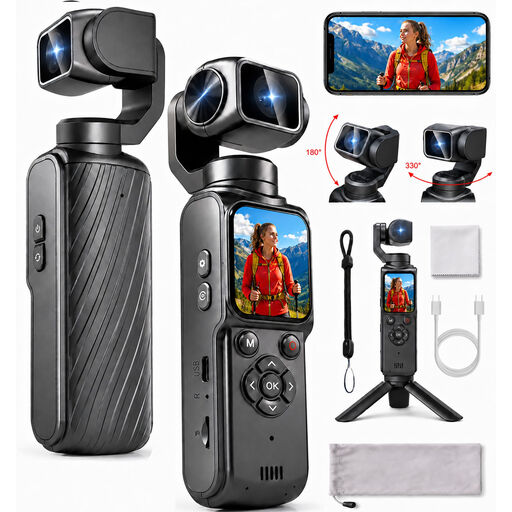 No image available
The product name suggests this camera could suit anyone looking for a compact setup.
4K; 330° rotating lens; 1.72-inch touchscreen.
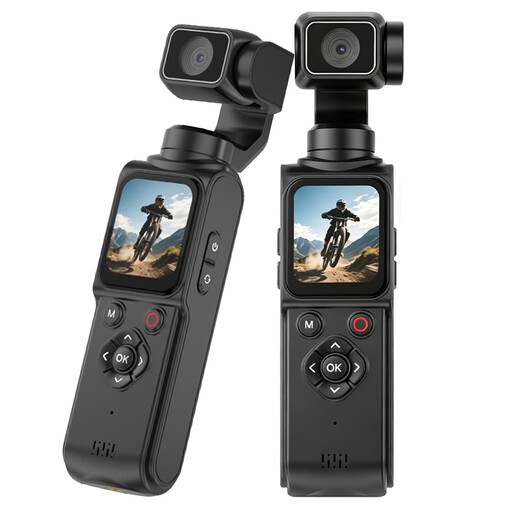 No image available
The product name mentions a tripod, which may suit a fixed camera setup.
64 MP; 330° rotating lens; 1.72-inch touchscreen; mini tripod.
 No image available
The zoom lens may be useful if you want to capture different crops of a candlestick.
12× optical zoom; 4K; 64 MP; Wi-Fi.
 No image available
The zoom lens kit may suit you if you want to try different framing options.
16-50mm zoom lens.
 No image available
This zoom lens kit may suit wide shots where you want to adjust the framing.
16-50mm f/3.5-5.6 OSS II lens.
Not necessarily. First check whether the lens can capture the wide shots and details you need, then assess the lighting and setup. A tripod helps you keep the framing consistent across a series of photos; reflections on shiny surfaces remain a separate consideration.
Put the camera on a tripod and keep the framing and background consistent while you check the lighting. Try diffused light if reflections are a problem; a light tent is one possible setup, not a camera feature.
Check whether the kit you’ve chosen includes the lens you need and any relevant accessories. You may need a separate macro lens for small details; for example, Nikon states that a charger isn’t included with the Z50II twin zoom kit described.
If you buy online as a consumer, you generally have a statutory 14-day cancellation period after delivery, with some exceptions; ACM ConsuWijzer explains how this period works. You’re also covered by the statutory guarantee if a product doesn’t meet what you could reasonably expect, although there’s no single fixed guarantee period that applies in every case. If you’re buying for your business or online shop, don’t assume that the same consumer rights apply.