Start with test shots in a fixed set-up: Adobe says your existing smartphone could be a good starting point, while Canon describes a tripod as a useful way to keep your framing consistent. If you want to fill the frame with small raised details, compare the magnification of the specific lens; a mirrorless camera gives you more choice with a suitable macro lens. A compact camera has a fixed lens, so check that each option can capture the wide shots and close-ups you want in your lighting conditions.
Which camera is right for you?
Maker who wants to showcase colour and materials
You want the material, finish and colour to come across clearly. Adobe highlights the importance of controllable lighting, while Canon explains how white balance can help you assess colour under artificial light.
Maker who photographs small details
Your portfolio needs to show texture or fine details. The magnification of your chosen lens and the space available for lighting are important considerations.
Maker who wants a consistent series of photos
You photograph several candlesticks with similar framing and backgrounds. Canon describes a tripod and a fixed composition as useful ways to create consistent product photos.
What should you look for in a camera for photographing candlesticks?
Your current smartphone
Choose this if: you mainly want to show the whole candlestick and your test shots capture the details you need.
Bear in mind: results depend on how close your device can focus; check the photo at the size you intend to use it.
Compact camera with a fixed lens
Choose this if: you want to carry a separate camera without changing lenses, and a test shot gives you the framing you need.
Bear in mind: the lens cannot be changed; on the Sony DSC-RX100M7A, the stated minimum focusing distance varies considerably between wide-angle and telephoto settings.
Mirrorless camera with a standard zoom lens
Choose this if: you often photograph whole candlesticks or groups and want the option to choose a different suitable lens later.
Bear in mind: a standard zoom lens is not automatically suitable for very small details; check the magnification of the supplied lens.
Mirrorless camera with a macro lens
Choose this if: you want a small textured detail or surface to fill a large part of the frame, and the lens is compatible with the camera body.
Bear in mind: a macro lens may need to be bought separately; at short focusing distances, there may be little room for lighting.
| Consideration |
What to check before buying |
Who should consider this? |
| Colour and reflections |
Take a test shot in your own lighting and check the colour, highlights and adjustable white balance. |
When I photograph shiny metal or coloured materials, I want to assess the finish in my own lighting. Around 33% of consumers prioritise colour and materials. |
| Small details |
Compare the maximum magnification of the exact lens and check whether there is room for lighting when shooting close up. |
When a small textured detail needs to fill the frame, I want to know what my lens can actually capture. Around 27% of consumers put small details first. |
| Consistent framing |
Check that you can fit the whole candlestick in the frame from your working distance; try using a tripod and a fixed background. |
When photographing several candlesticks, I want to keep the framing and background much the same. Around 20% of consumers prioritise a consistent series of photos. |
| Simplicity and cost |
First compare test shots taken with your current device, then check whether a camera is sold as a body, a kit or a model with a fixed lens. |
If I want to buy as little equipment as possible, I want to know whether my current phone is good enough and what comes with a camera. Around 20% of consumers prioritise simplicity and keeping extra purchases to a minimum. |
Common product photography buying mistakes
-
Assuming a kit zoom is a macro lens
Magnification depends on the specific lens, not just the camera body. Canon states that the RF-S 18–45 mm achieves a maximum magnification of 0.16× with autofocus at 45 mm; for the separate RF 35 mm F1.8 Macro, Canon quotes a maximum of 0.5×.
Compare the magnification of the lens you actually plan to use with the smallest detail you need to capture.
A compatible macro lens may need to be bought separately.
-
Assuming maximum zoom gives you the best close-up
For the Sony DSC-RX100M7A, the stated minimum focusing distance from the front of the lens increases from around 8 cm at the wide-angle setting to around 100 cm at the telephoto setting.
Test the close-up framing you want at the zoom setting you plan to use, and allow for space to position your lighting.
-
Replacing only the camera when the lighting and framing keep changing
Changes to the background, composition or lighting set-up can make a series of product photos less consistent. Adobe highlights the value of a controlled set-up, while Canon describes a tripod as a way to keep the framing consistent.
First take comparable test shots with your current device. If needed, improve your set-up before deciding what a new camera should help you achieve.
Setting up a fixed background, controllable lighting and a tripod takes time.
Camera brands to consider
Canon
The EOS R50 kit with RF-S 18–45 mm is one example for wide shots; Canon also offers a separate RF macro lens.
- Canon lists an RF mount and a 24.2-megapixel APS-C sensor for the EOS R50.
- Canon states that the kit zoom achieves a maximum magnification of 0.16× with autofocus at 45 mm; the separate RF 35 mm F1.8 Macro achieves a maximum of 0.5×.
Nikon
The Z50II kit with NIKKOR Z DX 16–50 mm is one example for wide shots; the separate NIKKOR Z MC 50 mm f/2.8 is a macro option.
- Nikon specifies a 1:1 magnification ratio for the MC 50 mm.
- At the closest focusing distance, Nikon states that the gap between the front of the lens and the subject is around 5 cm; bear in mind where you will position lamps and reflectors.
Sony
The RX100 VII model DSC-RX100M7A is an example of a compact camera with a fixed lens for anyone who would rather not change lenses.
- Sony specifies an equivalent zoom range of 24–200 mm.
- The stated minimum focusing distance from the front of the lens is around 8 cm at the wide-angle setting and around 100 cm at the telephoto setting; this does not guarantee that a particular detail will fill the frame.
Fujifilm
The X-S20 is an example of a mirrorless camera body for anyone who wants to choose a lens separately.
- Fujifilm lists a 26.1-megapixel sensor and built-in five-axis stabilisation for the X-S20.
- Check whether the option you choose is a body or a kit; the body specifications do not tell you whether a suitable close-up lens is included.
Cameras at Joybuy
These Joybuy picks are cameras whose product names mention photography. Take test shots to see whether they suit the framing and small details you want to capture in photos of your candlesticks.
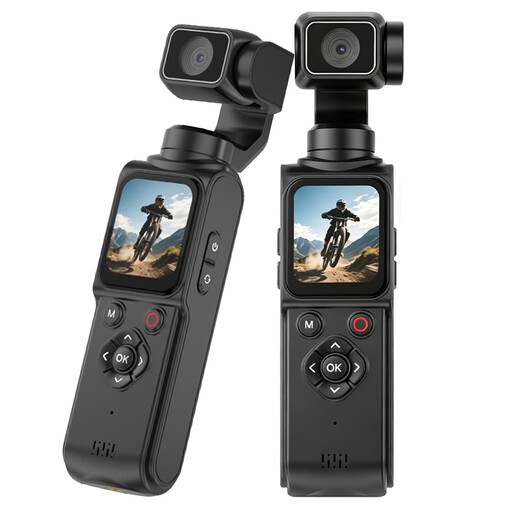 Image unavailable
KINSI Mini Vlog Camera 4K
A compact camera option for makers who want to check whether they can get the candlestick photos they want with this device.
The product name lists Wi-Fi, 64 MP, a 330° rotating lens, a 1.72-inch touchscreen, a mini tripod and Type-C.
View at Joybuy
 Image unavailable
DJI Osmo Pocket 4 Standard Combo
Take test shots to see whether this pocket gimbal camera can handle the close-ups and framing you need for your portfolio.
The product name lists a 1-inch CMOS sensor, 4K/240fps, 3-axis stabilisation, 2× lossless zoom, 107 GB of built-in storage and a 2-inch rotating screen.
View at Joybuy
 Image unavailable
KOMERY G7-A 4K (pink)
A point-and-shoot camera option; take a test shot to check whether your candlestick details appear large enough in the frame.
The product name lists 4K video, 80 MP and 18× zoom.
View at Joybuy
 Image unavailable
KOMERY G7 5K (white)
This point-and-shoot camera is an option to compare with your current device; take a test shot to judge whether it gives you the close-up framing you need.
The product name lists 5K video, 80 MP and 18× zoom.
View at Joybuy
 Image unavailable
Komery W6
Compare the framing from this camera with the smallest detail you want to show in your portfolio.
The product name lists 12× optical zoom, 4K, Wi-Fi and 64 MP.
View at Joybuy
Frequently asked questions
Do you need to buy a camera straight away for your portfolio?
No, start by taking test shots with your current smartphone. Adobe lists a smartphone as a possible option; photograph both the whole candlestick and the smallest detail you want to show, then review the files at the size you plan to publish them.
How can you make photos of several candlesticks look consistent?
Keep the background and lighting set-up the same, and use a tripod if needed to maintain the same framing. Canon describes this as a way to create consistent product photos; check sharpness and colour with test shots.
What extra purchase might you overlook?
Check whether the package includes only a body or a lens as well. You may need a separate macro lens for small details; compare the magnification of the lens you actually plan to use.
What should you bear in mind when photographing a lit candle?
The fire service advises placing candles on a sturdy, non-flammable surface and extinguishing them when you leave the room. Keep flammable photo props well away.
What are your rights when buying a camera online in the Netherlands?
According to the Dutch government, many applicable distance sales from a business come with a 14-day cooling-off period; buying from a private seller is different. Applicable consumer purchases are also covered by statutory guarantees. The Netherlands has no fixed statutory guarantee period, and the retailer is your point of contact if a product is faulty. If you are buying for business use, check which rights apply to your agreement.


