For repeatable photos of whole candles, a consistent set-up and control over exposure and white balance are important. For small decorations, the magnification offered by the right lens matters most. If you also want to photograph a lit candle, bear in mind the big difference in brightness between the flame and its surroundings, and make safety part of your set-up. A more expensive camera body is no substitute for a suitable lens or lighting.
Who photographs candles at home?
Maker of consistent online shop photos
Takes repeated photos of whole candles and wants to keep their shape, colour and background consistent. Canon UK highlights colour reproduction and product details as important considerations in product photography.
Maker of detailed candle designs
Wants to show small decorations, wax texture or labels clearly, so chooses the camera body and a close-focusing lens together. Canon, Nikon and Fujifilm’s manufacturer specifications show that magnification varies between lenses.
Maker of atmospheric photos with a flame
Photographs lit candles and needs to account for the contrast between the flame and its surroundings, as well as a safe set-up. Canon Europe discusses the difference in brightness; the fire service advises placing candles securely and away from heat sources.
What should you look for in your equipment?
First decide whether you’ll mainly be photographing whole candles, small details or a lit flame. Then choose the lens and set-up to suit the shot, rather than comparing camera bodies alone.
| What to consider |
What to look for when buying |
Who this matters to |
| Consistent colour and exposure |
Check for manual exposure, adjustable white balance and the capabilities of the lens included in the kit. |
If I want to photograph whole candles repeatedly with the same home set-up, I want to be able to adjust the colour and exposure. Around 40% of consumers say consistent online shop images are their top purchasing priority. |
| Capturing small details |
Compare the maximum magnification, lens mount and exact contents of the kit. |
When small decorations or wax texture need to fill the frame, I look at the lens’s magnification, not just the camera body. Around 30% of consumers prioritise close-ups of small details. |
| Flame and atmosphere |
Check whether manual exposure is available and whether the camera and tripod can be set up safely. |
If I want to show a lit candle in its surroundings, I need to account for the difference in brightness and position it safely. Around 20% of consumers say flame and atmospheric photos are their top priority. |
| Complete set-up |
Compare the body or kit, exact lens, mount and what you already own for each offer. |
If you want to avoid spending your whole budget on the body, leaving nothing for a lens or set-up, look at the complete combination. Around 10% of consumers say the total equipment set-up is their top purchasing priority. |
Common buying mistakes
-
Comparing camera bodies alone
For small details, magnification depends on the exact lens, not the number of megapixels in the camera body.
First note how small your subject is, then compare the complete camera-and-lens combination and the contents of the kit.
A suitable lens and components for a stable lighting set-up may need to be bought separately.
-
Assuming all macro lenses offer the same magnification
Canon specifies a maximum magnification of 1:2 for the RF 35mm F1.8 Macro; Nikon and Fujifilm quote 1:1 for the macro lenses discussed here.
Check the maximum magnification of the full lens model before choosing it for very small details.
-
Treating a lit candle like an ordinary product photo
Canon Europe describes the big difference in brightness between a flame and its surroundings. A lit candle also calls for a safe set-up.
Assess the exposure of the flame and its surroundings separately, and place the candle securely, away from flammable materials and heat sources.
Camera brands to consider
Canon
The EOS R50 is an APS-C camera body with an RF mount; Canon also lists the RF 35mm F1.8 Macro as a separate lens for close-ups.
- Canon Europe specifies 24.2 effective megapixels for the EOS R50 and support for RF and RF-S lenses.
- According to Canon, the RF 35mm F1.8 Macro has a maximum magnification of 1:2, not 1:1. The EOS R50 does not have in-body image stabilisation, according to the manufacturer’s specifications.
Nikon
The Z50II is a Nikon Z DX camera body; the NIKKOR Z MC 50mm f/2.8 is a separate macro lens for close-up photography.
- Nikon specifies 1:1 magnification for the MC 50mm and says it can be used on FX- and DX-format Z cameras.
- The macro lens is not automatically included with a Z50II body. Check which lens comes with the kit on offer.
Sony
The Alpha 6400 is an APS-C camera body with an E mount, for anyone who wants to choose a suitable lens separately.
- Sony specifies approximately 24.2 effective megapixels, an E mount and RAW shooting for the ILCE-6400.
- These camera body specifications don’t tell you what magnification a supplied zoom lens offers. Check the exact lens model if close-ups matter.
Fujifilm
The X-S20 is a camera body that can be paired with the separate XF30mmF2.8 R LM WR Macro when capturing small details is a priority.
- Fujifilm lists RAW and manual exposure for the X-S20, and 1:1 macro for the XF30mmF2.8 R LM WR Macro.
- Fujifilm specifies a minimum focusing distance of 10 cm for this lens. Allow room for lighting when taking very close-up shots.
Cameras at Joybuy
This Joybuy selection includes compact cameras and Sony mirrorless camera kits for photography and a range of framing options. Check that the features and kit contents suit your candle photos, especially if close-ups or a consistent home set-up matter to you.
 No image available
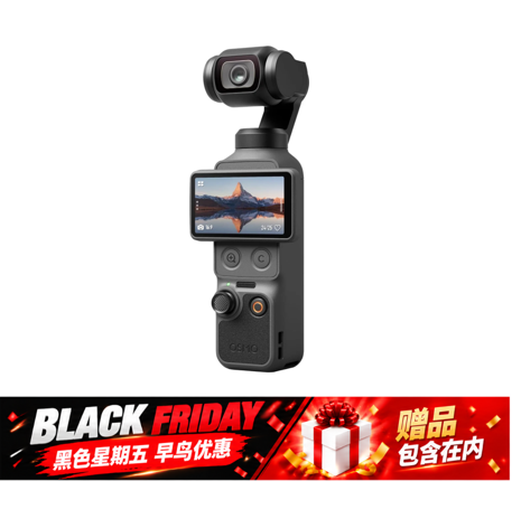
DJI Osmo Pocket 4 Standard Combo
The title describes this camera as suitable for photography; check that its controls and features work for still-life product photos of candles.
The product title lists a 1″ CMOS sensor, 4K/240fps, 3-axis stabilisation, 2× lossless zoom, 107GB of built-in storage and a 2″ rotating screen.
Joybuy
 No image available
Komery W6
The title describes a digital camera with optical zoom; check that its specifications suit the framing you want and still-life candle photos.
The product title lists 12× optical zoom, 4K, Wi-Fi and 64MP.
Joybuy
 No image available
DJI Osmo Pocket 3
The title describes the camera as suitable for photography; check that its video-focused features suit your product photography needs.
The product title lists a 1″ CMOS sensor, 4K/120fps, 3-axis stabilisation and a 2″ rotating touchscreen.
Joybuy
 No image available
Sony ZV-E10 + 16-50mm Zoom Black
This kit includes a zoom lens for a range of framing options; check the lens specifications if capturing small details is important.
The product name lists a 16–50mm zoom lens.
Joybuy
 No image available
Sony Alpha A6100 + 16–50mm f/3.5-5.6 OSS II
The product name lists a zoom lens for a range of framing options; check the lens specifications if you need close-ups of small candle details.
The product name lists a 16–50mm f/3.5-5.6 OSS II lens.
Joybuy
Frequently asked questions
Do you need a macro lens for small decorations?
Not for every photo. Compare the magnification and focusing distance of the exact lens with the smallest detail you want to capture. Canon specifies a maximum of 1:2 for the RF 35mm F1.8 Macro, while Nikon and Fujifilm list 1:1 for the macro lenses discussed here.
How can you keep the colour consistent across different candle photos?
If possible, use the same lighting set-up each time and check the white balance against a neutral reference. Nikon explains how automatic white balance and a setting based on a white card can produce different results; also compare the photo with the candle’s actual colour.
What changes when you light the candle for a photo?
The flame is much brighter than its surroundings, so assess the exposure of each separately. Place the candle securely and away from flammable materials and heat sources, as the fire service advises; never leave a lit candle unattended.
What are your rights when buying a camera online in the Netherlands?
If you buy online as a consumer from a trader, ACM ConsuWijzer says you generally have a statutory cooling-off period of up to 14 days after delivery, subject to legal exceptions. The product must also meet what you can reasonably expect of it; if there is a fault, contact the seller about your statutory guarantee. These consumer rights do not necessarily apply to business purchases.


