Who is this buying guide for?

Online shop owner with a small photo table

You want consistent photos that fit the whole candle holder in the frame, without having to adjust your set-up for every shot. A tripod can help you keep the composition consistent, as Canon UK explains in its product photography tips.

Maker who wants to show off the finish

As well as an overall view, you want to photograph engravings, glaze or material texture up close. So compare a lens’s magnification and focusing capabilities.

Photographer of shiny candle holders

You want room to control the lighting and reflections, because a shiny surface can reflect the camera or its surroundings. Sony explains that working distance is the space between the front of the lens and the subject.

What should you look for when choosing?

Close-up lens for overall shots

A good fit if: you mainly photograph the whole candle holder and only want to show a detail occasionally.

Trade-off: a wider angle of view can be practical on a small photo table, but magnification may be lower than with a 1:1 macro lens.

Macro lens around 90–105 mm

A good fit if: small decorations or engravings matter and you can keep enough distance for an overall shot.

Trade-off: according to their manufacturers, the models mentioned offer 1:1 magnification, but you won’t need that for every product photo. Also check the working distance available for your lighting.

Macro above 1:1

A good fit if: you want to show very small components or surface textures larger in the frame, and the lens mount is compatible with your camera.

Trade-off: higher maximum magnification doesn’t automatically make a lens more suitable for a photo of the whole candle holder.

What to consider What to look for Who should pay particular attention?
Mount and camera Check your camera’s exact lens mount and sensor format. A model may be available in several versions. I want to make sure the lens fits my existing camera first. Around 29% of consumers put compatibility first.
Fitting the whole product in the frame Measure your largest candle holder and the distance available on your photo table, then compare this with the lens’s angle of view. I want to fit different candle holders completely in the frame on a small table. Around 24% of consumers prioritise framing the full product.
Room for lighting Compare the working distance in front of the lens for your desired framing. This is not the same as the focusing distance measured from the sensor. I want to be able to control the lighting and reflections around shiny candle holders; around 18% of consumers put this at the top of their list.
Detail and depth of field Match the maximum magnification to the smallest detail you want to show. If you’re using focus stacking, check that your camera and editing software support it. I want to show small engravings clearly, perhaps using several focus-stacked images. Around 17% of consumers focus mainly on detail and depth of field.
Complete photography set-up Check what’s included and allow for any extra support and lighting your set-up may need. I weigh up the lens against the support and lighting I need. Around 12% of consumers prioritise the complete set-up.

Common buying mistakes

  • Assuming every macro lens offers 1:1 magnification

    Maximum magnification varies by model. Canon specifies a maximum of 0.5× for the RF 35mm and 1.4× for the RF 100mm.

    Choose magnification to suit the smallest detail you actually want to photograph; don’t choose a lens based on the word ‘macro’ alone.

  • Confusing focusing distance with working distance

    Minimum focusing distance is measured from the sensor; working distance is the space between the front of the lens and the candle holder. That space can be important when positioning lights and controlling reflections.

    Check the working distance at the magnification you want to use, then test the lighting with your own set-up.

  • Considering only the lens when planning your set-up

    A lens on its own won’t give you consistent framing or controlled lighting. If you’re focus stacking, successive images also need to stay properly aligned.

    Plan for support and lighting too, and check which accessories come with the lens. Canon recommends a tripod as a way to keep your composition consistent.

Brands to compare

Canon

Canon offers RF lenses for both overall shots and higher macro magnification.

  • Canon specifies a maximum of 0.5× for the RF 35mm and 1.4× for the RF 100mm.
  • These are model specifications, not an independent comparison of image quality. Check that the RF mount is compatible with your camera.

Sony

The FE 90mm F2.8 Macro G OSS, model SEL90M28G, is an E-mount option for detail photography.

  • Sony specifies 1:1 magnification and, in its macro guide, gives a working distance of around 13 cm for this model.
  • That working distance doesn’t guarantee that you can photograph every candle holder without reflections using your lighting.

Nikon

For Nikon Z, there’s the MC 50mm for mixed use and the longer MC 105mm.

  • Nikon specifies 1:1 magnification for both models.
  • According to Nikon, when focusing very close, the front of the MC 50mm is around 5 cm from the subject. Check whether that leaves enough room for your lighting set-up.

Sigma

The 105mm F2.8 DG DN MACRO | Art is available in separate Sony E and L-Mount versions.

  • The manufacturer lists both mount versions.
  • Check the full version details when ordering. Sigma’s claims about sharpness come from the manufacturer and are not independent confirmation of performance with candle holders.

OM SYSTEM

The M.Zuiko Digital ED 60mm F2.8 Macro is an option with a Micro Four Thirds mount.

  • The OM Digital Solutions manual specifies 1:1 magnification and a focusing distance of 0.19 m at that ratio.
  • The 0.19 m is measured from the sensor, so it isn’t the clear space in front of the lens. This version won’t fit directly onto the other mounts mentioned.

Joybuy lenses for product photography

Below are Sony E lenses with different focal lengths and uses. Check the stated magnification before choosing one for fine macro details; the product names don’t identify these models as macro lenses.
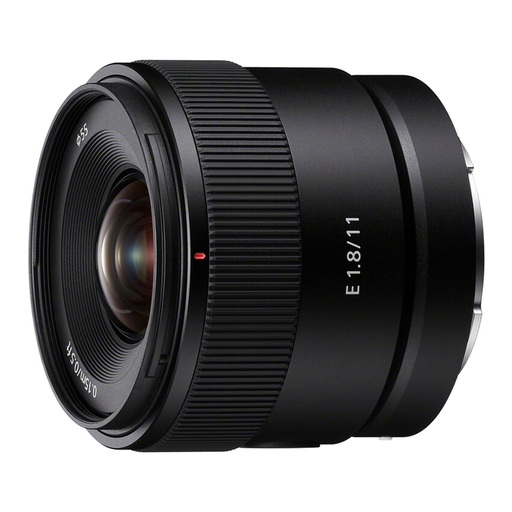
Sony E 11mm F1.8 APS-C wide-angle lens SEL11F18

Sony E 11mm F1.8 APS-C Wide Angle Prime Lens (SEL11F18)

Worth considering if you’re looking for a wide-angle lens for product photography with your Sony E camera; check that the magnification suits the details you want to show.

11 mm; F1.8; APS-C; fixed focal length.

View at Joybuy

Sony E 50mm f/1.8 OSS Black lens

Sony E 50mm f/1.8 OSS Black

Worth comparing if you’re looking for a fixed focal length for product and close-up photography with a Sony E camera; check in advance what magnification you need for macro details.

50 mm; f/1.8; OSS.

View at Joybuy
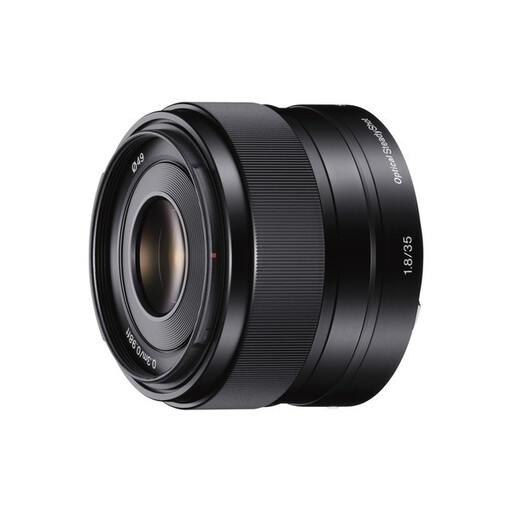
Sony SEL 35mm F1.8 OSS lens

Sony SEL 35mm F1.8 OSS

Worth comparing if you’re considering a fixed focal length for product photography with a Sony E camera; assess the magnification separately if you want to capture small details filling the frame.

35 mm; F1.8; OSS.

View at Joybuy
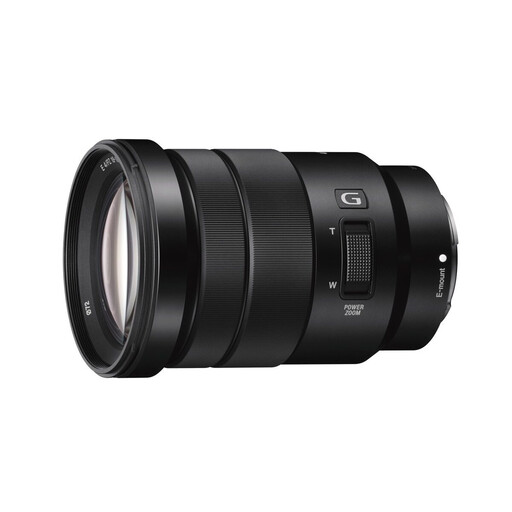
Sony E PZ 18-105mm f/4 G OSS lens

Sony E PZ 18-105mm f/4 G OSS

Worth considering if you want to adjust your framing between product shots; check that the zoom range suits the space available on your photo table and the detail shots you want to take.

18–105 mm zoom range; constant f/4; OSS.

View at Joybuy

Frequently asked questions

Do I always need a 1:1 macro lens to photograph the whole candle holder?

No, not if you mainly photograph the whole candle holder and don’t need high magnification for close-ups. Measure the product and check that it fits fully in the frame from the distance available.

Why isn’t the minimum focusing distance the same as the space needed for a lamp?

Focusing distance is measured from the subject to the image sensor, whereas working distance is measured to the front of the lens. If you need room around a shiny candle holder, the working distance at your intended magnification is the measurement that matters.

How can I keep a series of online shop photos consistent and details sharp?

A tripod can help you keep the framing and background consistent. If a single shot doesn’t capture enough depth in focus, you can combine images taken at different focus distances. Check that your camera and editing software support this.

What warranty and additional costs should I check when buying a lens?

Check what’s included, the delivery costs and the seller’s warranty terms. Business.gov.nl distinguishes between statutory warranty and additional commercial warranties; different terms may apply to business purchases than to consumer purchases.

Are there any UK rules on how I present candle holders in my online shop?

When selling to consumers, product information must be clear and accurate. Business.gov.nl also highlights the ban on misleading claims, so make sure your photos and description together represent the product on offer accurately. There is no special licence requirement for a macro lens.
