
Product photographer
Photographs several candle holders and wants to achieve consistent framing, backgrounds and lighting. Canon Netherlands discusses using a tripod for a consistent product composition.


If you want a single device without a separate lens, check whether a compact camera with a macro mode can frame the candle holder large enough from your shooting position. For more flexibility over framing and focusing, compare a mirrorless camera with the lens you actually need. A tripod and control over window light and reflections are important considerations; Canon Netherlands recommends using a tripod for consistent product photos. Manufacturer specifications describe features, but they do not provide a direct comparison of image quality in this setup.
Photographs several candle holders and wants to achieve consistent framing, backgrounds and lighting. Canon Netherlands discusses using a tripod for a consistent product composition.
Wants to capture texture, edges or decorations close up, so needs to consider the lens’s focusing and framing capabilities. OM SYSTEM and Nikon Netherlands outline dedicated options for macro photography.
Wants to photograph by a window without having to choose a camera body and separate lenses straight away. The Consumers’ Association describes a compact camera as a camera with a fixed lens; OM SYSTEM lists macro modes for the TG-7.
A good fit if: you want a single device and its fixed lens can frame the candle holder as you want.
Consider: you cannot change the lens, so check the framing and shooting distance. OM SYSTEM lists macro modes and RAW shooting for the TG-7.
A good fit if: you want to photograph different sizes or use different framings, and choose a lens to suit.
Consider: assess the body and lens as a complete combination; a standard lens is not automatically a macro lens. Canon lists RF and RF-S lenses for the EOS R50, while the NIKKOR Z MC 50mm f/2.8 is a separate lens for Nikon Z cameras.
A good fit if: you often want to show fine details across different focus planes and are happy to use a specific technique.
Consider: the feature does not remove the need to check your lens and setup. OM SYSTEM lists focus stacking for the OM-5 Mark II; keep the camera and subject still while taking the shots.
| What to consider | What to look for when buying | Who is this important for? |
|---|---|---|
| Reflections and exposure | Check whether you can adjust exposure and white balance, and whether a filter will fit the lens. Canon describes reducing reflections on non-metallic surfaces such as glass; this is not a general solution for metal parts. | I want to preserve shine and texture by a bright window without losing detail in the shadowed areas. Around 33% of consumers prioritise reflections and exposure. |
| Capturing fine details in focus | Check the focusing distance, magnification, desired framing, lens mount and whether a lens is included. | I want to capture small decorations close up and large enough in the frame, with careful attention to focus. Around 27% of consumers prioritise close-up details. |
| Consistent series of photos | Check that the camera and tripod will fit your setup, and that you can easily set the framing again. Canon Netherlands recommends a tripod for a consistent product composition. | I want to photograph several candle holders with roughly the same framing and background. Around 20% of consumers prioritise a repeatable setup. |
| Complete kit | Compare what’s in the box, the lens mount and the included lens. Sony lists the α6400 ILCE6400AB.CEC as body only. | I want to get started without having to find a suitable lens myself. Around 20% of consumers value a complete, manageable kit. |
A higher megapixel count will not solve an unsuitable focusing distance or distracting reflections. The lens and how you control the window light matter too when photographing candle holders.
First, check that the candle holder is framed well from your shooting position and that the lens can focus on the details you want to capture.
A body-only version does not necessarily include a lens. Sony lists the α6400 ILCE6400AB.CEC as body only; the contents can also vary between offers for other mirrorless cameras.
Before buying, check the lens mount and whether the lens you need is actually included.
Being able to focus close up does not automatically mean the whole candle holder will fit in the frame or that you can control reflections well.
Try out your desired framing and working distance in a window setup similar to the place where you plan to take your photos.
The TG-7 is a compact camera with a fixed lens; the OM-5 Mark II is a separate mirrorless camera option.
The EOS R50 is a mirrorless camera compatible with RF and RF-S lenses.
The Z50II can be paired with separate Z lenses, including a macro lens.
The α6400 ILCE6400AB.CEC is an APS-C mirrorless camera with an E-mount.
This selection includes digital cameras and models with an included zoom lens. Check each product to make sure its lens, controls and features are suitable for photographing stationary products in window light.
 No image available
The product description mentions photography and close-ups, which may suit you if you want to vary your framing.
12× optical zoom; 4K; 64 MP; Wi-Fi.
 No image available
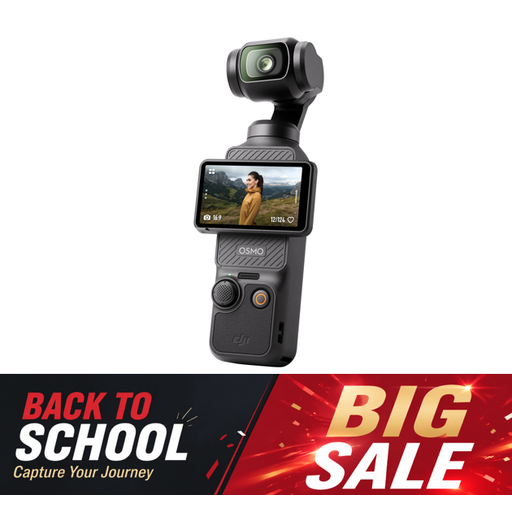
The product listing mentions photography and vlogging; consider whether its video-focused features suit your product photography.
1-inch CMOS sensor; 4K/120fps video; mechanical 3-axis stabilisation; 2-inch rotatable touchscreen.
 No image available
The product name indicates that a zoom lens is included; check whether its range suits your desired framing and shooting distance.
APS-C sensor with 24.2 MP; 16–50mm zoom lens.
 No image available
The product name indicates that a lens comes with the camera; check whether it is the lens you need for your candle holder and shooting distance.
16–50mm f/3.5–5.6 OSS II lens.
Not necessarily. First, check whether the fixed or included lens frames the whole candle holder as you want from your shooting position. A separate macro lens is mainly useful if you want to capture small decorations much larger.
For a series, use a tripod and keep the framing and background the same; Canon Netherlands recommends a tripod for consistent product photos. Recheck the exposure if the window light changes, as a tripod will not prevent that change.
No. Canon describes reducing reflections on non-metallic materials such as glass; it does not promise the same result on metal parts. Also check that the filter fits the lens you have chosen.
For consumer purchases, the Dutch government says you are entitled to a product that works properly; there is no fixed statutory warranty period in the Netherlands, and you should contact the seller if there is a fault. For online purchases from a business, you usually have a 14-day cooling-off period; check the applicable terms and exceptions. This does not apply to business purchases.