
Canal photographer dealing with tricky light and dark contrasts
Wants to assess detail in light façades and dark quays, and adjust images afterwards if needed. Canon Europe describes RAW as a format that gives you room to make adjustments later.


First decide whether you want to preserve the reflection or reduce distracting glare. A polarising filter can reduce reflections on water, but it can also diminish the mirror image you want to capture. When photographing light façades beside dark quays, shooting in RAW and having control over exposure give you room to adjust your images afterwards. Then choose between a compact camera with a fixed zoom lens and an interchangeable-lens camera. No camera can make moving water perfectly still on its own: Canon Europe recommends finding a sheltered spot or waiting for the wind to die down.
Wants to assess detail in light façades and dark quays, and adjust images afterwards if needed. Canon Europe describes RAW as a format that gives you room to make adjustments later.
Wants to decide how much of the reflection remains visible. Nikon explains that a polarising filter can reduce reflections on water; that may not be what you want if the reflection itself is your subject.
Wants to take a camera along on a walk and weigh up whether a built-in zoom lens will do or whether the choice of interchangeable lenses matters more. The Consumers’ Association lists size and ease of use among the factors to consider when choosing a camera.
First decide whether you want to keep the reflection or reduce glare. Then consider light and dark contrasts, portability and the conditions in which you’ll be shooting handheld.
| What to consider | What to look for when buying | Who is this important for? |
|---|---|---|
| Detail in contrasting light | Check that the camera supports RAW and that you can assess and adjust exposure while taking photos. | When I photograph light façades beside dark quays, I want to be able to adjust the exposure and edit images afterwards. Around 33% of consumers give light and dark contrast top priority. |
| Reflection or glare | Decide what you want to see in the water. If you’re buying a screw-on filter, check the filter thread on the exact lens. | If the reflection itself is my subject, I want to avoid a filter making it less visible. Around 27% of consumers want to control reflections. |
| Taking it along on walks | Compare the complete camera and lens. A fixed zoom lens and an interchangeable-lens camera offer different options. | When I’m walking around the city, I want to take a camera kit without carrying lots of unnecessary extras. Portability comes first for around 20% of consumers. |
| Handheld photography | Check whether stabilisation is in the camera body or the supplied lens, and the conditions under which the quoted performance applies. | When I’m shooting handheld in lower light, I look for ways to reduce the effect of my own camera movement. Around 20% of consumers make this their top priority. |
A polarising filter can reduce reflections on water, but it can also diminish the mirror image you’re trying to photograph.
First decide whether the reflection is your subject or whether you want to reduce distracting glare. Then check the filter thread on your chosen lens.
A filter with the wrong diameter won’t fit the lens directly.
The angle of view, filter size and any stabilisation also depend on the lens you choose. So a camera body alone won’t tell you which lens comes with the kit.
Compare complete kits and check exactly which lens and accessories are included.
You may need to buy a compatible lens, filter or other accessory separately.
Stabilisation is designed to reduce camera movement. Wind and ripples can still distort the water’s surface and the reflection.
Check the conditions attached to stabilisation claims and, if necessary, find a sheltered spot or wait for calmer water.
Canon offers cameras in several formats: an interchangeable-lens camera with RF and RF-S lenses, and a compact camera with a built-in zoom.
The Sony α6700 is an interchangeable-lens camera with an E-mount, for those looking for RAW and in-body stabilisation.
Nikon offers the Z50II in a kit that includes a Z DX 16-50mm VR lens, among other options.
These camera options range from portable models to a Sony camera with a zoom lens. For each model, check whether the listed features suit the way you take photos and the kind of reflection you want to capture.
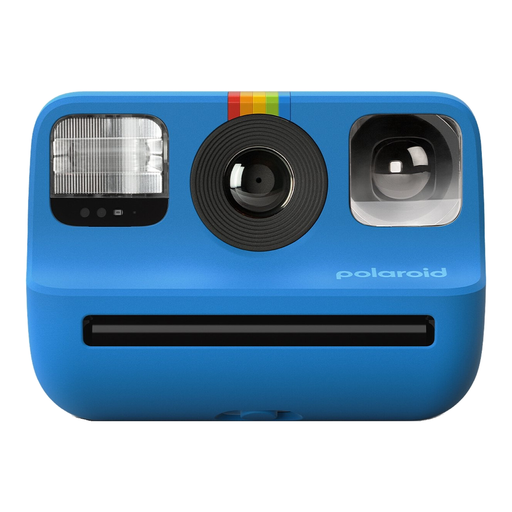 Image unavailable
For anyone looking for a portable instant camera for photos on the go, with prints they can take with them.
Uses Polaroid Go film, which is required to take and print photos.
The product description lists a self-timer and double exposure.
 Image unavailable
A pocket camera for anyone looking for a compact camera for photos and video.
The product name lists a 1-inch CMOS sensor, 4K/240fps, 3-axis stabilisation, 2× lossless zoom and 107 GB of built-in storage.
The product name also lists a 2-inch rotating screen.
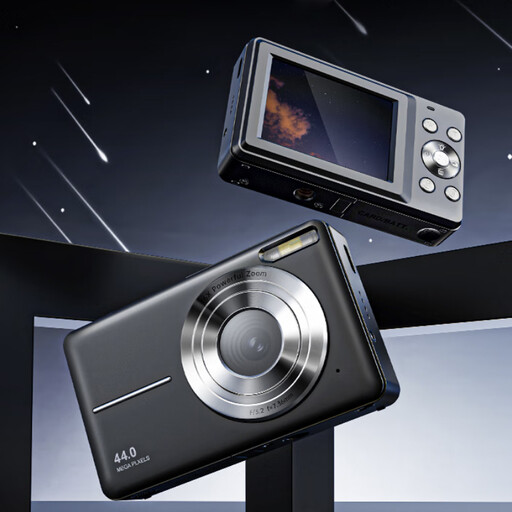 Image unavailable
A pocket camera for anyone looking for a compact model for photos and video.
The product name lists 4K, 44MP and 16X Zoom. The product description mentions autofocus and a digital zoom function.
According to the product description, a microSD card isn’t included.
 Image unavailable
For anyone looking for a Sony camera with a supplied zoom lens for photos on the go.
The product description lists a 24.2 MP APS-C sensor and a 16–50mm OSS kit lens.
The listed Active Mode stabilisation is for video. According to the product description, a memory card isn’t included.
Not necessarily. Nikon explains that a polarising filter can reduce reflections from water. This can help if glare is distracting, but if the reflection is your subject, try a shot without the filter too.
Not on its own. For a clear reflection, Canon Europe recommends finding a sheltered spot or waiting for the wind to die down. Your choice of camera can’t remove the ripples themselves.
Check the filter thread on the exact lens before buying a filter. Canon lists a 49 mm filter diameter for the RF-S 18-45mm; that size doesn’t automatically apply to another lens.
According to the Dutch government, if you have a problem with a product, you should contact the retailer for a solution, not the manufacturer. Your statutory rights and any additional manufacturer’s guarantee are separate rights.
This depends, among other things, on how you use and share the photo. The Dutch Data Protection Authority distinguishes between strictly personal use and wider or business use. According to the regulator, the exception for personal or household use doesn’t apply if, for example, you share images on a public page. So consider publication separately from taking a photo for your own private use.