
Detail-focused canal photographer
You want to capture subtle lines and patterns in a reflection, and choose the focus and exposure yourself. Canon Netherlands explains how still and flowing water produce different reflections.


A fixed-focal-length compact camera is a good fit if you can change your position and want to control the framing and exposure yourself. Optical zoom is more practical when you need different crops from a single spot on the canal bank. Check the exact model’s angle of view, RAW and exposure options, and optical zoom range. A stated sensor resolution or image stabilisation won’t guarantee sharp detail in moving water, and a polarising filter may reduce the reflection you want to capture.
You want to capture subtle lines and patterns in a reflection, and choose the focus and exposure yourself. Canon Netherlands explains how still and flowing water produce different reflections.
You can’t always get closer and want to switch between views of façades, water and reflections. So compare the stated optical angle of view and zoom range of the exact models.
You want to take photos on a city walk without carrying interchangeable lenses. Consumentenbond describes compact cameras as having a fixed lens and usually being small and lightweight.
A good fit if: you can change position along the canal and want to use a fixed crop. The RICOH GR IV has an angle of view equivalent to around 28 mm; the FUJIFILM X100VI is equivalent to 35 mm.
Trade-off: to get a different crop, you’ll need to move or crop the image afterwards; these models don’t have optical zoom.
A good fit if: you want to switch between a wide canal view and a tighter crop from the same spot. Canon specifies an equivalent range of 24–100 mm for the PowerShot G7 X Mark III.
Trade-off: the Sony RX100 VII has a different stated range of 24–200 mm equivalent; also compare the aperture at the focal length you plan to use.
A good fit if: you want a tighter view of details on the opposite bank from the same spot. Sony specifies an optical range of 24–200 mm equivalent for the RX100 VII.
Trade-off: Sony gives the aperture as f/2.8 at the wide end and f/4.5 at the telephoto end. Bear this in mind when shooting in low light.
| Consideration | What should you check? | Who is this important to? |
|---|---|---|
| Fine detail and shooting control | Check RAW support, focus and exposure modes, and whether the fixed angle of view suits where you usually shoot from. | If I want to capture subtle patterns in a reflection, I look at focus and exposure rather than just the megapixel count. Around 36% of consumers put detail and shooting control first. |
| Framing from the canal bank | Compare the optical range in mm equivalent with the scene and distance to your subject; distinguish optical zoom from digital zoom. | If I can’t get closer to a reflection, I want to be able to change the crop from where I’m standing. Around 29% of consumers put optical framing first. |
| Taking it on a walk | Check the dimensions and ready-to-use weight of the exact model; also see whether the screen or viewfinder is comfortable to use from where you shoot. | If I’m taking the camera on my usual canal walk, size and ease of handling matter a lot to me. Around 21% of consumers put portability first. |
| Exposure and moving water | Check the shutter speed controls and whether the model has an ND filter; decide whether you want a still reflection, visible movement or sharply frozen patterns. | If I want to control how movement in the water looks, I focus on the shutter speed and the effect I’m after. Around 14% of consumers put control over water movement first. |
A polarising filter can reduce reflections on water, weakening the reflection you want to photograph.
First decide whether you want to emphasise the reflection or see through the water. Then check whether a filter with a suitable mount will fit the exact camera model.
If you want to use a filter, you may need to buy a suitable filter and mounting system separately.
A mention of zoom doesn’t tell you whether the camera magnifies the image optically or crops it digitally. That difference matters if you want a different crop of something on the opposite bank.
Compare the optical range in mm equivalent for the exact models, and check how digital zoom is listed separately.
A slower shutter speed can emphasise movement in water, but that’s different from capturing fleeting ripples sharply. Canon explains that still water is suited to a calmer mirror effect.
Choose the exposure to achieve the image you want, then review a test shot of the moving water on the spot.
The GR IV suits photographers looking for a fixed, relatively wide angle of view of around 28 mm equivalent and manual shooting controls.
The X100VI suits photographers looking for a fixed 35 mm equivalent angle of view, RAW and direct exposure controls.
The PowerShot G7 X Mark III is worth considering if you want to create different crops with one compact camera.
The RX100 VII is worth considering if you want a greater optical zoom range from a fixed spot on the canal bank.
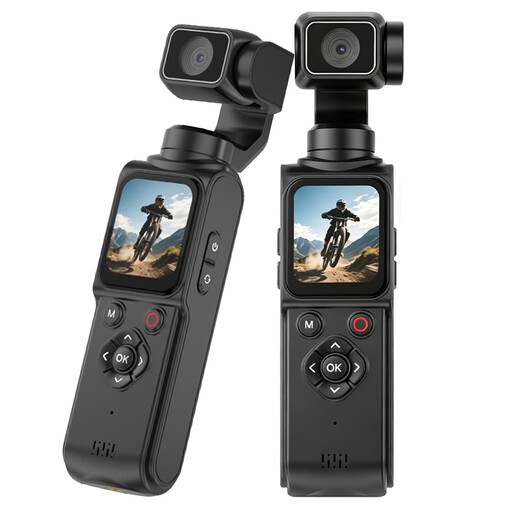
These Joybuy products include compact digital cameras and vlog cameras. For canal reflections, check each model’s focus options, optical zoom range and controls. The stated megapixel count alone doesn’t tell you how much fine detail will be visible in moving water.
 No image available
A vlog camera for anyone who also wants to take photos while travelling or taking part in sports. Check that the controls and angle of view suit the way you want to frame shots from the canal bank.
The product name lists 64 MP and a 330° rotating lens. These specifications don’t guarantee fine detail in moving water.
 No image available
A portable camera described in its product name as suitable for photography and vlogging. Check that its stated zoom range suits the way you plan to shoot from your chosen spot.
The product name lists 80 MP and 18× zoom, but doesn’t say whether the zoom is optical or digital. Check before relying on it for a tighter crop.
 No image available
A portable camera for photography and travel. For reflections, check that the focus controls and angle of view suit the way you like to take photos.
The product name lists 80 MP and 18× zoom. Check whether this range is optical or digital before using it to frame shots differently from one spot.
 No image available
A compact vlog camera for anyone who wants to take still photos as well as shoot video. Check that the controls suit the compositions you want to capture from the canal bank.
The product name lists a 1-inch CMOS sensor, 4K/120fps video and 3-axis stabilisation. These video specifications don’t guarantee fine detail in photos of moving water.
 No image available
A compact pocket camera for photography and video on the go. Check that the focus and framing suit the details you want to capture.
The product name lists 44 MP and 16× zoom. Check whether the zoom is optical or digital before planning shots from the opposite bank.
Not if you want to keep the reflection clearly visible: a polarising filter can reduce reflections on water. First decide what effect you want, then check whether a filter is suitable for your exact camera.
Find shelter or wait for the wind to die down to try for a calmer reflection. Canon Netherlands explains that still water is suited to a peaceful mirror effect; also check your focus and review the shot.
For online purchases, you’ll generally have a statutory 14-day cooling-off period after delivery, with some exceptions. ACM ConsuWijzer also states that the statutory guarantee applies if a product doesn’t meet reasonable expectations when used normally. Check who the seller is and which terms apply to your purchase.
It depends on how the photo is used and shared. According to the Dutch Data Protection Authority, the exception for personal or household use doesn’t apply when images of identifiable people are shared more widely; a legal basis under the GDPR may be required. This doesn’t mean every canal photo featuring people is automatically prohibited or allowed.