If your priority on a walk is to capture a wide reflection quickly while carrying as little as possible, a compact camera with a fixed angle of view may suit you. If you also want to frame details from the same spot, compare mirrorless cameras with zoom lenses. Ricoh lists the GR IV as having a fixed angle of view equivalent to around 28 mm on a full-frame camera, while the Fujifilm and Nikon kits mentioned come with zoom lenses. Compare the weight and angle of view of the complete set. A polarising filter can reduce reflections, so don’t use one automatically when the reflection itself is your subject.
Which camera is right for you?
Walker who wants a camera ready to go
You want to carry as little as possible on a short walk and capture a reflection quickly, and are happy to work with one fixed angle of view. The Dutch Consumers’ Association discusses portability as a factor when choosing a camera. Ricoh specifies a fixed angle of view equivalent to around 28 mm on a full-frame camera for the GR IV.
Photographer who wants to vary the framing
You want to photograph both the canal and reflections of individual buildings or boats without changing your position. So compare the lens included in the complete kit: the Fujifilm X-M5 kit mentioned comes with a 15–45 mm zoom, while the Nikon Z50II kit includes a 16–50 mm zoom.
Early-morning walker in changeable light and weather
You often take photos in low light or damp conditions and want to know which features of the camera and lens matter. The Dutch Consumers’ Association explains how the lens aperture affects the amount of light; OM SYSTEM describes protection for the OM-5 Mark II camera, but that doesn’t automatically tell you anything about every lens.
What should you look for when choosing?
First decide whether convenience or framing flexibility matters most on your walk. Then compare the complete camera-and-lens combination for the light and weather conditions you expect.
Compact camera with a fixed angle of view
Choose this if: you want to walk without carrying a separate lens and often photograph a wider canal scene.
The trade-off: you can’t zoom optically or change lenses, so check whether the fixed angle of view suits where you usually take photos.
Mirrorless camera with a standard zoom
Choose this if: you want to switch between a wide view and a tighter crop during the same walk. The Fujifilm X-M5 and Nikon Z50II kits mentioned include a zoom lens.
The trade-off: assess the camera and lens together for portability. With the zoom lenses mentioned here, the maximum aperture changes as you zoom.
Mirrorless camera for wet-weather walks
Choose this if: you often take photos in wet conditions and want to factor in weather protection.
The trade-off: OM SYSTEM describes protection for the OM-5 Mark II camera. Check separately whether the lens you choose is suitable for the conditions you plan to use it in.
| What to consider |
What to look for when buying |
Who is this important for? |
| Easy to carry |
Compare the ready-to-use weight, including the lens, battery and memory card, and decide whether one fixed angle of view is enough. |
If I want to grab a camera quickly on a short walk, what matters most is how easy the complete set is to carry. Around 40% of consumers put portability first. |
| Angle of view and framing |
Check the full-frame-equivalent angle of view or the lens actually included; consider whether you also want to photograph details from one spot. |
If you want to switch between a wide reflection and a detail from the same position, a suitable zoom is especially useful. Around 30% of consumers prioritise framing flexibility. |
| Low morning light |
Compare the maximum aperture at the zoom setting you want and check whether stabilisation is in the camera, the lens or both. |
If I’m taking handheld photos early in the morning, I look at both the lens and stabilisation. Stabilisation won’t automatically compensate for movement in the water or boats. Around 20% of consumers prioritise low-light photography. |
| Damp conditions on your walk |
Check the protection claims and conditions of use for both the exact camera model and the lens you choose. |
If I often head out in wet weather, I want to know what the whole combination can handle, not just the camera body. Around 10% of consumers make moisture protection their top priority. |
Pitfalls to avoid
-
Buying a polarising filter to make a reflection stand out
A polarising filter can actually reduce reflections on water. Nikon describes this effect for polarising filters.
Take some photos without a filter first, and only use one deliberately if you want to reduce glare rather than keep the reflection.
Buying a filter you don’t use adds an accessory without delivering the effect you want.
-
Comparing only the camera body’s weight or stabilisation
The weight of the body alone doesn’t tell you how heavy the complete set will be. Stabilisation may also be in the camera or the lens: Canon specifies that the EOS R50 has no sensor-shift stabilisation, while Nikon lists stabilisation in the lens included with the Z50II kit mentioned.
Compare complete, clearly specified kits and check where the stabilisation is located.
-
Treating an older camera test as a current ranking
The Dutch Consumers’ Association states that its camera test was last updated on 9 October 2025 and is marked as out of date. So it isn’t a current ranking of newer models.
Check the original test date and verify the specifications of the exact model you’re considering.
Brands to compare
Ricoh
The GR IV is a compact option if one fixed angle of view is enough for you.
- Ricoh specifies an APS-C sensor, sensor-shift stabilisation and a fixed angle of view equivalent to around 28 mm on a full-frame camera.
- The fixed lens doesn’t offer optical zoom, so consider whether its angle of view suits where you usually take photos.
Fujifilm
The X-M5 kit reviewed here pairs a compact mirrorless camera with an XC15–45 mm zoom lens.
- Fujifilm lists the X-M5 camera at 355 g and specifies the XC15–45 mm F3.5–5.6 OIS PZ as its kit lens.
- The camera weight quoted doesn’t include the complete ready-to-use set; the lens aperture varies with the zoom setting.
Nikon
The Z50II kit with the NIKKOR Z DX 16–50 mm VR offers a mirrorless option for varying your framing.
- Nikon says VR stabilisation is built into the included lens.
- The kit mentioned is different from a body-only purchase, so check which lens and accessories are included in the bundle.
Canon
The EOS R50 is an APS-C mirrorless camera for buyers who want to choose a suitable RF or RF-S lens themselves.
- Canon specifies a weight of around 375 g for the black camera, including the memory card and battery but without a lens.
- Canon doesn’t specify sensor-shift stabilisation for this model, so check the stabilisation and lens in the bundle you choose.
OM SYSTEM
The OM-5 Mark II is worth comparing if outdoor use and stabilisation are high priorities.
- OM SYSTEM lists the camera at 418 g including the battery and memory card, and describes stabilisation and weather resistance for the camera.
- These features don’t mean that every attached lens or bundle can be used in the same conditions; check the lens separately.
Cameras at Joybuy
These cameras are options to compare for photography on a walk, from fixed or wide angles of view to zoom lenses for different framing.
 No image available
DJI Osmo Pocket 4 Standard Combo
The stated 2× lossless zoom gives you an option for adjusting the framing on a walk.
The product title lists a 1″ CMOS sensor, 4K/240fps, 3-axis stabilisation, 107 GB of built-in storage and a 2″ rotating screen.
Joybuy
 No image available
KOMERY G7 5K, white
The stated 18× zoom is useful if you want to adjust the framing on your walk without changing position.
The product title lists 80 MP and 18× zoom.
Joybuy
 No image available
Songdian Pocket Camera 4K 44 MP, pink
The title describes it as a pocket camera, making it an option to compare if you’re looking for a compact camera to take with you.
The title lists 4K, 44 MP and 16× digital zoom.
Joybuy
 No image available
Sony ZV-E10 with 16–50 mm zoom lens, black
The included 16–50 mm zoom lens lets you frame different views if you want to capture both a wide scene and a detail from the same spot.
The product description lists an APS-C camera and a 24.2 MP sensor.
Joybuy
 No image available
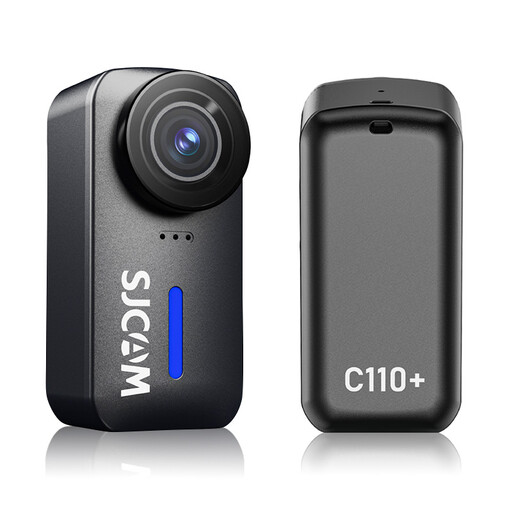
SJCAM C110+ 4K
The 170° wide angle of view is worth considering if you want to capture a broad stretch of the canal.
The product title lists 20 MP photos, gyro stabilisation and an f/1.8 aperture. According to the title, the stated water resistance to 30 m applies when used with the housing.
Joybuy
Frequently asked questions
Should you buy a polarising filter for reflections?
Not automatically. Nikon explains that a polarising filter can reduce reflections on water. If the reflection itself is your subject, first check how it looks in your photos without a filter.
How should you care for your camera after a damp walk?
Follow the instructions for use and care for the exact camera model and lens. Don’t assume the whole set is protected just because a claim applies to the camera body, and don’t use the camera beyond its stated operating limits.
Is a manufacturer’s warranty period the same as your legal guarantee in the Netherlands?
No. According to ACM ConsuWijzer, your statutory guarantee is separate from any retailer’s or manufacturer’s warranty. The retailer is responsible if a product doesn’t do what you could reasonably expect under normal use; there is no single fixed statutory period that applies to every camera.
Can you publicly share a canal photo showing identifiable passers-by?
Not without considering the privacy implications. The Dutch Data Protection Authority explains that identifiable people in images count as personal data. The exception for personal or household use doesn’t apply to sharing images publicly; the legal basis required in a particular case depends on how the photo is used.


