
Camper who just wants to say they’ve arrived
Wants to send a quick message after arriving and first checks whether their phone connection will do the job. ANWB Camping explains that a smartphone can create its own Wi-Fi hotspot using mobile data.


For a quick message to say you’ve arrived, your phone’s hotspot is often enough, provided you have mobile data at your pitch; ANWB Camping and Apple Support explain how a phone can share its mobile connection. A separate 4G MiFi is worth considering if you want to keep the connection separate from your phone or share it with more devices, but you’ll need a compatible SIM card and a charged battery. First, check your provider’s coverage at the campsite address: a router can’t create mobile coverage where there is none.
Wants to send a quick message after arriving and first checks whether their phone connection will do the job. ANWB Camping explains that a smartphone can create its own Wi-Fi hotspot using mobile data.
Wants to find out which mobile network works at their specific pitch. A faster router can’t make up for a lack of coverage; KPN points out that factors such as location and obstacles can affect the connection.
Wants to connect other devices as well as send an arrival message, and is comparing a MiFi with sharing a connection from one phone. TP-Link Netherlands says the M7000 and M7350 can connect up to 10 devices.
Choose this if: you want to send one quick message, your phone has mobile data and you don’t want to take an extra device with you.
Bear in mind: the hotspot uses your phone’s data allowance; Apple Support describes the iPhone hotspot as sharing your mobile connection.
Choose this if: you want to keep the connection separate from your phone or share it with several devices, and the chosen network has coverage.
Bear in mind: you’ll need a compatible SIM card and enough power; the stated battery life doesn’t guarantee how long it will last at the campsite.
Choose this if: there’s usable campsite Wi-Fi at your pitch and you don’t want to use mobile data.
Bear in mind: Wi-Fi at reception doesn’t guarantee a signal at every pitch; an extender only increases the range of an existing Wi-Fi network.
When choosing a hotspot for campsite arrival updates, coverage, quick set-up, sharing and data allowance can all make the difference.
| What to consider | What should you look for? | Who is this important for? |
|---|---|---|
| Coverage at your pitch | Check your provider’s coverage map for the campsite address, and bear in mind the effect of location and obstacles. | If I don’t have mobile coverage at my pitch, a separate router won’t solve the problem. Around 36% of consumers say coverage at their pitch is their top priority. |
| Sending a quick message | Try the hotspot function and check that your phone and plan allow you to share your mobile connection. | If I just want to send a quick message to say I’ve arrived, I don’t want to set up another device. Around 29% of consumers say ease of use is their top priority. |
| Sharing and power | Check how many devices can connect at once, along with the stated battery life and charging options. | If my fellow travellers also need a connection, I want to know whether one hotspot can handle enough devices and stay on for long enough. Around 21% of consumers say shared use and power are their top priorities. |
| Data allowance and costs while travelling | Check the SIM card’s terms and conditions; if you’re travelling outside the EU, ask your provider about its rates. | If I share internet at a campsite abroad, I want to avoid unexpected data use and charges. Around 14% of consumers say data allowance and costs while travelling are their top priorities. |
Your actual mobile connection depends in part on your location and any obstacles. A MiFi won’t help if the chosen mobile network has no usable coverage at your pitch.
Before you set off, check the coverage map for the network used by your SIM card at the campsite address. Treat it as a guide, not a guarantee of reception at your pitch.
An extender increases the range of an existing Wi-Fi network; a MiFi uses mobile data. They’re different solutions.
First decide whether you want to extend the campsite Wi-Fi or use a mobile connection instead.
A manufacturer’s maximum battery-life figure isn’t a guarantee of how long the battery will last with your own use.
Compare the specifications for the exact version, and make sure you have a way to charge it if you need the hotspot for longer.
TP-Link Netherlands describes the M7000 and M7350 as compact 4G MiFi models. The M7350 has a screen showing information such as data usage and battery status.
Tenda describes the 4G185 v4.0 as a portable 4G MiFi with a nano-SIM slot, USB-C and a screen.
D-Link describes the DWR-932C as a compact 4G router with a SIM card and rechargeable battery.
NETGEAR Netherlands lists portable 5G hotspots, including the Nighthawk M3.
This selection includes portable MiFi hotspots for sharing a mobile network connection, with 4G and 5G models. Check coverage, SIM card compatibility and the specifications of the exact version. The Dutch Authority for Digital Infrastructure states that radio equipment sold in Europe must meet the applicable requirements and carry a CE mark; check that the specific device has one.
 No image available
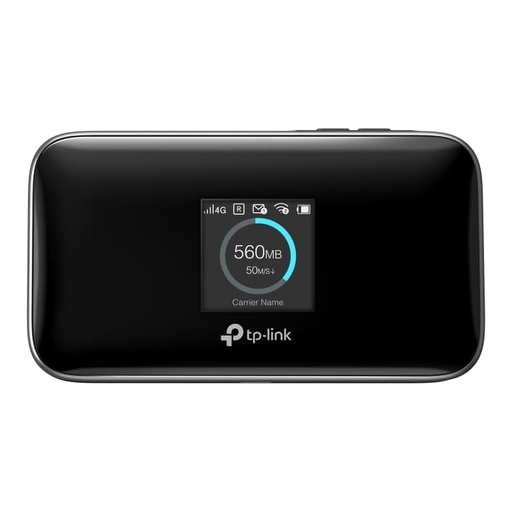
Could suit you if you want to share a separate mobile connection with several devices; check that the SIM card and network bands are compatible with your provider and campsite.
TP-Link Netherlands states that it supports up to 10 connected devices and offers up to 8 hours of use with a 2000 mAh battery; actual usage time varies.
The product name lists a download speed of 150 Mbps. This doesn’t guarantee a particular speed at your pitch.
 No image available
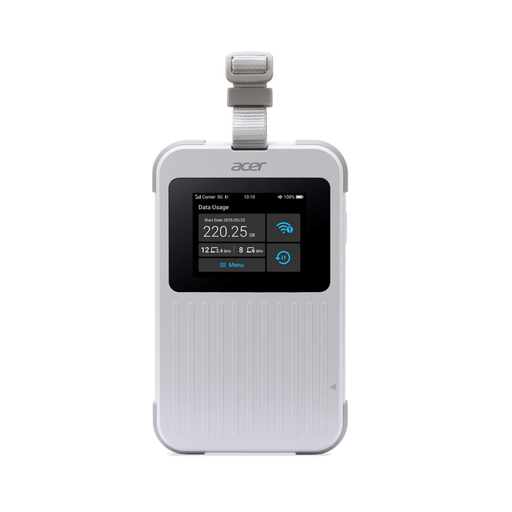
Could suit you if you want to connect lots of devices as well as send an arrival message; check that your provider, SIM card and location are compatible with this version.
The product name lists 5G, Wi-Fi 6E, nano-SIM and support for up to 32 connected devices.
 No image available
An option if you’re looking for a TP-Link router for mobile networks. Before buying, check that the exact version works with your SIM card and provider.
No, not if your existing mobile connection can send the message at the campsite. First check your provider’s coverage at the location; don’t choose based on 5G alone.
Before you leave, test the connection with the device you plan to use. On an iPhone, turn on Personal Hotspot and connect the other device using the network name and password shown. With a MiFi, insert a suitable, activated SIM card and follow the instructions for your model.
Use a password that’s hard to guess and install available device updates, as advised by the Dutch government. If you’re using a second-hand D-Link DWR-932C, also check the hardware revision and firmware: D-Link warned about older firmware on revision E.
Within the EU, roaming is generally charged at domestic rates, but your provider may apply a data limit or surcharge under certain conditions, as the Netherlands Authority for Consumers and Markets (ACM) ConsuWijzer explains. Rates may differ outside the EU; check your destination and your provider’s terms before you leave.
The router and mobile data plan are separate choices, so check the SIM card’s terms and conditions. In the Netherlands, you have statutory consumer rights in addition to any manufacturer’s warranty: according to the Netherlands Authority for Consumers and Markets (ACM) ConsuWijzer, the retailer must provide a solution under the applicable conditions if a product breaks down too soon during normal use.