
Vandaag of morgen in huis

Kwaliteit gegarandeerd

Welkomstaanbiedingen ontgrendelen: GRATIS bezorging | Tot 80% korting | Gratis 30 dagen JoyPlus-proefperiode
Download de app
Buying a camping tent sounds straightforward until you have to choose between a pop-up tent, lightweight tent, family tent or trekking tent. Marketing copy often focuses on quick assembly, waterproofing or UV protection. However, these terms only become meaningful when you check the underlying specifications.
For campers in the Netherlands, changeable weather, limited luggage space and wet ground are particularly important considerations. The right tent for a weekend at a campsite is not automatically suitable as a hiking tent or for a long backpacking trip.
A specification such as PU2000 mm or PU4000 mm refers to the fabric’s waterproof rating. This is useful information, but it is not a complete guarantee against leaks. Seams, zips, the groundsheet, the condition of the coating and how tightly you pitch the tent also play a role.
Therefore, check:
A waterproof tent for summer and autumn use is not necessarily a 4-season tent. A 3-season tent is generally designed for spring, summer and autumn, while a 4-season tent is also intended for winter conditions according to the product specifications. Always check the limits; no tent is designed for conditions beyond its stated specifications.
The stated capacity usually refers to the number of sleeping places. Luggage, wet jackets and room to move are not always taken into account. A tent for 2–5 people may therefore be suitable for a family with young children, but feel cramped for five adults.
As well as the capacity, look at:
A family tent with a canopy or integrated tarp provides more living space, but is often heavier and bulkier when packed than a 2-person tent.
A pop-up tent can be practical for a campsite, picnic or short stay. However, automatic models must also be secured with pegs and guy lines. A tent that pops open quickly but is not properly anchored can become unstable in windy conditions.
Also pay attention to packing it away. A folding tent should be stored dry and clean. Repeatedly using exactly the same folds may, according to the product instructions, put strain on the coating and fabric.
For walking and backpacking, weight and packed size are often more important than extra living space. An ultralight tent weighing approximately 1 to 2 kg is easier to carry over longer distances. The trade-off is usually less interior space.
A tent weighing 4 to 8 kg is better suited to car camping. For families, a larger model weighing around 10 kg can be practical when transporting the tent to a campsite, but less suitable for a trip where you carry everything on your back.
Many camping tents use polyester with a PU coating and fibreglass poles. This is a common combination for recreational camping. Trekking tents often use aluminium poles and ripstop nylon. These materials can help reduce weight, but they also require more careful use on sharp ground.
When checking a tent for camping and walking, look at:
Large mesh doors and ventilation openings help air circulate through the tent while keeping insects out. A blackout tent can reduce light and heat, but a dark inner tent is not a substitute for ventilation. Keep the openings suitably open for the weather conditions.
Some models carry a UPF50+ rating or a claim about UV blocking. Attribute this to the manufacturer: according to the brand’s product information, the fabric in question provides this protection. Treat UV protection as an additional feature, not as a reason to remain exposed to the sun for long periods.
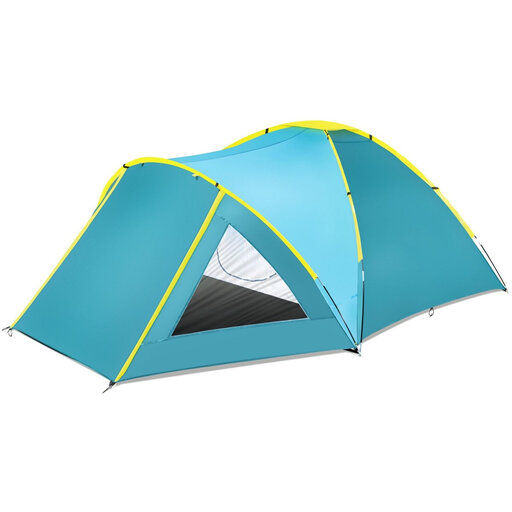
Why it suits this profile: A practical choice for weekend camping and short holidays where ease of packing and extra storage space are important.
The product description specifies a flysheet with PU2000 mm, a groundsheet, 15 pegs and guy lines. The stated assembly time is approximately 15 minutes, so this is not an instant pop-up construction.
Room for 3 people, a porch, dimensions of 350 × 240 × 130 cm and a weight of approximately 4.51 kg.
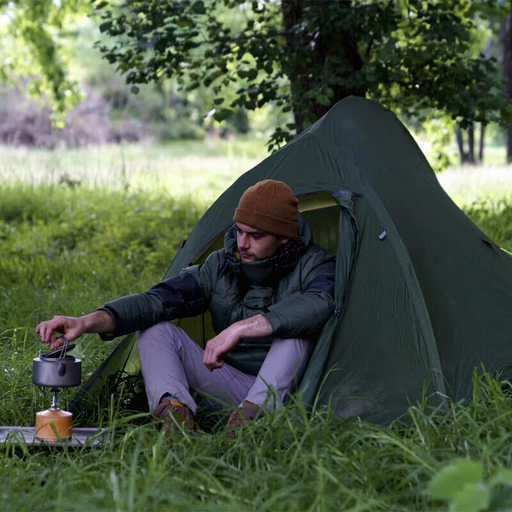
Why it suits this profile: Designed for solo hikers and backpackers who want to carry as little as possible while still having a separate sleeping area.
The specifications mention fully taped seams, a PU4000 mm flysheet and a floor with PU4000 mm. However, the tent is designed for 1 person and has limited living space.
A weight from approximately 1.33 kg, aluminium poles, a packed size of around 45 × 12 cm and a 3-season design.
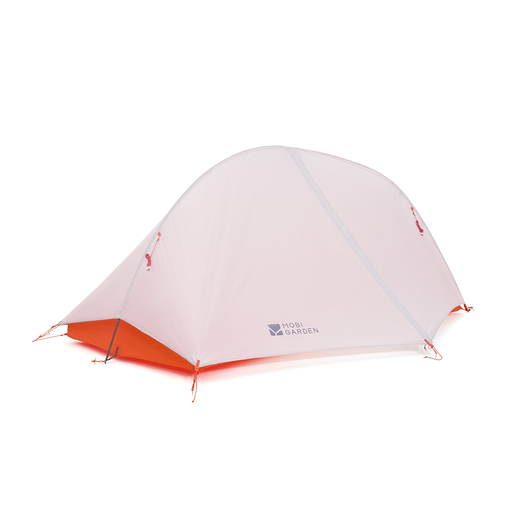
Why it suits this profile: For long-distance hikes, mountain trips and 2-person backpacking, where low weight and a compact packed size are key considerations.
The tent uses 20D ripstop nylon, aluminium poles and has a packed size of 48 × 11 × 11 cm. The manufacturer states that it is suitable for 3-season use, so this model is not intended for severe winter storms.
Approximately 1.18 kg, two doors, a breathable mesh inner area and a floor with taped waterproof seams.
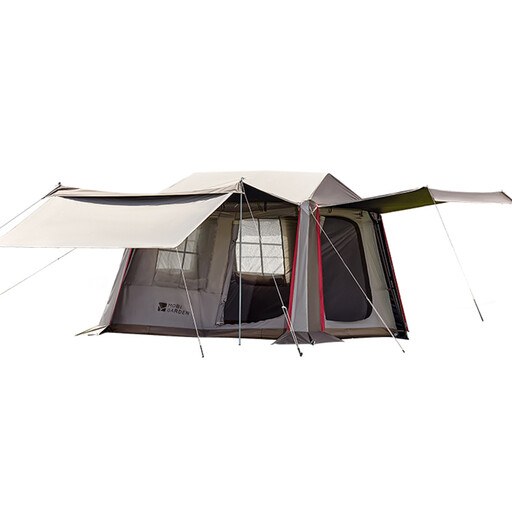
Why it suits this profile: Suitable for car camping when living space, canopies and easy assembly matter more than low carrying weight.
The product information specifies four mesh windows, an integrated canopy and a PU2000 mm flysheet. At approximately 11.8 kg and with a packed size of 107 × 24 × 24 cm, this is not a tent for long-distance hikes.
Interior space of approximately 5.9 m², sleeping capacity for 2–4 people, an automatic aluminium frame and a UPF50+ rating according to the manufacturer.
We have compiled a complete, up-to-date list of products that fully meet these strict selection criteria and the applicable European safety regulations.
First lay the tent on a flat, clean surface. With a pop-up tent, unfold the frame according to the instructions and then secure the corners with pegs. With a trekking tent, assemble the poles first, attach the inner tent and then position the flysheet. Tension the guy lines so that the fabric is taut without being overstretched.
Its lifespan depends on sunlight, moisture, transport, frequency of use and maintenance. A tent that is cleaned and stored completely dry after every trip is less likely to develop mould or coating problems. Do not leave the tent wet in its carry bag for long periods, and check the seams, zips, poles and pegs regularly.
The price is mainly determined by the materials, frame, capacity, waterproof ratings, packed size and ease of assembly. A basic 3-person tent may be sufficient for occasional camping weekends. For backpacking, you often pay for lower weight and more compact materials. Therefore, do not compare the price alone; also consider the total weight, the included components and whether the tent is suitable for the season.
