
Vandaag of morgen in huis

Kwaliteit gegarandeerd

Welkomstaanbiedingen ontgrendelen: GRATIS bezorging | Tot 80% korting | Gratis 30 dagen JoyPlus-proefperiode
Download de app
A camping stove should suit the way you travel. For a weekend at a campsite, weight and packed size are less critical than on a multi-day trek. Even so, many buyers encounter the same problems: a gas burner that does not fit their gas canister, a hob that stands unstably or a stove whose stated power rating says little about actual cooking times.
This guide will help you choose a portable camping stove, a lightweight camping burner or a complete camping cooking set based on verifiable specifications.
A power rating of, for example, 3,240 W sounds appealing, but it does not tell you everything about how practical the stove is. Always check which type of gas bottle or gas cartridge is required and whether the connection is compatible. Some models use a screw connection, while others attach directly to a specific butane or propane bottle.
Also check whether the gas bottle is included. For several models in this guide, fuel is not included.
An ultralight stove can be useful for backpacking, but a small burner requires a level surface and a pan that fits securely on the supports. For larger pans or cooking for several people, wider supports are more important than saving a few grams.
So check:
A separate gas burner is often smaller than an integrated system, but you will still need a pan, lid and possibly a windscreen. An integrated camping cooking set can sometimes take up less space as a whole because the components fit inside one another. So consider the total packed volume, not just the burner's dimensions.
Power is measured in watts. A higher figure can help bring water to the boil more quickly, but wind, outdoor temperature, pan shape and fuel also have an impact. The stated cooking time is therefore a product specification measured under particular conditions, not a guarantee for every campsite.
For example, the product details for the BRS TS19 state 1,900 W and approximately three minutes for one litre of water. The BRS 3000T lists 1,940 W and around 2 minutes and 58 seconds for one litre. These figures are mainly useful for comparing models under similar conditions.
For hikers and cycle campers, every component counts. An ultralight stove weighing 26 grams is appealing if you only boil water for coffee, soup or freeze-dried meals. A slightly heavier model with a pan and lid may be more practical if you want to avoid carrying lots of separate items.
Pay attention to the difference between:
A camping gas burner must be connected to a compatible fuel source. According to the product specification, the BRS TS19 is suitable for butane and propane. The BRS 11-Series states compatibility with, among other things, butane cartridges, 7/16 screw threads according to EN 417 and certain propane tanks with an adapter.
Check before buying:
Use any outdoor stove only outside in a well-ventilated area. Do not use it in a tent, caravan, car or any other enclosed space. Check for leaks before every use and keep flammable materials away from the stove.
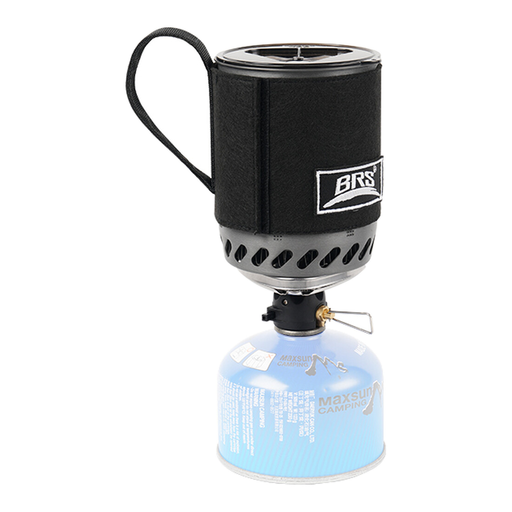
Why it suits this profile: The burner, pan, lid and carry bag make up a straightforward set for beginners who do not want to buy every component separately.
The components nest inside one another, making the packed volume more predictable than with a separate burner and individual cookware.
1,500 W power, 0.36 kg total weight, 0.5-litre pan and a pressure-regulating valve for flame control.
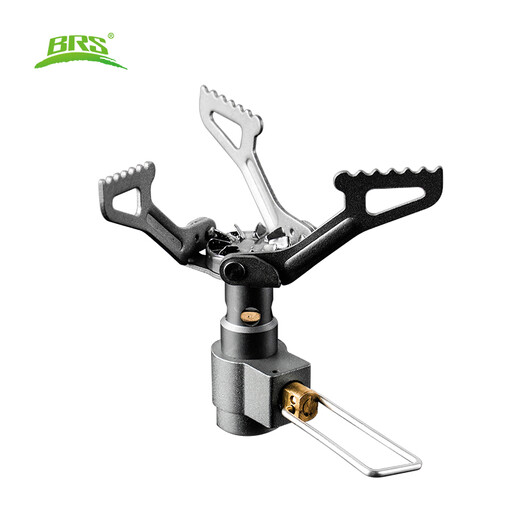
Why it suits this profile: Titanium construction and a stated weight of 26 grams will appeal to campers who value their choice of materials and keeping pack weight to a minimum.
The folding pan supports keep the packed size small. Bear in mind, however, that you will need a separate pan and external fuel source.
26 g, titanium construction, folding pot supports and a stated power rating of 1,940 W.
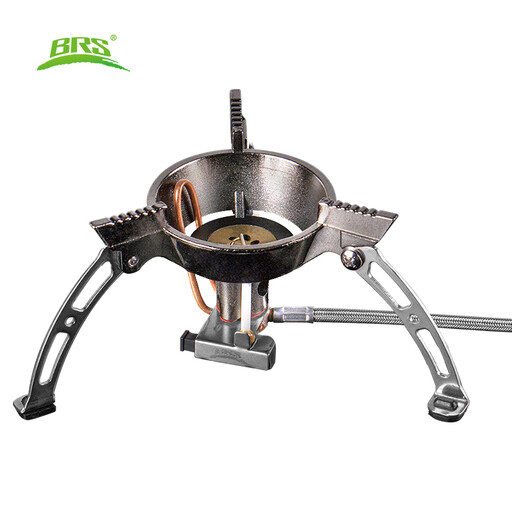
Why it suits this profile: The adjustable flame and wider fuel compatibility are practical for campers who regularly combine different locations and cooking tasks.
The product specification lists several compatible connections and an adapter. Always check your exact gas bottle before use.
Up to 3,240 W, 240 g, piezo ignition, folding support and a stated load capacity of 5 kg.
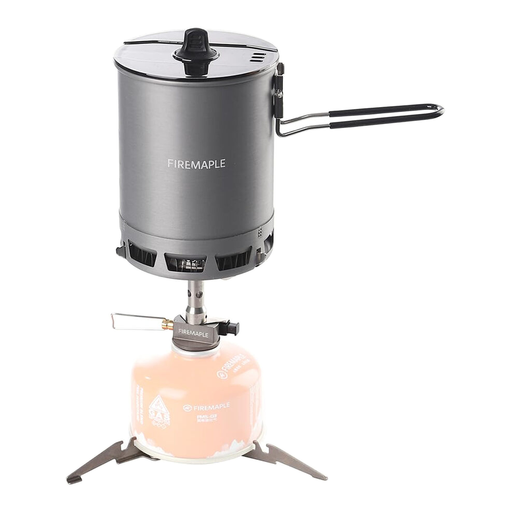
Why it suits this profile: This complete set is designed for one person, combining a burner, pan and lid in a compact unit for trekking and hiking.
The integrated design means you do not have to put together a separate pan and pan supports. The gas cartridge must still be checked and purchased separately.
600 ml capacity, 265 g for the complete set, storage space for a 110 g gas cartridge and a three-point base.
We have put together a complete, up-to-date list of products that fully meet these strict selection criteria and the applicable European safety regulations.
A gas burner for camping requires regular checks. Connect the fuel source according to the product instructions and check the connection for leaks before lighting the burner. With a model featuring external ignition, such as the BRS TS19, you will need a separate lighter or another suitable ignition source.
Also follow these basic rules:
For backpacking, low weight and a small packed size are usually the deciding factors. According to the product information, a separate titanium burner such as the BRS 3000T weighs 26 grams. A complete set such as the Fire Maple Petrel G3 weighs 265 grams and also provides a pan and lid. Choose a separate burner if you already have cookware; choose an integrated set if you want to pack compactly.
Its lifespan depends on the materials, frequency of use, transport and maintenance. Check the burner head, pan supports, control knob and sealing ring before every trip. Store the stove in a dry place and only fold it away once it has cooled completely. Do not use it if there is visible damage or a persistent smell of gas.
The running costs mainly consist of fuel consumption and the price of a suitable gas cartridge. A higher power rating can heat water more quickly, but may use more gas when cooking at full power for extended periods. A windscreen approved for use according to the instructions and a suitable pan can help reduce heat loss. So do not compare just the purchase price: also consider the fuel type, cartridge capacity and how long you cook for.
