
Vandaag of morgen in huis

Kwaliteit gegarandeerd

Welkomstaanbiedingen ontgrendelen: GRATIS bezorging | Tot 80% korting | Gratis 30 dagen JoyPlus-proefperiode
Download de app
A camping stove may seem simple at first glance: connect it, light it and cook. Yet many purchases disappoint as soon as you use them on a windy campsite, a mountain trail or a small picnic table. A stove can be lightweight but offer little stability. A high wattage rating does not automatically mean you will cook faster. And a cooking set may look compact, while the correct gas cartridge is not included.
With this practical buying guide, you can compare a portable camping stove based on the features that really matter outdoors. That way, you can avoid paying for functions that do not suit the way you travel.
A power rating of, for example, 3,240 W sounds appealing, but your actual cooking experience also depends on wind, pan size, fuel pressure and flame control. A lower power output may be perfectly adequate for boiling water or preparing a simple meal for one person. So do not check the power rating alone: consider the stability and the type of cookware you use as well.
With a lightweight camping burner, it is not just the burner itself that counts. You should also consider a gas cartridge, adapter, carry bag, pan, lid and any wind protection. An ultralight 26-gram stove is convenient for a backpacker, but it will usually offer less cooking space and less support for large pans than a more comprehensive system.
Not every camping gas burner works with every cartridge. Check the connection type, such as a 7/16 thread according to EN 417, and see whether butane, propane or a butane-propane mixture is specified. An adapter can expand your options, but it also makes the set heavier and requires extra care when checking the seal.
For hiking and backpacking, the packed size is more important than the weight of the stove alone. A folding burner is easier to fit into a rucksack. An integrated camping cooking set can be even more practical because the pan, lid and burner can be stored inside one another.
As a general guide:
Also pay attention to the dimensions when the stove is folded. A compact cylinder will often fit inside a pan, while a wide burner takes up more room in a rucksack.
Power is usually expressed in watts. A higher figure can help bring water to the boil faster, but only when the pan fits properly and the wind is limited. An adjustable flame is more important than a high maximum power output if you also want to simmer food.
A compact burner is often sufficient for coffee, soup or freeze-dried meals. If you cook with a larger pan, wide pan supports and a sturdy base will be more useful than extra wattage alone.
Check whether the pan supports fold away and whether they have non-slip details. The stated load capacity is a product specification, not a guarantee that every surface will be safe. Always place the stove on a flat, non-combustible surface.
Many models combine aluminium with stainless steel. Titanium reduces weight, but an ultralight design may be less suitable for large or full pans. Before use, check the gas connection, O-rings and any signs of leakage. Only use an outdoor gas stove in a well-ventilated outdoor area, never inside a tent, caravan or any other enclosed space.
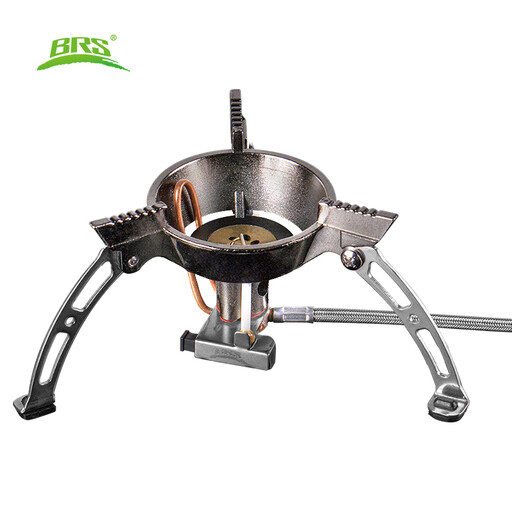
Why it suits this profile: This portable camping stove combines piezo ignition, folding pan supports and a carry bag. According to the product specification, it weighs 240 grams.
The included adapter and mounting base make the connection options clearer, but you should still check your cartridge before buying. The flame is adjustable rather than being focused solely on maximum power.
240 g, up to 3,240 W according to the product specification, piezo ignition and a stated load capacity of 5 kg.
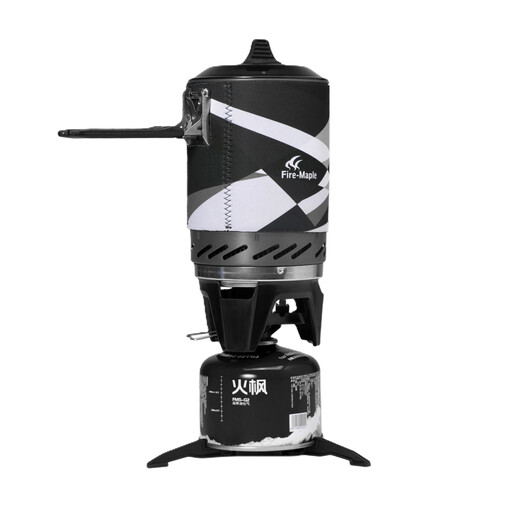
Why it suits this profile: An integrated system is ideal for anyone looking for a neat, complete solution for hiking, fishing and camping. According to the product description, the components can be stored inside the 1-litre pan.
You do not need to choose a pan and pan support separately. Do bear in mind that the gas cartridge is not included and the connection is designed for standard screw-on cartridges containing isobutane.
Integrated storage, hard-anodised aluminium pan, folding handle and support for multiple pans.
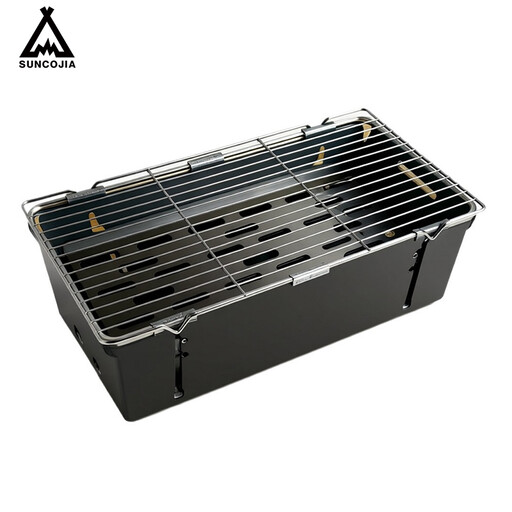
Why it suits this profile: This folding charcoal barbecue is designed for gardens, parks and car camping. At approximately 3.6 kg, it is less suitable for backpacking but well suited to cooking for several people.
The clearly stated size and weight help prevent you from accidentally buying this appliance as a lightweight camping burner. The barbecue uses a grill and requires a stable, heat-resistant surface.
Carbon steel body, stainless steel grill, folding design and included storage bag.
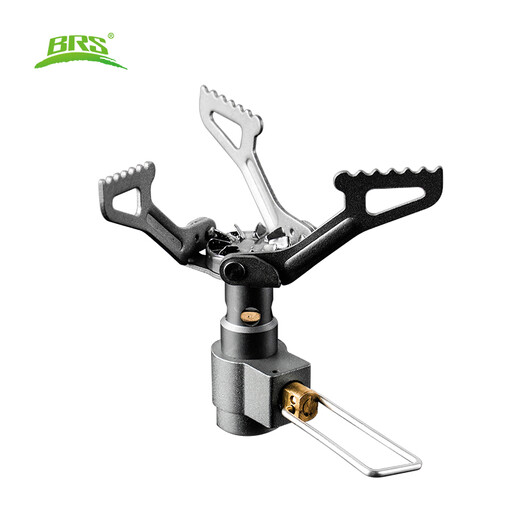
Why it suits this profile: With a stated weight of 26 grams, this ultralight stove is aimed at hikers and backpackers who count every gram.
Its low weight makes the limitation clear: no integrated pan or ignition is specified. You will therefore need to bring a suitable cartridge and an external ignition source.
Titanium construction, 26 g, folding pan supports and a stated power output of 1,940 W.
We have put together a complete, up-to-date list of products that fully meet these strict selection criteria and the applicable European safety regulations.
Look for a low total weight, a compact folded size and a connection that fits your gas cartridge. A lightweight camping burner such as the BRS 3000T is particularly suitable if you already have a separate pan and ignition source. An integrated cooking set adds a little more weight, but may be more practical in your rucksack.
First, check that the control knob is turned off. Connect the burner to a compatible cartridge, check the connection and look out for a gas smell or damaged O-ring. Only ignite the stove outdoors on a stable, non-combustible surface. Always follow the instructions for the specific model.
The cost depends on the type of cartridge, power output, cooking time and outdoor temperature. According to brand descriptions, a windscreen or integrated heat exchanger can affect the cooking process, but such performance claims depend on the product and the conditions. It is therefore best to compare the cartridge price, capacity and expected use per trip.
