
Vandaag of morgen in huis

Kwaliteit gegarandeerd

Welkomstaanbiedingen ontgrendelen: GRATIS bezorging | Tot 80% korting | Gratis 30 dagen JoyPlus-proefperiode
Download de app
A camping sleeping mat might seem simple at first: choose one that’s big enough and take it with you. In practice, its material, insulation and packed size all affect how comfortable you’ll be on the move. A cheap mat may be too thin for cold nights, while a large inflatable camping mattress can be awkward on a backpacking trip.
Campers, walkers, festival-goers and families tend to encounter the same three pitfalls:
The ground beneath a tent often feels colder than you expect. Look for an insulated sleeping mat with a foam core, air chambers or a stated R-value. The R-value indicates how well the mat resists heat transfer to the ground. A higher value is particularly useful when camping in spring or autumn, or on damp ground.
A ridged foam sleeping mat can create a layer of trapped air between your body and the ground. According to Mobi Garden’s product description, the egg-shaped recesses in the XPE foam core create this kind of insulating air layer. In cold conditions, you can pair a foam mat with an inflatable one to increase the distance between you and the ground.
Check the surface, too. A water-repellent coating helps protect against dew and damp grass, but it doesn’t automatically make the mat suitable for prolonged use in the rain.
Check the width and thickness as well as the length:
A self-inflating sleeping mat sounds appealing, but check how it actually inflates. Some models inflate partly on their own, while others need a built-in or separate pump. Also check the inflation time, valve type and how compact the mat is when packed away.
Every gram counts when you’re backpacking or walking. A lightweight sleeping mat weighing around 500 grams is easier to attach to a rucksack than one weighing 1.5 kilograms or more. Check the packed size, too. A compact mat with a sturdy surface is more practical to carry, but may feel less soft than a thick air mat.
Key things to check include:
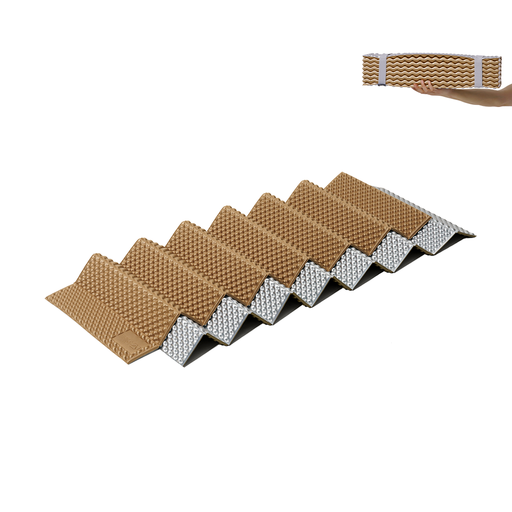
Why it suits this type of user: According to the product specifications, this folding sleeping mat weighs around 0.5 kg and measures 183 × 55 cm. It’s a good fit for short camping trips, festivals and first-time backpackers.
The XPE core and egg-shaped structure offer more than a thin, flat piece of foam. The mat doesn’t rely on a pump or valve.
Around 500 grams, a water-repellent polyester surface, and the option to connect multiple mats together.
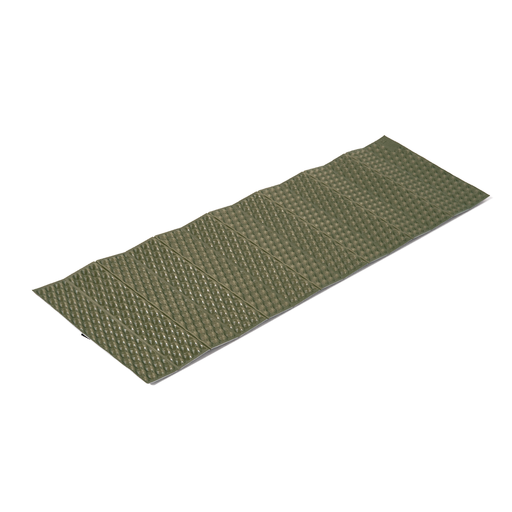
Why it suits this type of user: This thicker version is designed for campers who value extra width and cushioning but don’t want to carry an air pump.
Its stated R-value of R2.6 gives you a clear point of comparison, so you don’t have to rely on the word “insulated” alone.
183 × 63 × 2,6 cm, around 750 grams, reversible and finished with a water-repellent surface.
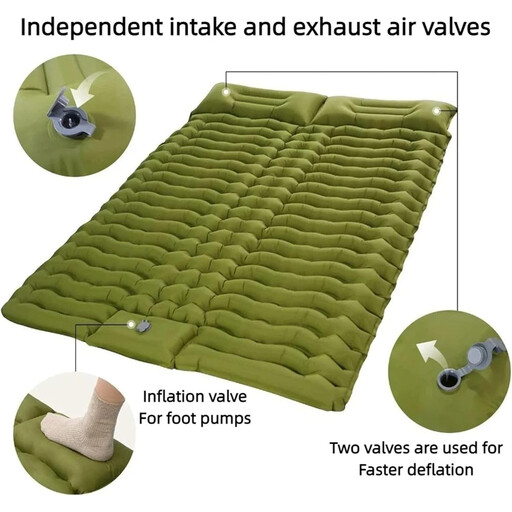
Why it suits this type of user: According to the product description, this double sleeping mat is designed for two people, family camping and car travel. It’s less suitable for a small backpack.
The stated dimensions, packed size of 29 × 16 × 16 cm and weight of around 1,7 kg make it clear in advance how much space it takes up and how easy it is to carry.
200 × 140 cm, around 8 cm thick when inflated, with a built-in foot pump and integrated pillows according to the product information.
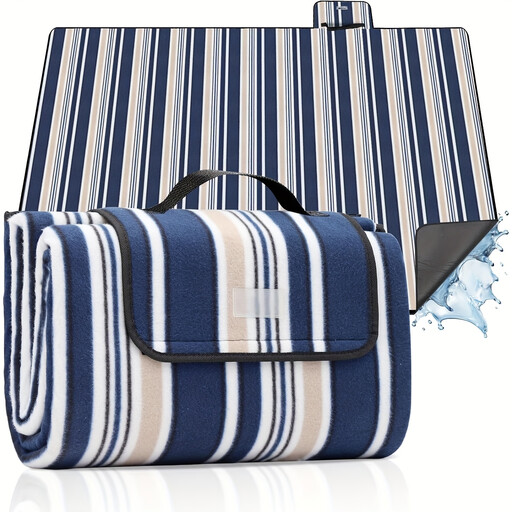
Why it suits this type of user: A good choice for families, beach-goers and park visitors who mainly want a spacious surface to keep them off sand and damp grass.
Its purpose is clear: this is a surface for sitting and lying on, not a substitute for an insulated sleeping mat on cold nights.
200 × 200 cm, a PEVA water-repellent underside, 2 mm foam padding, and a folding design with a carry handle.
First, clear the ground of branches, stones and sharp pine cones. These can damage an inflatable model in particular. After use, roll up a foam sleeping mat as instructed and store it somewhere dry. A mat put away while damp can start to smell or go mouldy.
If you have an air mat, check the valve before setting off and test at home to make sure it stays fully inflated. Don’t overinflate it unless the instructions say to. A compact repair kit is handy for longer trips.
A waterproof picnic blanket is suitable for grass, the beach and festivals. For sleeping in a tent, you’ll generally be better off with a camping mat that has an insulating core and enough width.
We’ve put together a complete, up-to-date list of products that meet these strict selection criteria and the applicable European safety regulations.
A thin foam sleeping mat may be enough for summer nights if the ground is level. If you want more cushioning or sleep on hard ground, choose a thicker mat or an inflatable camping mattress. Always check the insulation rating as well as the thickness.
It depends on its weight and packed size. A model weighing under one kilogram is generally easier to carry than a wide double mat. Also check whether it really inflates by itself or simply has a built-in pump.
Wipe a foam sleeping mat with a damp cloth and let it dry completely. You can also spot-clean an air mat, following the care instructions. Don’t use harsh solvents, and never store the mat while it’s wet.
