
Vandaag of morgen in huis

Kwaliteit gegarandeerd

Welkomstaanbiedingen ontgrendelen: GRATIS bezorging | Tot 80% korting | Gratis 30 dagen JoyPlus-proefperiode
Download de app
A camping mat may seem like a simple product at first. But the wrong choice can leave you with a damp tent floor, little insulation or a mat that’s awkwardly bulky when packed away. You’ll notice this most in changeable British weather, on wet grass or at a campsite with stony ground.
As a Joybuy Product Recommendation Officer, I focus on details you can check: dimensions, material, weight, storage and intended use. Clear product specifications tell you more than marketing terms.
A water-repellent or waterproof underside helps protect against moisture from grass, sand or a damp tent floor. But that doesn’t automatically mean the camping mat provides enough thermal insulation. A thin outdoor mat can work well as a moisture barrier, but it may not be suitable as a standalone sleeping surface in cold weather.
A 200 × 200 cm mat has room for several people, but takes up more space than a compact insulated mat. So check both its size when in use and its packed size. For hikers and festival-goers, a small pack size is often more important than a larger lying area.
Cotton, polyester and foam all feel different and respond differently to moisture and dirt. A waterproof picnic blanket with a smooth PEVA underside is generally easier to wipe clean than a mat with a highly absorbent underside. With aluminium foil, sharp stones or creases can damage the coating.
First, consider what the mat is designed for:
Pay attention to the wording. A manufacturer may describe how a product works, but that’s no guarantee it will perform the same way on every surface, at every temperature or in every situation. For example, the Mobi Garden mat is explicitly described as a basic moisture barrier, not as a standalone sleeping mat for extended use in cold conditions.
A 200 × 200 cm mat is practical for a family or group. A more compact mat may fit better in a rucksack or bike bag. Check:
The Mobi Garden aluminium mat measures 180 × 200 cm, weighs around 0.3 kg according to the product information and has a packed size of approximately 52 × 18 × 18 cm. That makes it worth considering for lightweight camping kit, although its slim 0.25 cm thickness also means limited comfort when sitting.
Your camping mat should suit where you plan to use it. The features you need on sand, grass or a flat tent floor may differ from those you need on a stony campsite.
Don’t use a thin aluminium mat directly on sharp gravel. The product information warns that damage to the coating can reduce its moisture-resistant and insulating properties. Wipe the mat clean after use and fold or roll it according to the instructions. Many models aren’t suitable for soaking or machine washing.
For the beach, you could also look for a sand-free beach blanket. A smooth underside and carry strap make it easier to pack away. If you’ll mainly be sitting in the park, you may prefer a soft, wide outdoor mat.
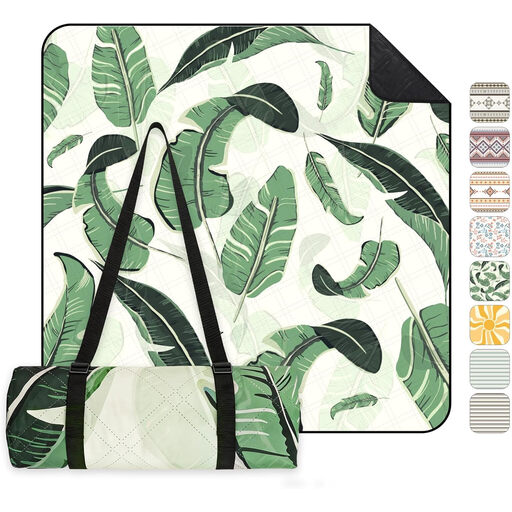
Why it suits this buyer: The 200 × 200 cm size has room for a family or small group on picnics, camping trips and days at the beach. The carry strap is handy for short walks from the car.
The product specifications list a polyester top layer, an 80 g/m² cotton middle layer and a water-repellent PEVA underside. They also say it can be cleaned with a damp cloth.
200 × 200 cm, three layers, foldable design and adjustable carry strap. The product description says it can be used by 4 to 6 people.
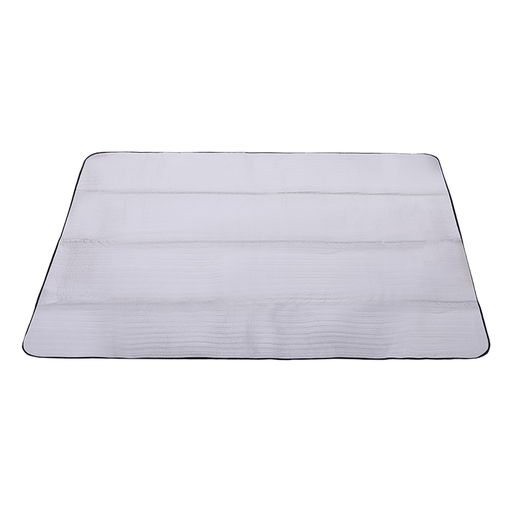
Why it suits this buyer: This mat is designed for buyers who value low weight and a small pack size for hiking, camping or a day at the beach.
The product information makes it clear that the mat is thin and isn’t designed to be used as a standalone sleeping mat in cold conditions. This helps set the right expectations.
Approximately 0.3 kg, 180 × 200 cm and rolls up to around 52 × 18 × 18 cm. The description says it can be cut to size.
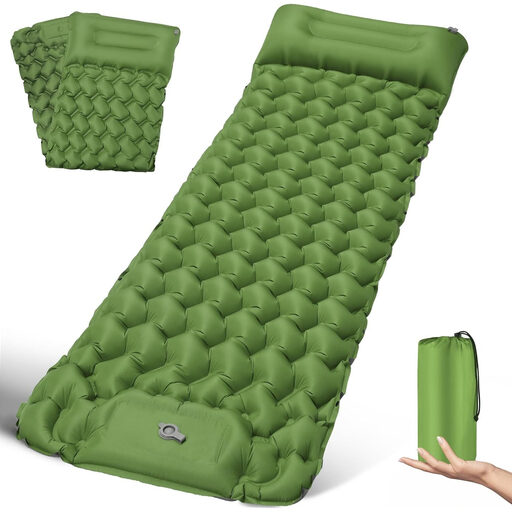
Why it suits this buyer: This model is for campers looking for an air mattress rather than a thin ground mat, and who value a compact design for outdoor use.
The product title mentions a foot pump, pillow, compact size and a water-repellent, tear-resistant design. Before buying, check the exact dimensions and maximum load in the current product information.
Inflatable design, integrated foot pump according to the product title, and a stated pillow. Suitable as a sleeping solution, not as an all-purpose picnic mat.
We’ve put together a complete, up-to-date list of products that meet these strict selection criteria and the applicable European safety regulations.
That depends on the type. A thin aluminium mat is mainly a moisture barrier and underlay. For sleeping, an air mattress or a mat with enough thickness and insulation is a better choice. Always check the product description and usage warnings.
First, remove sand and dirt while dry. According to the product description, a water-repellent picnic blanket can often be wiped clean with a damp cloth. Wipe aluminium mats carefully; soaking, scrubbing and sharp objects can damage the coating.
Choose a lightweight, foldable mat with a smooth underside and a carry strap. A 200 × 200 cm mat has room for several people, while a smaller one is handier for one or two people. Also check the pack size, so you can easily carry the mat with your other camping accessories.
