
Vandaag of morgen in huis

Kwaliteit gegarandeerd

Welkomstaanbiedingen ontgrendelen: GRATIS bezorging | Tot 80% korting | Gratis 30 dagen JoyPlus-proefperiode
Download de app
After a long day of hiking or cycling, there's nothing better than a hot meal in the great outdoors. But lugging around clumsy, heavy pots from your home kitchen is no fun. A good camping cookset is the solution: lightweight, compact, and specifically designed for cooking on a camp stove.
However, the options can be overwhelming. What material is best? How many pots do you need? This guide will help you choose the right camping cookware without the marketing fluff. We focus on the specifications that truly matter, so you can make an informed decision for your next trip.
Before we dive into specific models, here are a few key considerations. Paying attention to these points will help you find a set that matches your travel style.
The material largely determines the weight and cooking performance. For most campers, hard-anodized aluminum is an excellent choice. It's light, strong, scratch-resistant, and conducts heat quickly and evenly. This means your meal is ready faster, and you save fuel. Titanium is even lighter but often more expensive and less efficient at heat distribution. Stainless steel is robust but considerably heavier and less suitable for backpackers.
Space in your backpack or car is precious. A good compact cookset is designed to nest together. The pots, lids, and sometimes even a small fuel canister and stove fit together like a puzzle. Look for folding handles that lock securely in place during cooking. This not only saves space but also prevents rattling while you walk.
Are you cooking just for yourself or for a whole family? A solo traveler will find a 1-liter pot sufficient, while a family of four is better off with multiple pots of various sizes, including a frying pan. Consider the types of meals you plan to make. Simply boiling water for freeze-dried meals requires different outdoor cookware than frying pancakes or preparing a pasta sauce.
Based on the criteria above, we've selected a few popular and practical cooksets. These models stand out for their specifications and design.
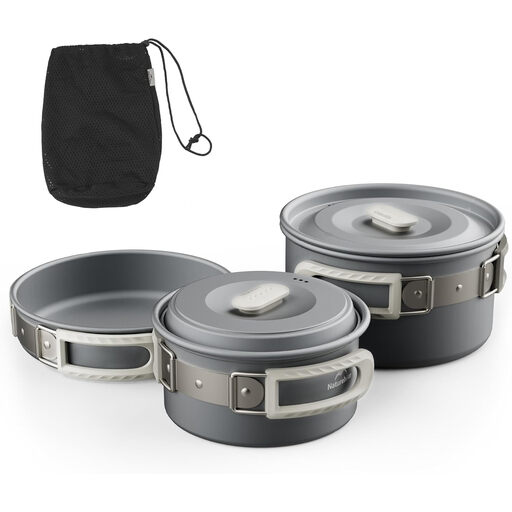
Why It Stands Out: This set from NatureHike is a popular choice for campers seeking a reliable and complete foundation. The set is made from hard-anodized aluminum, ensuring good heat conduction and scratch resistance. It includes a 1.7L pot, a 1L pot, and an 18 cm frying pan, allowing you to prepare a variety of meals. Everything nests neatly together and comes in a convenient mesh carrying bag.
Pros:
Who Is This Set For? Ideal for couples or small families (2-4 people) looking for an all-around, reliable, and affordable camping cookset. Suitable for both weekend trips and longer camping holidays.
View the NatureHike 2-7 Person Cookset
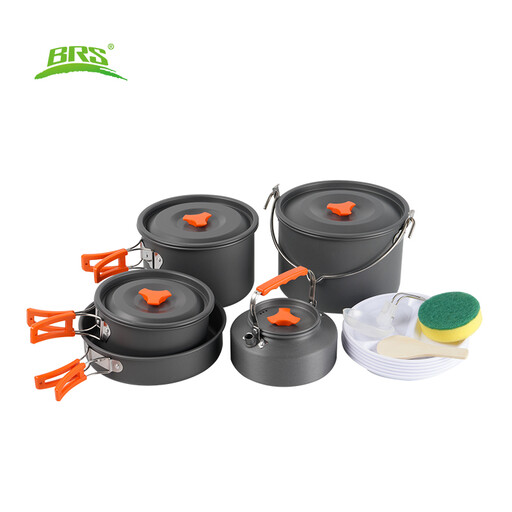
Why It Stands Out: If you're cooking for a larger group, the BRS 157-series offers the capacity you need. With a 4.2L hanging pot, a 2.9L large pot, and various other pans, you can prepare complete meals for the whole group. The set is made from specially treated aluminum that, according to the manufacturer, is highly resistant to high temperatures and corrosion.
Pros:
Who Is This Set For? Perfect for family camping, group trips, or road trips where you're cooking for 4 to 7 people. This set is less geared towards the ultralight backpacker and more for the camper who values cooking capacity.
View the BRS 157-Series Cookware Set
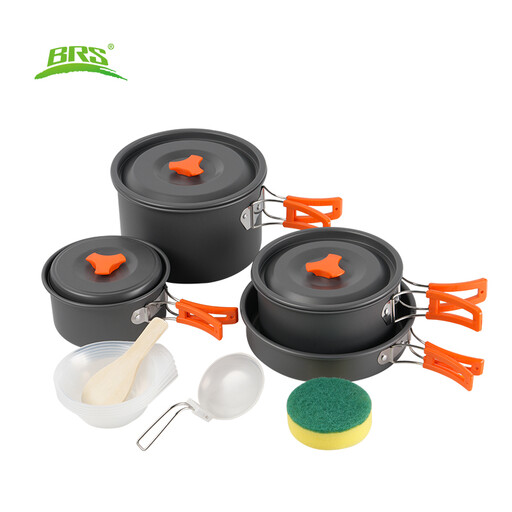
Why It Stands Out: The unique feature of the BRS-155 is the heat exchanger ring at the bottom of the pots. This ring captures heat from the stove more efficiently, speeding up the cooking process. According to the manufacturer, BRS, this shortens boiling times and saves gas. The set is made from food-grade hard-anodized aluminum and has a non-stick coating.
Pros:
Who Is This Set For? The efficiency-focused backpacker or camper for whom every gram of fuel counts. Ideal for trips where fuel conservation is crucial. The set is designed for 2 to 5 people and offers a great balance of weight, performance, and functionality.
View the BRS 155-Series Cookware Set
These three sets offer a great starting point, but perhaps you're looking for something slightly different. A smaller set for solo trips, a stainless steel set, or a model with a built-in kettle. Every camper has unique needs.
Check out our full range of nesting pots and pans and find the perfect match for your next trip.
Cleaning is simple. After use, wipe away grease and food residue with a cloth or paper towel. Use a small amount of biodegradable soap and water. Sets with a non-stick coating are often even easier to wipe clean. Ensure the pots are completely dry before you nest them back together to prevent corrosion.
There is no single "best" material; it depends on your priorities. Aluminum is the most popular all-rounder due to its excellent balance of weight, price, and heat conduction. Titanium is the choice for ultralight backpackers willing to pay a premium. Stainless steel is very durable and robust, but also the heaviest.
This depends heavily on the model and manufacturer. Pots with plastic or silicone components (like handles) are generally not suitable for open flames, as they can melt. Some sets, like the BRS 157 with its hanging pot, are specifically designed for this. Always check the manufacturer's specifications before placing a pot directly in or over a fire. Using a gas stove is the safest method for most sets.
