
Vandaag of morgen in huis

Kwaliteit gegarandeerd

Welkomstaanbiedingen ontgrendelen: GRATIS bezorging | Tot 80% korting | Gratis 30 dagen JoyPlus-proefperiode
Download de app
A camping cooking set may seem simple at first: a pan, a stove and perhaps a carry bag. In practice, details such as weight, fuel connection and stability determine how quickly and safely you can cook outdoors. This matters for backpackers and hikers, as well as families travelling by car.
1. Focusing only on power
A high wattage sounds appealing, but it doesn’t tell you everything about ease of use. A powerful camping gas stove may boil water faster, but an unstable design can make it difficult to use with a full pan. So check the size of the pan supports, the surface you’ll be cooking on and the maximum load capacity too.
2. Forgetting to weigh the complete set
With a lightweight cooking set, it’s not just the weight of the stove that counts. Remember to include the pan, lid, carry bag, adapter and gas cylinder. Many models don’t include the cylinder, either. Check exactly what comes in the box and what you’ll need to buy separately.
3. Not checking fuel compatibility
A portable gas stove won’t necessarily work with every gas cylinder. Check the type of connection, such as a screw thread for EN 417 cartridges, butane or propane. Only use fuel and adapters that the product description says are compatible. Check connections for leaks before lighting the stove.
Another common mistake is using a stove in an awning, car or other enclosed space. Gas burners are designed for well-ventilated outdoor areas. Place yours on a flat, stable, non-flammable surface, away from tent fabric, dry grass and overhanging branches.
For solo adventures and backpacking, the difference between 240 and 425 grams is noticeable. An integrated system, where the burner, pan and lid fit together, saves space in your rucksack. Also consider the capacity:
A large camping pan can be more versatile, but it takes up more space and needs a more stable burner.
Power is measured in watts. A 1,500 W model is suitable for basic use, while a 3,240 W burner can heat up faster. However, maximum power doesn’t necessarily mean consistent cooking performance. Wind, outdoor temperature, pan shape and fuel can all make a difference.
A pressure regulator or fine flame control is useful if you want to simmer as well as boil water. Check whether the ignition is built in. Some models need an external lighter.
Anodised aluminium is lightweight and commonly used for outdoor cooking pots and pans. Stainless steel is often used for burner heads and parts that need to withstand heat and repeated use. A non-stick coating can make cleaning easier, but you’ll need to use soft utensils and handle it carefully when transporting it.
Also look for:
Let camping cookware cool completely before cleaning or packing it away. Store metal parts somewhere dry and check O-rings, hoses and connections regularly.
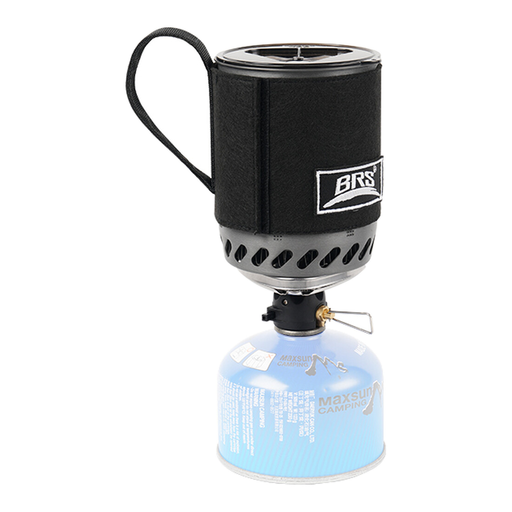
Why it suits this type of user: This integrated system is designed for solo campers, hikers and backpackers looking for a simple set with few separate parts. The pan has a capacity of 0.5 litres and the stated total weight is 0.36 kg.
According to the product description, the burner head, pot, lid and carry bag fit together for storage. This means fewer loose parts in your rucksack. The gas cylinder must be bought separately.
0.36 kg, 1,500 W, pressure regulator and an anodised aluminium pan with an insulating cover.
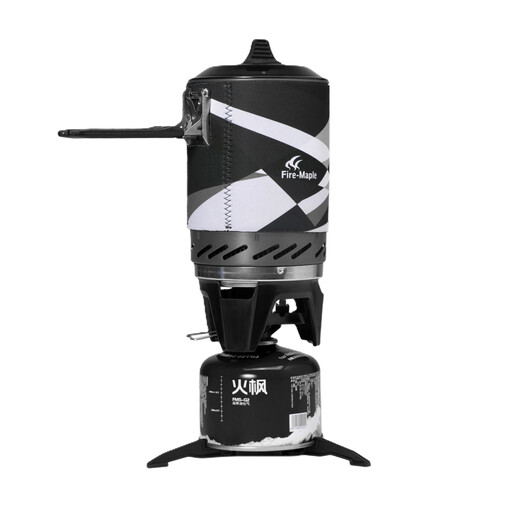
Why it suits this type of user: Solo travellers looking for an integrated system with sturdy details get a 1-litre pan, neoprene cover and locking handle. According to the product information, the system is compatible with standard threaded isobutane canisters.
The burner, stand and pan are designed to pack away together. The gas canister isn’t included, so check the connection and fuel availability in advance.
1-litre pan, hard-anodised aluminium, integrated storage and compatibility with standard isobutane canisters.
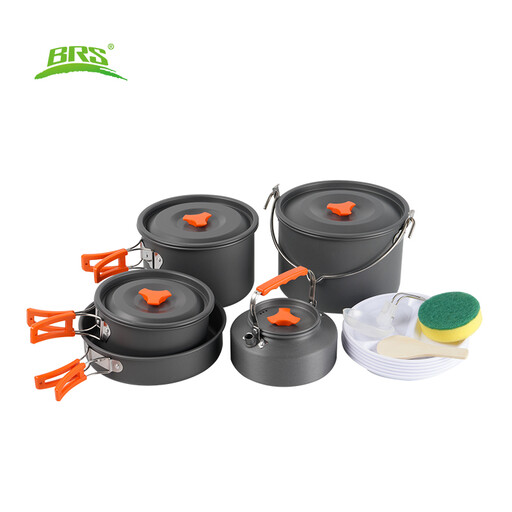
Why it suits this type of user: This set is made for group meals while camping, on road trips and at picnics. With a 4.2-litre hanging pot, a large 2.9-litre pot, a medium-sized pot, a pan and a water bottle, you have plenty of options for preparing different dishes.
Instead of combining several separate pans, you get a nesting design. Be sure to check the space you have for packing and the weight your walking kit can carry.
A range of cooking options, aluminium construction, ergonomic handles and a design that packs away compactly.
We’ve put together a complete, up-to-date list of products that meet these strict selection criteria and current European safety regulations.
Look for a compact set with a pan of around 0.5 to 1 litre and a low total weight. An integrated backpacking cooking set means fewer separate parts to carry. Always check whether the fuel canister and any adapter are sold separately.
No. Only use a camping gas stove outdoors, in a well-ventilated area. Place it on a stable, non-flammable surface and keep it away from tent fabric, dry grass, children and pets. Let the burner cool completely after use.
Its lifespan depends on the materials, how often you use it, how you transport it and how well you care for it. Clean pots and pans after use, avoid metal utensils with a non-stick coating and store everything somewhere dry. Regularly check a gas burner’s connections, O-rings and feet for wear or damage.
