
Vandaag of morgen in huis

Kwaliteit gegarandeerd

Welkomstaanbiedingen ontgrendelen: GRATIS bezorging | Tot 80% korting | Gratis 30 dagen JoyPlus-proefperiode
Download de app
Traveling with a camper or caravan means freedom. But with that freedom comes the responsibility to keep your vehicle safe and reliable, especially on long journeys. One of the most critical, yet often underestimated, aspects is tire pressure. Incorrect pressure can lead to increased fuel consumption, unpredictable handling, and, in the worst-case scenario, a blowout.
A camper tire pressure monitoring system, also known as a TPMS, is a tool that continuously monitors the pressure and temperature of your tires. It alerts you immediately to any anomalies, allowing you to take timely action. In this article, we'll help you make the right choice by outlining the key points to consider and highlighting some popular models for 2026.
The market offers many different systems. To help you navigate the options, it's helpful to focus on a few practical considerations.
The number of wheels on your vehicle combination determines how many sensors you need. A standard camper requires four. If you need a caravan TPMS or a trailer tire pressure system, you add the wheels of the towing vehicle and the trailer together. For longer vehicles (over 6-7 meters) or combinations, a signal booster (repeater) is recommended. This ensures that the signal from the rear sensors reliably reaches the display in the cabin.
There are two types of sensors: internal and external. Internal sensors are mounted inside the rim and require professional installation. A TPMS with external sensors is the most common choice for the DIY enthusiast. You simply screw these sensors onto the valve stem in place of the standard valve cap. They often come with an anti-theft nut to prevent them from being easily removed. This makes checking your camper's tire pressure much easier and faster.
The display is your control panel. Pay attention to its readability, both in bright sunlight during the day and at night. Many models feature automatic backlighting. The power supply is also a point to consider: some displays run on solar power, others via a USB connection. The alarm functions are essential. A good wireless TPMS not only warns you of low or high pressure but also of rapid leaks and high tire temperatures.
Based on product specifications and functionalities, we have selected a few systems suitable for different types of vehicles and users.
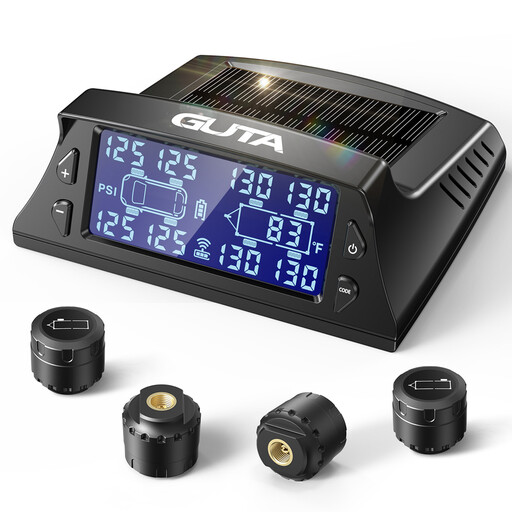
Why It Stands Out This system from GUTA is designed for heavier vehicles, with a wide pressure range of 0 to 188 PSI (13 BAR). The monitor is equipped with a solar panel for charging and has an automatic sleep mode to conserve energy.
Advantages
Who Is It For? This system is a solid choice for owners of campers, caravans, and trailers with a vehicle length of up to approximately 6 meters.
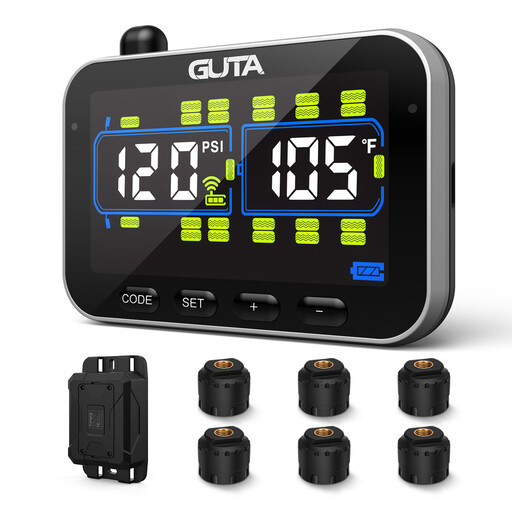
Why It Stands Out This set is specifically designed for long vehicle combinations. The included signal booster (repeater) ensures stable communication over distances up to 15 meters. The large color screen displays all information clearly.
Advantages
Who Is It For? Perfect for drivers of large motorhomes, combinations with a caravan or trailer, and semi-trucks who need a reliable signal over a long distance.
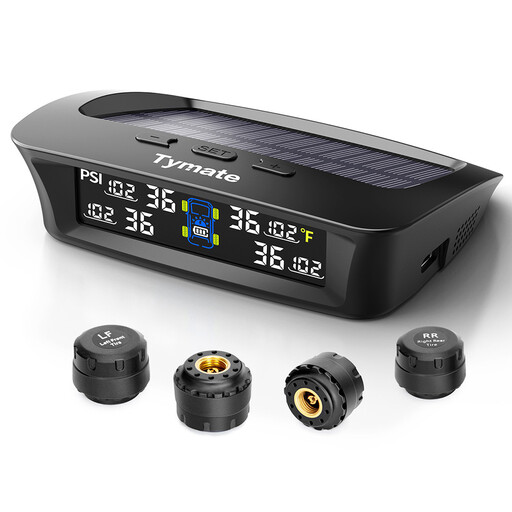
Why It Stands Out The Tymate system is aimed at standard campers, SUVs, and passenger cars with a pressure range up to 87 PSI (6 BAR). It combines a compact design with a bright LCD color screen and solar charging.
Advantages
Who Is It For? A suitable option for drivers of standard camper vans, Class C motorhomes, and SUVs looking for a reliable camper tire pressure gauge for daily use and holidays.
The right choice depends on your vehicle, your travel plans, and your personal preferences. If the options above don't quite match your needs, or if you're looking for a system with a different number of sensors, we invite you to browse our full selection.
? Explore more options for a tire pressure monitor here
Installation is typically straightforward. You screw the included anti-theft nut onto the valve stem, followed by the corresponding sensor (e.g., FL for front left). Then, you tighten the nut against the sensor using a special wrench. Make sure the monitor is turned on before you install the sensors so they can be recognized immediately.
The correct tire pressure depends on the vehicle's weight and tire type. This information is almost always listed on the driver's side doorjamb, in the camper's owner's manual, or on the tire itself. Always check the pressure when the tires are "cold" (having been driven less than 2 km).
The battery life of an external sensor varies by brand and model. According to manufacturer specifications, the batteries (usually CR1632 or CR2032 type) last an average of 2 to 4 years. Most TPMS monitors will display a warning when a sensor's battery is low.
