
Vandaag of morgen in huis

Kwaliteit gegarandeerd

Welkomstaanbiedingen ontgrendelen: GRATIS bezorging | Tot 80% korting | Gratis 30 dagen JoyPlus-proefperiode
Download de app
Anyone looking for camper accessories will soon come across dozens of products with impressive specifications. However, a large number on the packaging does not always indicate whether a product is suitable for your motorhome, caravan, truck or van. The wrong connection, an insufficient measurement range or too few sensors can make an accessory barely useful in practice.
This guide will help you compare products more effectively. It focuses on motorhome tyre safety, portable power, cooling and roadside assistance.
With a 12V to 230V inverter, the peak power is often the main figure quoted. A model with a 4000W peak output will not automatically deliver 4000W continuously. Always check the rated power. For example, the EAFC inverter in this selection specifies 2000W continuous power and 4000W peak power.
High output also demands a great deal of current from the battery. In a 12V system, a powerful inverter can draw hundreds of amps. Suitable cables, fuses, ventilation and professional installation are therefore important. An inverter must not be connected through a standard cigarette lighter socket if the load is too high for it.
A motorhome tyre pressure monitoring system, also known as a motorhome TPMS, must have enough sensors for the motorhome and any trailer. Four sensors make sense for a vehicle with four tyres, but a motorhome with a tandem axle, trailer or additional wheels may require six, eight or ten sensors.
Also check the signal range. A repeater may be needed for longer vehicles. A system with a long measurement range is not automatically suitable if the wireless connection cannot reliably bridge the distance between the trailer and the cab.
A small portable motorhome fridge does not always work in the same way as a compressor cool box. According to the manufacturer’s product information, a thermoelectric model is compact and can cool and heat, but it does not have a freezer compartment. A compressor fridge is generally more suitable when you need stable cooling for longer periods. As well as capacity, consider the supply voltage, power consumption and available space.
A caravan tyre pressure gauge or TPMS can display pressure in psi, bar or kPa. For users in the UK, bar is usually the most practical option. Compare the range with the recommended tyre pressure for your vehicle. According to the product information, the GUTA systems in this selection specify a range of up to 0–14 bar or 0–188 psi. The Tymate systems are specified for 0–8 bar or 0–116 psi.
A TPMS is an aid and does not replace checking with a suitable manual gauge. Measure when the tyres are cold and follow the figures in the vehicle or tyre handbook.
External sensors are screwed onto the valve. Check that your valves are suitable and use the supplied anti-theft nuts where provided. Pay attention to the type of coin cell, such as CR2032 or CR1632, and the stated lifespan. According to GUTA’s product information, the CR2032 battery in certain sets can last around four years; Tymate states approximately two years for the CR1632.
After installation, check that the sensor is not leaking and that its position is shown correctly on the display. According to the product information, fittings may be more stable on metal valves. If in doubt, ask a garage to check the installation.
A pure sine wave inverter supplies alternating current with a waveform that, according to the product description, is designed for sensitive electronics. First check whether your motorhome uses a 12V or 24V battery system. A 12V inverter must not be connected to 24V, and vice versa.
Also consider:
A 1000W continuous inverter may be sufficient for a small appliance. For heavier equipment, you must calculate the total power requirement.
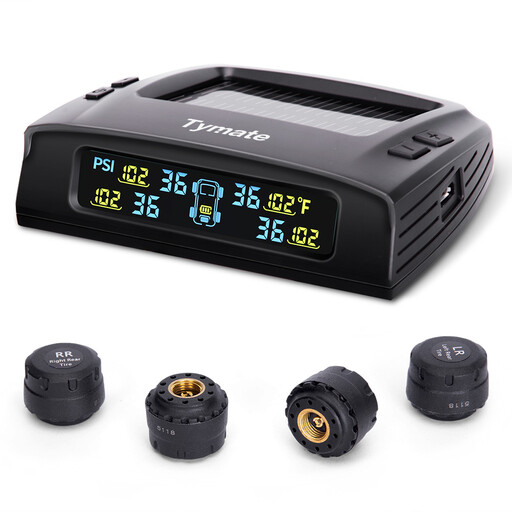
Why it suits this profile: A practical choice for a motorhome, SUV or car with four tyres. According to the product information, the system displays tyre pressure and temperature on a colour screen.
The stated range of 0–8 bar makes it clear what type of vehicle the system is designed for. You do not pay for sensors you will not use.
Four external sensors, 433,92MHz communication, sleep mode and a stated measurement deviation of less than 2 psi.
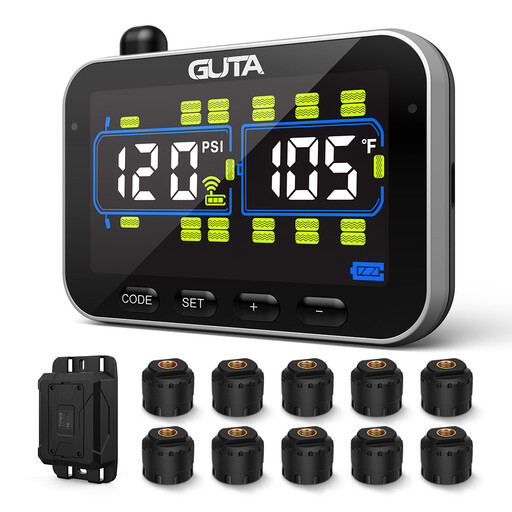
Why it suits this profile: Designed for motorhomes, trailers, trucks and combinations with multiple tyres. According to the product information, the set is intended for longer vehicles.
With ten sensors and a repeater included, it is clear from the outset that the set is not intended only for a standard car.
0–14 bar measurement range, six alarm types, colour display, repeater and a stated battery life of approximately four years per sensor.
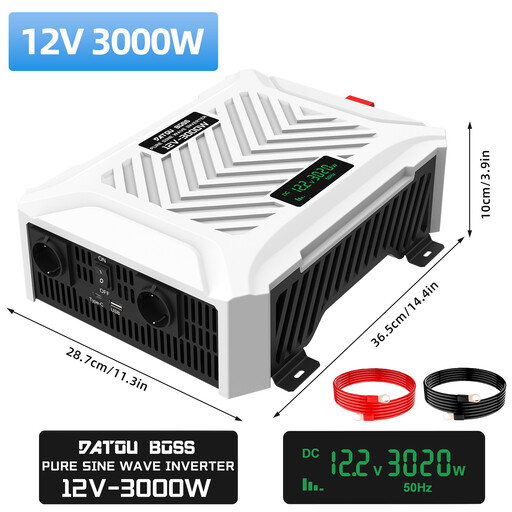
Why it suits this profile: For users who want to run several appliances in a 12V motorhome and can have the installation carried out professionally.
The product specifies 3000W continuous power and 6000W peak power separately. The installation information also warns that heavy-duty cables and a suitable fuse are required.
12V DC to 220/230V AC, pure sine wave, LCD display, dual temperature-controlled fans and multiple safety protections.
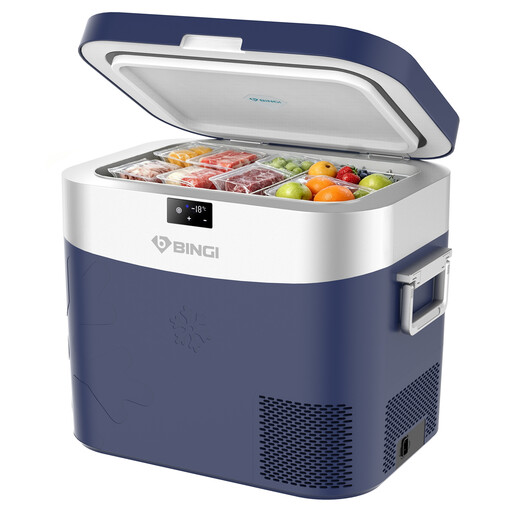
Why it suits this profile: With a capacity of 22 litres, it offers more space than a small thermoelectric mini fridge and is well suited to travelling in a truck or motorhome, or for use at a campsite.
The product name and specifications explicitly mention compressor operation and 12/24V DC. However, check the power consumption and available ventilation space beforehand.
22-litre capacity, 12/24V direct-current power supply and a design for trucks, motorhomes, camping and picnics.
We have put together a complete, up-to-date list of products that fully meet these strict selection criteria and the applicable European safety regulations.
As well as a TPMS and power supply, a car compressor pump and a motorhome jump starter are practical additions. When choosing an air pump, look for a hose that is long enough, a suitable valve connection and a clear pressure display. With a jump starter, check that the stated capacity is suitable for the type of engine. Even if a product is intended by the manufacturer for SUVs, pick-ups and RVs, it still needs to be charged correctly and connected according to the instructions.
The same principle applies to caravan accessories and truck accessories: first check the connection, dimensions, load capacity and installation location. An accessory that fits physically is not automatically suitable electrically or mechanically.
Start with a suitable tyre pressure gauge or motorhome TPMS, a compressor pump and a backup power solution. Also check the tyre tread, valves, battery and cables before setting off. A TPMS provides warnings, but regular manual checks are still advisable.
This depends on the battery type, usage and temperature. According to the product information for the GUTA systems mentioned, a CR2032 battery can last approximately four years. Tymate states approximately two years for a CR1632 battery. Treat these figures as the manufacturer’s stated service life and check the battery status on the display.
Consumption depends on both the connected appliance and the inverter’s own power usage. A powerful appliance can drain the battery quickly, particularly in a 12V system. Calculate the power requirement in advance and switch the inverter off when it is not in use. This will help prevent unnecessary discharge of the leisure or starter battery.
