
Maker with a product range
You photograph several baskets for a shop or portfolio and want to keep the framing, background and lighting consistent. Canon Netherlands describes a tripod as a useful way to maintain consistent framing.


For the occasional basket photo, you don’t automatically need a new camera. Adobe says a smartphone can be a good place to start, provided controlled lighting and a steady set-up give you the results you want. If you regularly photograph both whole baskets and small weaving details, a mirrorless camera with a carefully chosen lens gives you more flexibility. Check what’s included in the kit and its close-up capabilities, as neither a camera body nor a standard lens guarantees you’ll capture those details. A dark background doesn’t automatically mean you need a camera designed for low light: assess the exposure in test shots and adjust it if necessary, as Canon Netherlands explains.
You photograph several baskets for a shop or portfolio and want to keep the framing, background and lighting consistent. Canon Netherlands describes a tripod as a useful way to maintain consistent framing.
You want to capture the whole basket as well as the texture of individual woven strands, with sharp, clear results. The lens and shooting distance deserve extra attention. Adobe and Nikon Netherlands highlight product photography and close-up lenses as important considerations.
You take photos from time to time and want to see whether your existing phone or camera will do the job with better lighting. Adobe suggests a smartphone as a possible starting point, while the Consumers’ Association describes compact cameras as having a fixed lens.
Start with the shot you want to take: the considerations for occasional full-basket photos differ from those for regular close-ups. First assess the lighting and the equipment you already have, then decide whether you need a different camera body or lens.
| What to consider | What to check before buying | Who will find this important? |
|---|---|---|
| Consistent full-basket shots | Check whether you can set the camera up steadily and whether the lens can fit the whole basket into the frame from the available distance. Also check whether you can set the exposure manually. | If I want to photograph several baskets with the same framing, I look for a fixed set-up and consistent exposure. Around 36% of consumers prioritise consistent full-basket shots. |
| Sharp weaving details | Compare the included lens’s close-up capabilities with the details you want to show. Also check the lens mount and the working distance required. | If I want to show small joins in the weave, what matters most is what the lens in the exact kit can capture at close range. Around 29% of consumers prioritise these weaving details. |
| Basket against a dark background | Check whether exposure compensation or manual exposure is available. Use test shots to assess both the basket and how dark you want the background to be. | If I want the basket to remain clearly visible without making the background lighter than intended, I look for control over the exposure. Around 21% of consumers share this priority. |
| Keeping things simple | First take a test shot with your current equipment and controlled lighting. Then compare a camera body on its own, a kit and a camera with a fixed lens. | For just a few photos, I’d rather find out whether my current device will do the job before buying a new camera. Around 14% of consumers prioritise keeping things simple and avoiding unnecessary purchases. |
If you don’t assess the exposure, the basket’s texture may be harder to see. Canon Netherlands explains that a scene with lots of dark tones can affect the camera’s automatic metering.
Check the basket and background separately in test shots. Adjust the lighting or exposure before choosing a camera based only on its specifications.
An interchangeable lens mount or a wide zoom range doesn’t guarantee that small woven strands will be sharp in the framing you want.
Compare the exact kit contents, lens mount and close-up capabilities with the shot you want to take.
A suitable close-up lens or tripod may need to be bought separately.
You can’t replace the lens on a compact camera. This may make it less suitable if your need for close-up shots changes.
Choose this option only if the close-up capabilities of the exact lens suit the level of detail you want.
The EOS R50 is an APS-C mirrorless camera for anyone looking for a compact body and a choice of RF or RF-S lenses.
The Z50II is a mirrorless camera for a Nikon Z set-up, with a lens to be chosen separately for full-basket shots or details.
The X-S20 is a mirrorless camera for anyone who wants to consider RAW shooting and in-body stabilisation alongside their choice of lens.
Sony offers two different options here: the RX100 VII with a fixed lens and the α6400A with an interchangeable E-mount lens.
This selection includes digital cameras, two Sony cameras listed with a 16–50mm lens, and a DJI vlog camera. Compare the lens and close-up capabilities of the exact model with the framing you want for your basket. A stated zoom range alone doesn’t prove that it can capture small weaving details sharply.
 No image available
The stated 12× optical zoom gives you a choice of framing; check whether the camera can also capture close-ups of your weaving.
The product name lists 12× optical zoom and 4K.
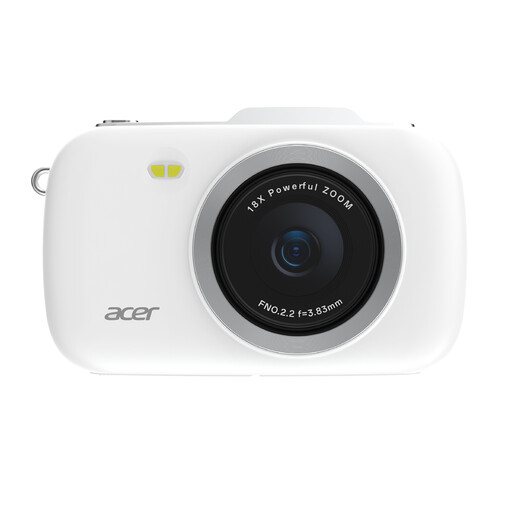 No image available
The stated 18× zoom gives you a choice of framing; check this model’s close-up capabilities for small weaving details.
The product name lists 4K, 80MP UHD and 18× zoom.
 No image available
The product name describes this model as a small vlog camera; check whether its shooting distance and framing suit the basket photos you want to take.
The product name lists a 1-inch CMOS sensor, 4K/120fps video and 3-axis stabilisation.
 No image available
The product name lists a 16–50mm zoom lens for a range of angles of view; check whether its close-up capabilities suit the details you want to capture.
The product name lists a 16–50mm lens.
 No image available
The included 16–50mm lens gives you a choice of angles of view; check its close-up capabilities for the weaving you want to photograph.
The product name lists a 16–50mm f/3.5–5.6 OSS II lens.
Not necessarily: the background colour and the amount of light on the basket are two different things. Lots of dark tones can affect automatic metering. Assess the result and, if necessary, use manual exposure or exposure compensation, as Canon Netherlands advises.
Use the same shooting location and keep the framing and exposure as consistent as possible. Canon Netherlands describes a tripod as a way to maintain consistent framing and reduce camera shake; you don’t automatically need a new camera for this.
Don’t assume so: check the contents of the exact kit and the close-up capabilities of the included lens. Nikon lists 1:1 magnification for the NIKKOR Z MC 50mm f/2.8, which is sold separately, not for every Z50II kit.
When you buy from a business at a distance, you generally have 14 days to change your mind, although there are exceptions. If a product is faulty, the seller is your point of contact for your statutory guarantee. The Dutch Government explains these consumer rules; they don’t necessarily apply to purchases made on behalf of a business.