Who is this guide for?

Makers who want to show off their carving

If you want to show fine grooves and wood grain separately, check the magnification and working distance of the exact lens. Nikon Netherlands and Sony Netherlands list these specifications for their individual macro lenses.

Sellers with a permanent photography table

If you photograph several spoons with a similar crop, background and colour, a fixed camera setup can help you frame your images more consistently. Canon Netherlands recommends using a tripod for consistent composition.

Beginners with limited setup space

If you want to photograph whole spoons and close-ups without changing lenses often, a camera with a close-up mode can be practical. The OM Digital Solutions manual says the TG-7’s microscope mode can capture images from as close as 1 cm; remember to leave room for lighting too.

What should you look for?

Compact camera with a close-up mode

A good fit if: you want to take both overview shots and close-ups on a small table without changing lenses. OM Digital Solutions says the TG-7’s microscope mode can capture images from as close as 1 cm.

Bear in mind: the stated distance applies to that specific mode. At such a short distance, it can be difficult to get light onto your subject, and the lens cannot be changed.

Mirrorless camera with a kit zoom

A good fit if: you mainly want to frame whole spoons and your tabletop setup, and may want to add a macro lens later. Canon Netherlands lists a zoom range and 0.25× magnification for the RF-S 18-45mm when using manual focus.

Bear in mind: a kit zoom is not automatically a substitute for a dedicated macro lens. Check exactly which lens comes with the camera.

Mirrorless camera with a macro lens

A good fit if: you want to capture small carving or grain details separately and at a larger size, and can choose the camera body, lens and lighting as a combination. Nikon Netherlands lists 1:1 magnification for the Z MC 50mm f/2.8; Canon Netherlands lists a maximum of 1:2 for the RF 35mm F1.8 Macro IS STM.

Bear in mind: magnification figures for different lenses are not a direct measure of quality. A short working distance can also leave less room for lighting.

What to consider What should you check? Who should pay particular attention?
Small details Check the maximum magnification of the exact lens and the working distance from the front of the lens. If I want fine carving marks to fill the frame, I’ll look at magnification and working distance first. Around 33% of consumers prioritise detail.
Consistent images Check whether a tripod will fit and whether the screen and controls will still be accessible from your chosen position. For a series of spoons, I want to keep the framing and background consistent with ease, for example by using a fixed setup. Around 27% of consumers prioritise consistency between photos.
Simple setup Check whether you can frame both the whole spoon and your preferred close-up, and which mode the close-up distance applies to. On a small table, I don’t want to keep changing lenses, but I do want to be able to take both overview shots and close-ups. Around 20% of consumers prioritise a simple setup.
Colour and shape Check whether you can adjust the white balance and, if you want to edit your images, shoot in RAW. Also look for an adjustable aperture and focus point. If the wood colour and shape need to look consistent from one image to the next, I want to be able to adjust the lighting, white balance and depth of field. Around 20% of consumers put colour and shape first.

Common buying mistakes

  • Assuming ‘macro’ means the same magnification on every lens

    The label alone doesn’t tell you how much detail a particular lens projects onto the sensor. Nikon Netherlands lists a 1:1 reproduction ratio for the Z MC 50mm; other lenses may have different figures.

    Compare the maximum reproduction ratio of the exact lens and check which mode or conditions it applies to. Distinguish between an actual reproduction ratio and an FX-format equivalent.

  • Looking only at the minimum focusing distance

    Focusing distance and working distance are not the same. Sony Netherlands lists a minimum working distance of 2.4 cm from the front of the lens and a minimum focusing distance of 9.5 cm for the SEL30M35.

    Compare the working distance and map out the space needed for the camera, spoon and lighting on your table before choosing a lens.

  • Assuming every mirrorless camera kit includes a macro lens

    The Canon RF-S 18-45mm is a zoom lens; the RF 35mm F1.8 Macro IS STM is a separate lens. They are different products with different magnification specifications.

    Check the full model name and exactly what the camera kit includes. You may need to choose a separate lens for individual close-up shots.

  • Assuming more megapixels mean better photos of spoons

    The Consumers’ Association (Consumentenbond) points out that image quality is determined by factors including the sensor, lens and image processing; a higher megapixel count alone is no proof of better photos of wood carving.

    First assess the lens, close-up capabilities, lighting and depth of field for the images you want to take.

Camera brands to compare

OM SYSTEM

The TG-7 is a compact camera with a fixed lens and a microscope mode for close-ups.

  • According to the OM Digital Solutions manual, this mode can capture images from as close as 1 cm.
  • This distance applies to the specific mode. At such a short distance, it’s important to leave room for lighting, and the lens cannot be changed.

Canon

EOS R mirrorless cameras can be used with a zoom lens for whole spoons and a separate RF macro lens for close-up details.

  • Canon Netherlands lists 0.25× for the RF-S 18-45mm with manual focus and a maximum of 1:2 for the separate RF 35mm F1.8 Macro IS STM.
  • The macro lens specification does not apply to the kit zoom. Check that the lens is compatible with the camera body and confirm which lens is included in the kit.

Nikon

The Nikon Z system offers separate macro lenses for bodies including the DX-format Z50II.

  • Nikon Netherlands lists 1:1 for the Z MC 50mm f/2.8, with around 5 cm of clearance in front of the lens at the minimum focusing distance.
  • For the Z DX MC 35mm f/1.7, Nikon lists an actual maximum reproduction ratio of 0.67×. The stated 1:1 is an FX-format equivalent and is not the same sensor-size measurement.

Sony

A compatible Sony E-mount body can be paired with the separate SEL30M35 to capture small details.

  • Sony Netherlands lists a reproduction ratio of 1:1 for this lens.
  • The minimum working distance in front of the lens is 2.4 cm. Check whether you’ll still have room for lighting in your setup; the lens is not necessarily included in a camera body kit.

Cameras at Joybuy

This selection includes compact and vlogging-focused cameras. For photos of wooden spoons, it’s worth checking the close-up capabilities of each exact model and how much room it leaves for lighting.

DJI Osmo Pocket 3 camera

DJI Osmo Pocket 3

The product name mentions a rotating touchscreen. For close-ups of wood carving, check that the focus and working distance suit your table.

The product name lists a 1-inch CMOS sensor and a rotating 2-inch touchscreen.

View at Joybuy
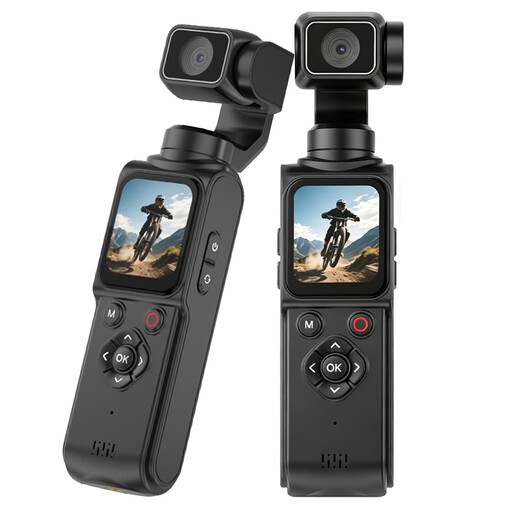
KINSI Mini Vlog Camera 4K

KINSI Mini Vlog Camera 4K, 64 MP

If you want to set up on a small table, check that the camera can focus on the close-up of the carving you want.

The product name lists a 330° rotating lens, a 1.72-inch touchscreen and a mini tripod.

View at Joybuy
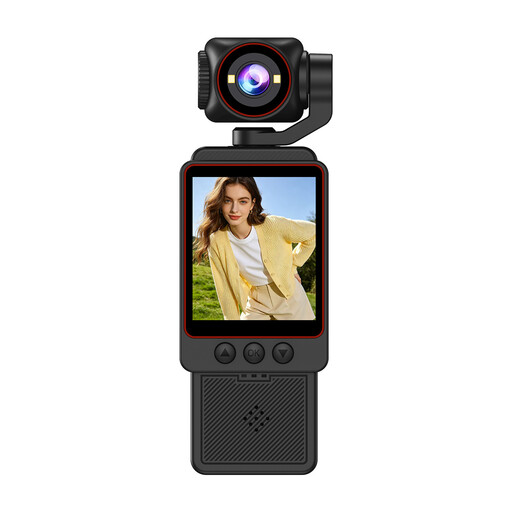
Small video camera with 1080P HD video

Small Video Camera, 1080P HD

For product photos on a small table, check that the model can focus closely enough and that you can position the lighting as needed.

The product name mentions HD photos, Wi-Fi transfer and an included SD card. It also states that the camera should not be exposed to rain or moisture.

View at Joybuy
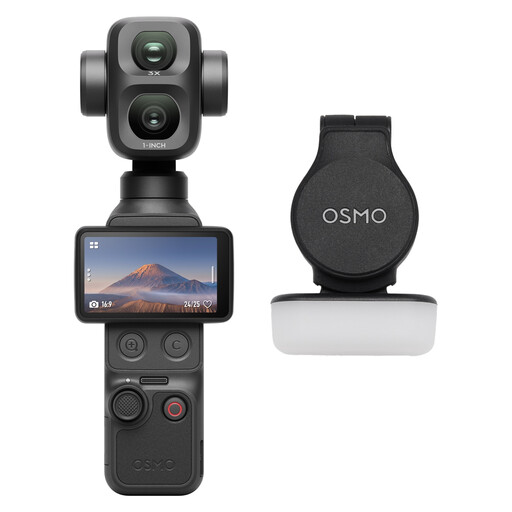
Osmo Pocket 4P Standard Combo in black

Osmo Pocket 4P Standard Combo, black

Before photographing spoon details, check whether this exact model can focus closely and whether the setup will fit on your table.

The product name lists the Standard Combo version in black.

View at Joybuy

Frequently asked questions

Do I need a 1:1 macro lens to photograph a whole spoon?

Not necessarily. First check whether the whole spoon fits in the frame from where your camera will be positioned. A zoom can be useful for different crops; a separate macro lens is most relevant if you want to capture small carving or grain details individually and at a larger size. Compare the magnification of the lens that is actually included.

How can I keep a series of spoon photos consistent?

Keep the camera and background in fixed positions as much as possible, and check the framing and lighting each time. Canon Netherlands recommends using a tripod for consistent composition in its product photography tips, but a tripod is not essential.

What should I look for in a camera kit?

Check whether the offer includes a camera body, a zoom lens or the macro lens you have in mind as well, and consider whether you already have suitable support and lighting. A camera body with a kit zoom does not automatically include a separate macro lens mentioned elsewhere.

What are my rights when buying a camera online in the Netherlands?

For eligible distance purchases, you’re generally entitled to a 14-day cooling-off period; exceptions and the type of seller are relevant. If a product is faulty, you can also hold the seller responsible under the statutory guarantee. The Government of the Netherlands does not specify a fixed statutory Dutch guarantee period of two years.

Can I use someone else’s photos on my product page?

Not without permission. According to the Government of the Netherlands, you may only use other people’s copyright-protected photos with the creator’s permission. You must not make a private copy available to the public.
