Which buying priorities should you consider?
Start with the field of view you want and a lens to suit your viewpoint. Then decide how much flexibility you need for cropping, and whether you want the turning sails to look sharp or show motion blur.
The percentages show the main priorities of consumers looking for a camera for this type of windmill landscape photography.
| Factor to consider |
What to look for when buying |
Who is this important for? |
| Detail when cropping |
Compare the effective resolution and a suitable lens with your preferred viewpoint and crop. |
If I want to crop later or make a large print, I need to retain enough captured detail. Around 36% of consumers put this need first. |
| Moving sails |
Check whether you can set the shutter speed and focus yourself; a tripod won’t stop the sails moving. |
I want to choose whether the turning sails are captured sharply or show motion blur. Around 29% of consumers prioritise this control over movement. |
| Portability |
Compare the weight of the camera body with the lens and any tripod you actually plan to take. |
If I’m walking and often changing viewpoints, the weight of all my gear matters. Around 21% of consumers put portability first. |
| Cost of the camera system |
Consider the camera body, a compatible lens and, if needed, a tripod as one complete set. |
I want to put together a suitable body-and-lens combination without the body limiting my lens choice. Around 14% of consumers cite the cost of the complete system as their top priority. |
Joybuy products for this type of photography
This selection includes mirrorless cameras with interchangeable lenses, as well as compact and action cameras. For fine detail in still windmill photos, consider the lens and sensor resolution, and assess video specifications separately.
 No image available
DJI Osmo Pocket 3 Creator Combo
Its compact size and rotating screen may suit composing shots on the move. The stated video specifications don’t, on their own, indicate the level of detail in still windmill photos.
1-inch CMOS sensor; 3-axis stabilisation; 2-inch rotating screen; video up to 4K/120fps.
View at Joybuy
 No image available
Sony ZV-E10 with 16–50mm zoom lens, black
This kit may suit you if you’re looking for a camera with an interchangeable lens and an included zoom lens. Bear in mind that the stated weight is for the body only.
24.2 MP; APS-C sensor; included 16–50mm lens; body weight 343 g.
View at Joybuy
 No image available
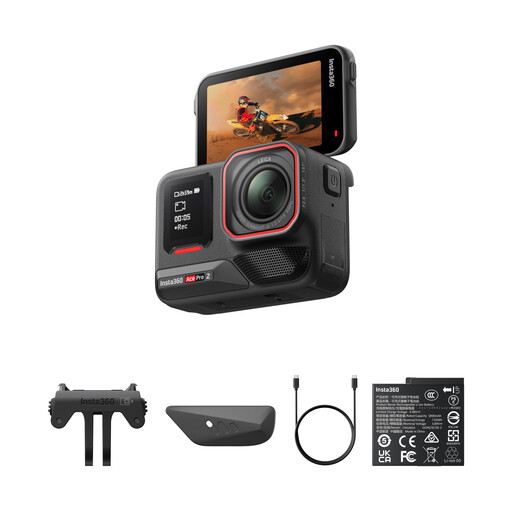
Insta360 Ace Pro 2 Dual Battery Bundle
This action camera may be suitable for outdoor use, but check that this type of camera meets your needs for still landscape photos. The stated 8K specification is for video.
1/1.3-inch sensor; 157° wide-angle lens; video up to 8K/30fps.
View at Joybuy
 No image available
Sony Alpha A6100 with 16–50mm f/3.5-5.6 OSS II
The included zoom lens offers a range of focal lengths for composing your shot; the lens weight is in addition to the stated body weight.
24.2 MP; APS-C sensor; 16–50mm f/3.5-5.6 OSS II lens; shutter speed up to 1/4000 s; body weight 396 g.
View at Joybuy
Frequently asked questions
Do I always need the camera with the most megapixels for fine detail?
No. Extra resolution is most useful if you plan to crop a lot or make large prints. Choose a suitable lens too, and pay attention to focus, camera movement and the movement of the sails when taking your photos.
When should I take a tripod?
For a stationary composition in low light, a tripod can reduce camera movement during a longer exposure. If you’re walking and want to change viewpoint quickly, shooting handheld may be more practical; a tripod won’t stop turning sails.
What should I bear in mind after using my camera outdoors?
Follow your camera and lens manuals for cleaning and protection. Take care to avoid moisture and dirt when changing lenses, and check what protection your particular combination offers.
What are the rules on camera warranties in the Netherlands?
According to ACM ConsuWijzer, your statutory guarantee applies alongside any retailer or manufacturer’s warranty. If a product breaks during normal use sooner than you could reasonably expect, the retailer must offer an appropriate solution. A statutory guarantee does not simply have a fixed two-year term.
Can I publish a windmill photo showing identifiable passers-by?
Not automatically: according to the Dutch Data Protection Authority, identifiable people are personal data, and privacy rules apply to taking and publishing such images. What’s permitted in a particular situation depends on the circumstances. If you prefer, take photos without identifiable bystanders or assess the legal basis before publishing.


