
Photographers of skies and shadows
You want to retain detail in both the sky and foreground when photographing a windmill against a bright sky, and are happy to use RAW or exposure bracketing.


First, decide how you like to take photos: from one spot, with time to shoot in RAW and bracket exposures, or while walking, often handheld. Then compare the complete kit for ease of use, weight, the framing you want and what’s included. More megapixels won’t automatically fix a bright sky and a dark foreground.
You want to retain detail in both the sky and foreground when photographing a windmill against a bright sky, and are happy to use RAW or exposure bracketing.
You change position to find the right composition and light, and weigh the convenience of carrying a complete kit against the flexibility of shooting handheld.
You want to be able to crop into details or print large, and compare resolution alongside the lens and your shooting technique.
First, decide whether your priority is managing contrast, carrying your camera on a walk, cropping into details, or understanding the cost and contents of the complete kit.
| What to consider | What should you check? | Who it matters most to |
|---|---|---|
| Sky and foreground | Check RAW, exposure bracketing and exposure controls on the exact model. Taking multiple shots takes time, and moving sails or clouds can look different between exposures. | If you want to retain detail in both the sky and foreground when shooting into the light, check the options for editing your photos; around 33% of consumers say contrast is their main concern when buying. |
| Portability | Compare the weight of the camera body and lens together. Check the conditions attached to any stabilisation claims. | If you change position while out walking, you’ll want to know how heavy the complete kit will be; around 27% of consumers prioritise portability and handheld photography. |
| Detail and cropping | Compare effective megapixels with the crop you want and a suitable lens; don’t assess resolution in isolation from the rest of the kit. | If you want to crop in closely or make a large print of the windmill later, look at the detail captured; around 20% of consumers prioritise cropping or print detail. |
| Complete kit | Check exactly what’s included, the lens mount and which other items you’ll need. Compare kits with the same contents. | If you still need a compatible lens or other essentials, it’s worth checking the complete kit in advance; around 20% of consumers make the usefulness and cost of the full kit their main priority. |
When you have a bright sky and dark foreground, exposure and editing matter too. Extra pixels won’t automatically solve the contrast.
First choose how you want to shoot, then compare the resolution and lens.
The lens and the contents of the version you choose affect how much you’ll be carrying and which items you’ll need.
Compare complete kits with the same contents and check what’s in the box.
You may need to buy a compatible lens and, depending on the version, other essentials separately.
A weather-protection rating for a camera body doesn’t prove that every lens has the same protection or that the combination is suitable in all weather conditions.
Check the specifications and conditions of use for both the body and the lens you’ve chosen.
The X-T5 is an APS-C mirrorless camera worth comparing if resolution and a lightweight body are important to you.
The EOS R8 and EOS R5 are separate full-frame models you can compare for resolution and body weight.
The α7R V is a full-frame option to consider if you want plenty of scope for cropping.
The Z5II is a full-frame alternative to compare for ease of use, handheld photography and the contents of the version you choose.
The OM-5 Mark II is worth looking into if you’re after a compact kit for walking and features for different shooting styles.
The options below include compact cameras described in their product names or information as suitable for photography, vlogging or use on the move. Compare the stated angle of view, zoom and controls with the composition and shooting style you need for a windmill landscape.
 No image available
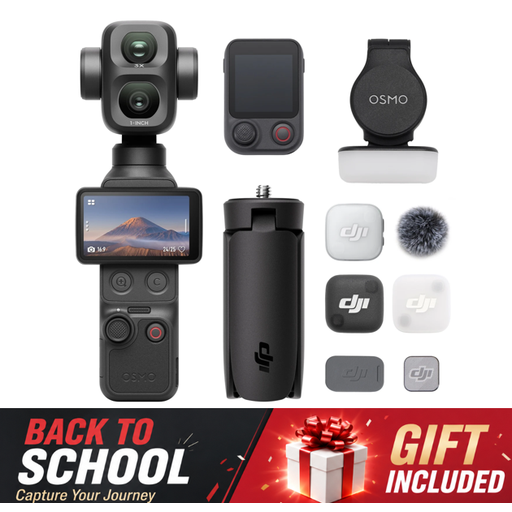
The wide-angle lens listed may be useful if you want to capture a wide landscape composition.
The product information lists a 1-inch CMOS sensor and a 20 mm f/2.0 wide-angle lens.
 No image available
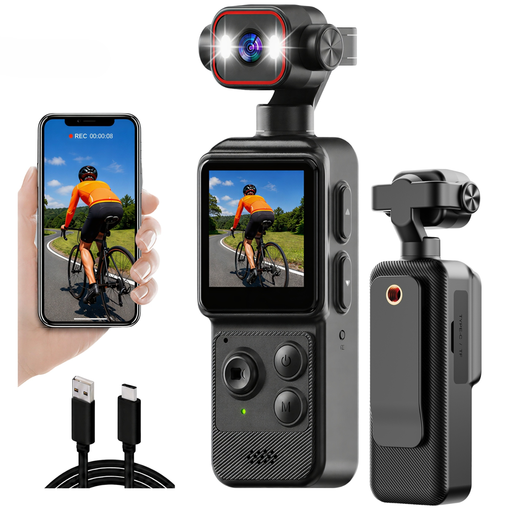
The clip is designed to attach the camera to clothing, a rucksack or a bag when you’re on the move.
The product name lists a 1.54-inch display and a 140° field of view; the product information mentions app control.
 No image available
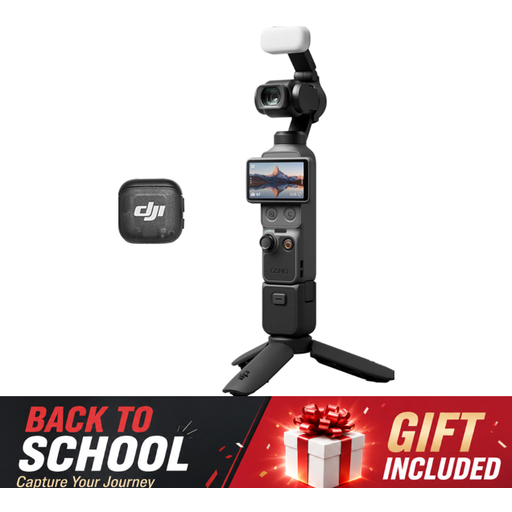
The product information describes this version as suitable for photography on the move. Check whether the controls suit the way you like to capture landscapes.
The product information lists a 1-inch CMOS sensor, mechanical 3-axis stabilisation, a rotating 2-inch screen and a weight of 179 g.
 No image available
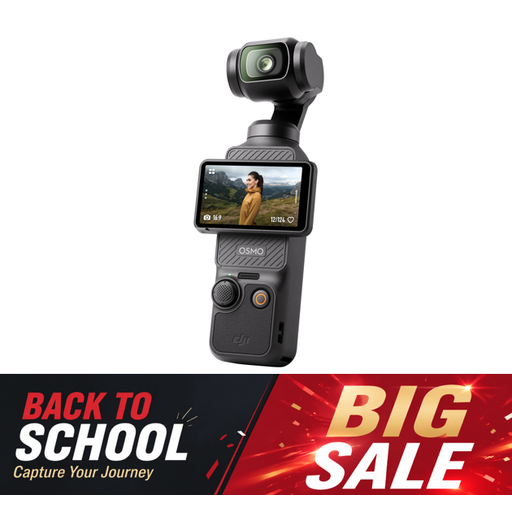
The product information mentions still images and use on the move; check whether this suits the way you want to photograph a windmill landscape.
The product information lists a 1-inch CMOS sensor, mechanical 3-axis stabilisation and a rotating 2-inch touchscreen.
 No image available
The optical zoom listed may be useful if you want to frame a windmill in the distance.
The product information lists 10× optical zoom, a 16MP front camera and a 12MP rear camera. The stated 56MP is interpolated.
First, check the exposure in the sky and foreground. If one shot doesn’t capture the detail you want, you can use RAW and exposure bracketing on a suitable model; successive shots may look different if the sails or clouds are moving.
A tripod keeps the camera steady when using a longer shutter speed or when you want the framing to stay the same across several exposures. A self-timer or remote release can help reduce camera movement caused by pressing the shutter button.
Check the lens mount, the lens you want and exactly what’s included with that version. For example, the Dutch listing for the Nikon Z5II body states that the charger isn’t included; that doesn’t tell you what’s included with other versions.
According to the Netherlands Authority for Consumers and Markets, you should contact the seller to resolve an issue with a faulty product. There’s no fixed statutory guarantee period for all products in the Netherlands; what you can expect depends, among other things, on the product and the sales information.
Not necessarily. The Dutch Data Protection Authority distinguishes between private use within a very limited circle and wider sharing or commercial use; when people are identifiable, personal data and the GDPR may be relevant. Consider the specific use before publishing.