Who is this camera guide for?

Photographers of flower details

You want to fill the frame with stamens, petals or other tiny details. Compare the magnification of the complete camera-and-lens combination: Canon says macro photography typically offers magnifications of 0.5x to 1.0x at the minimum focusing distance.

Walkers travelling light

You want to take photos quickly on a holiday walk without changing lenses. The Consumers’ Association describes compact cameras as models with a fixed lens that are usually small and lightweight.

Photographers staying on the path

You also want to frame flowers that you can’t get close to. In that case, the zoom setting and focusing range matter, as do the rules for the paths open to visitors in the area.

What should you look for when buying?

Compact camera with close-up mode

A good fit if: you want to take one camera with you and photograph nearby flowers close up. OM SYSTEM says the TG-7’s microscope mode can focus from as close as 1 cm.

The trade-off: the fixed lens limits your future lens choices. Focusing at close range alone doesn’t tell you the magnification or working distance you’ll get.

Fixed zoom lens with greater reach

A good fit if: you want to frame flowers at different distances on the same walk without changing lenses. Sony specifies a 24–600 mm full-frame equivalent range for the RX10 IV.

The trade-off: zoom isn’t a measure of macro magnification; the RX10 IV’s minimum focusing distance varies between wide-angle and telephoto.

Mirrorless camera with a macro lens

A good fit if: you want to capture small details at a larger size, or already own a compatible camera body. Nikon and OM SYSTEM specify a maximum magnification of 1:1 for the macro lenses mentioned here.

The trade-off: you’ll need a camera body and a compatible lens. Check the mount and how much room you’ll have in front of the lens.

What to consider What should you look for? Who should pay particular attention?
Tiny details Compare the magnification of the exact lens or close-up mode. Treat the space in front of the lens separately from the minimum focusing distance. If I want to fill the frame with stamens or petals, I compare the complete setup; around 33% of consumers put flower details first.
Ease of carrying Check whether the lens is fixed or actually included in the kit. Compare the weight of the complete setup, not just that of a separate lens. If I want to take photos quickly on a walk without changing lenses, simplicity matters to me; around 27% of consumers prioritise ease of carrying and being able to take photos straight away.
Taking photos from the path Check the focusing range at your preferred zoom setting and read the guidance for the specific area. Natuurmonumenten and Staatsbosbeheer refer visitors to local rules and access guidance. If a flower is out of reach, I want to frame it from an accessible spot; around 20% of consumers put taking photos from the path first.
Outdoor conditions Compare the protection offered by the exact camera and lens. Canon warns that the dust and moisture resistance of the RF 100mm F2.8L Macro IS USM does not completely prevent dust or moisture from getting inside. If I’m preparing for changeable conditions on an outdoor holiday, I check the protection of my whole setup; around 20% of consumers make weather resistance their main consideration.

Common buying mistakes

  • Assuming a camera body or standard zoom is a complete macro setup

    The stated magnification applies to the lens mentioned or to the complete camera with its fixed lens. A camera body on its own is not the same macro setup.

    Check the lens mount and what’s included in the kit before choosing a combination.

  • Confusing focusing distance with the clear space in front of the lens

    Nikon gives the NIKKOR Z MC 50mm f/2.8 a minimum focusing distance of 0.16 m, with around 5 cm between the front of the lens and the subject at the closest setting. These are different measurements.

    Check both the magnification you want and the space in front of the lens, especially if you want to stay in an accessible spot.

  • Assuming more zoom automatically means better macro photos

    The zoom range doesn’t tell you what macro magnification you’ll get. The Sony RX10 IV’s minimum focusing distance also changes with the zoom setting.

    Check the focus and framing at the setting you plan to use for the flower.

  • Treating an older test roundup as the latest verdict

    The Consumers’ Association says that the test data in its camera overview runs up to autumn 2025 and that the overview is out of date.

    When comparing models, check the test date and verify the specifications and kit contents for the exact model.

Camera brands to consider

OM SYSTEM

For this type of photography, it offers both a compact camera with a fixed lens and separate macro lenses for a compatible mirrorless camera.

  • OM SYSTEM says the TG-7 focuses from 1 cm in microscope mode. The manufacturer specifies 1:1 magnification for the M.Zuiko Digital ED 60mm F2.8 Macro, and a weight of 185 g for the lens alone.
  • With a separate lens, you’ll also need to carry a compatible camera body and consider the weight of the complete kit.

Nikon

The Z-system lets you choose a camera body and macro lens as a combination.

  • Nikon specifies 1:1 magnification for the NIKKOR Z MC 50mm f/2.8, with around 5 cm between the front of the lens and the subject at the minimum focusing distance.
  • Check compatibility with the exact camera body and what’s included in the kit. The distance given is not the same as the minimum focusing distance.

Canon

The RF system uses separate macro lenses with a compatible EOS R camera body.

  • Canon specifies a maximum magnification of 1.4x for the RF 100mm F2.8L Macro IS USM and a lens weight of 685 g.
  • Canon states that the lens is dust- and moisture-resistant, but warns that this does not completely prevent dust or droplets from getting inside.

Sony

The RX10 IV is a fixed-lens option for framing a variety of shots on a single walk.

  • Sony specifies 25x optical zoom for the RX10 IV.
  • The minimum focusing distance from the front of the lens varies between wide-angle and telephoto; the zoom range alone doesn’t prove that it offers macro magnification.

PENTAX

The WG-8 is a compact camera with a fixed lens for anyone who wants to take just one camera.

  • Ricoh Imaging describes the WG-8 as rugged and gives it a 28–140 mm full-frame equivalent range.
  • The zoom range alone doesn’t tell you what magnification to expect when photographing tiny flower details.

Cameras at Joybuy

Here are some cameras that may be relevant to this type of photography. Camera type and zoom specifications alone don’t show whether a model offers the macro magnification you want, so check the details of the exact camera and kit.
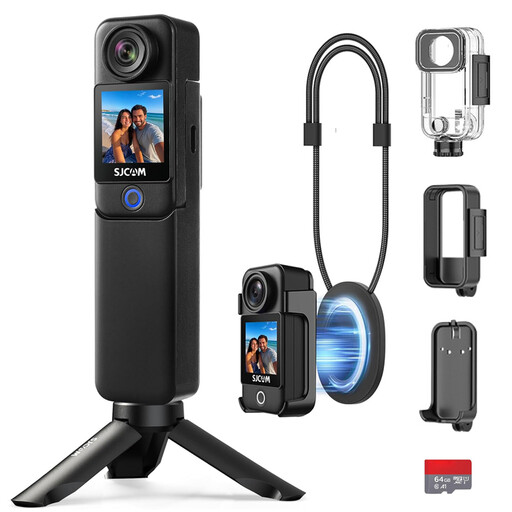
SJCAM C300 4K action camera, black

SJCAM C300 4K Action Camera, black

The product title describes this model as an action camera; it doesn’t tell you whether it’s suitable for macro flower photography.

The title lists a 154° lens, 6-axis stabilisation, battery life of up to 7 hours and an accessory kit. The supplied waterproof housing is required for underwater use.

View at Joybuy

KOMERY G7 5K digital camera, white

KOMERY G7 5K Digital Camera, white

The title describes a camera with zoom for travel; that alone doesn’t confirm it’s suitable for photographing tiny flower details.

The product title lists 18× zoom and 80 MP. The product description advises keeping the camera away from damp environments.

View at Joybuy
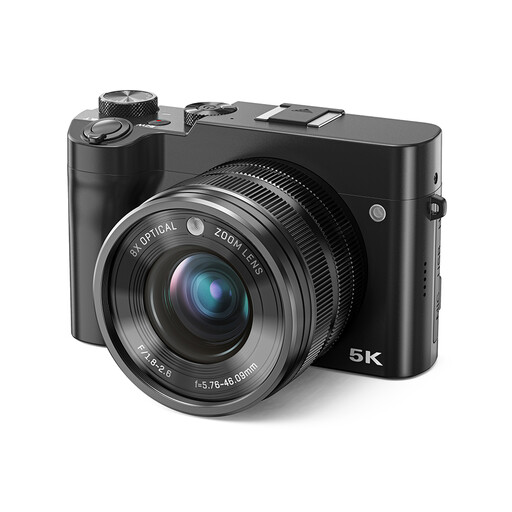
Songdian digital camera with 8x optical zoom, black

Songdian Digital Camera 8X Optical Zoom, black

The stated zoom may be useful for framing subjects at a distance, but it doesn’t tell you what macro magnification the camera offers.

The product title lists 8× optical zoom, 5K video, 64 MP and a dual lens. The product description advises keeping the camera away from damp environments.

View at Joybuy
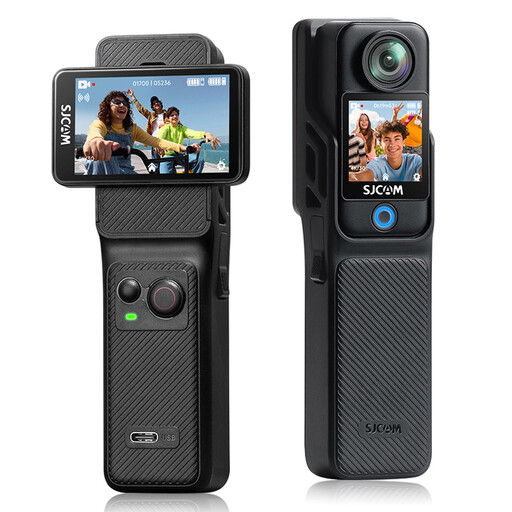
SJCAM C400 4K action camera with dual touchscreen, black

SJCAM C400 4K Action Camera, black

The product title describes this model as an action camera; check separately whether its focusing capabilities are suitable for close-ups of flowers.

The title lists dual touchscreens, 16 MP photos, a 154° field of view and battery life of up to 437 minutes. The supplied waterproof housing is required for underwater use.

View at Joybuy
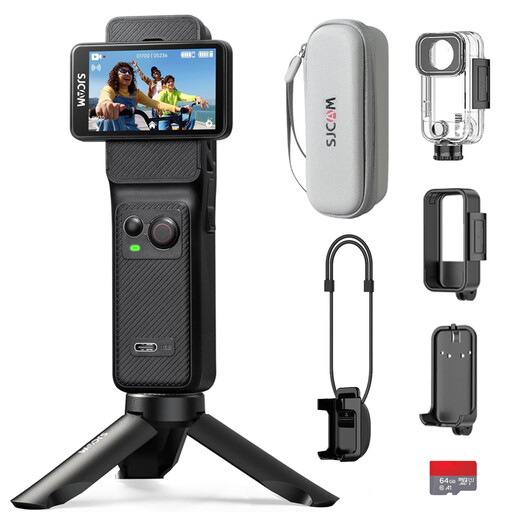
SJCAM C400 4K action camera with 64GB card, black

SJCAM C400 4K Action Camera with 64GB card, black

The product title describes an action camera; the listed accessories don’t tell you whether this model can focus on the flower details you want to capture.

The title lists a 64GB card, an accessory kit, dual touchscreens and 16 MP photos. The supplied waterproof housing is required for underwater use.

View at Joybuy

Frequently asked questions

Is a focusing distance of 1 cm enough to photograph a flower from the path?

Not necessarily. OM SYSTEM gives 1 cm for the TG-7’s microscope mode, which describes close-up focusing, not the distance at which you can photograph a flower further away. Compare the framing you want with the focusing range at your preferred zoom setting; Sony gives different distances for wide-angle and telephoto on the RX10 IV.

How can you avoid blurry handheld macro photos?

Nikon recommends using a shutter speed fast enough to keep the camera steady when taking handheld macro photos. A tripod can keep the camera stable, but it won’t stop a flower moving, so remember to account for movement in your subject too.

What should you check when buying a camera online?

Check who the seller is, which items are included in the kit and what terms and conditions apply. According to the Dutch government, a qualifying online distance purchase from a business generally comes with a 14-day cooling-off period; the guidance cited doesn’t treat an online purchase from a private individual as a distance purchase. In the Netherlands, there is no fixed statutory guarantee period; if a product is faulty, contact the seller.

Can you leave the path or pick flowers to photograph wildflowers?

It depends on the rules at the specific location. The Dutch government says that provinces set the rules for nature reserves. In Natuurmonumenten areas, the local rules generally require you to stay on the paths, and picking wild plants is not permitted; Staatsbosbeheer refers visitors to the signs at the site. Always check the guidance for the area you’re visiting.
