
Camper travelling light
You want to photograph flowers quickly as you go, without changing lenses or taking up much room in your bag. Consumentenbond lists the subject and the camera’s size among the factors to consider when choosing.


A rugged compact camera is a good fit for walks while camping if you want to travel without a separate macro lens and protection matters to you. Check, though, that its close-up mode can frame flowers large enough. If you want to capture tiny details filling the frame and have more choice of lenses, consider a mirrorless camera with a suitable macro lens, and assess the protection and contents of the complete kit.
You want to photograph flowers quickly as you go, without changing lenses or taking up much room in your bag. Consumentenbond lists the subject and the camera’s size among the factors to consider when choosing.
You want to capture tiny structures, such as stamens, at a large size, and are prepared to take a suitable macro lens with you. Check the lens’s magnification, not just the camera body.
You expect rain or dirt and want to weigh up how well the entire camera set-up is protected. The specifications for a body and a separate lens may differ.
A good fit if: you want to walk without changing lenses and use a built-in close-up mode. OM SYSTEM lists a Microscope mode for the TG-7; Ricoh Imaging specifies a five-times optical zoom for the PENTAX WG-8.
Trade-off: you can’t swap the fixed lens for a different macro lens, so check whether its close-up capability suits the flower framing you want.
A good fit if: you want to capture small parts of flowers at a large size and choose a suitable separate macro lens. OM SYSTEM and Nikon specify 1:1 magnification for the macro lenses mentioned; Canon specifies a maximum of 1:2 for the RF 35mm F1.8 IS Macro STM.
Trade-off: the body and lens are separate components, so check the mount, what’s included in the kit, the weight and the protection of both.
| Factor to consider | What to check before buying | Who should pay particular attention? |
|---|---|---|
| Tiny details | Compare the maximum magnification of the lens or close-up mode, and consider how much space there is in front of the lens for light. | If you want to fill the frame with stamens or tiny structures, the lens determines the magnification. Around 33% of consumers prioritise flower details. |
| Protection in changeable weather | Check the body and lens specifications separately; they are not interchangeable. | If you expect rain or dirt while out and about, you’ll want to know how the complete set-up will cope. Around 27% of consumers give weather protection top priority. |
| Travelling light | Compare the weight and components of the complete kit, not just the body. | If you have little room for luggage on walks, a set-up that doesn’t involve changing separate lenses may be more practical. Around 20% of consumers mainly prioritise carrying light. |
| Creative control | Check which lenses fit the mount and whether the macro lens you want is included in the offer. | If you want to switch between photographing a whole flower and its details, the choice of lenses matters. Around 20% of consumers prioritise this creative control. |
Consumentenbond notes that more megapixels don’t necessarily mean better photos. For flower photography, also consider the lens or close-up mode and the kind of image you want to create.
The Canon EOS R50 kit described comes with an RF-S 18-150mm zoom lens, not the separately described RF 35mm macro lens. A body-only offer may not include a lens.
Read the full kit name and box contents, and check that the lens mount and magnification meet your close-up needs.
A suitable macro lens may be a separate part of the kit.
OM SYSTEM lists separate protection specifications for the OM-5 Mark II body and the M.Zuiko ED 60mm F2.8 Macro lens.
Assess the body, attached lens and accessories separately for the conditions in which you plan to use them.
According to Consumentenbond, a higher megapixel count isn’t automatically better; the lens, sensor and how they work together also matter.
Start by deciding how large you want the flower to appear in the frame, then check which lens or close-up mode is designed for that.
Offers the TG-7 compact camera and the OM-5 Mark II mirrorless camera. The M.Zuiko ED 60mm F2.8 Macro is sold separately for the latter.
The PENTAX WG-8 is a rugged compact camera with a fixed lens, designed for a set-up without separate lens changes.
The EOS R50 has an RF mount; the RF 35mm F1.8 IS Macro STM is a separate option for close-ups.
According to Nikon, the Z50II can be used with a suitable Z-mount macro lens, including the NIKKOR Z MC 50mm f/2.8.
The SEL30M35 is a separate macro lens for a compatible camera with a Sony E-mount.
The products below are compact Pocket and mini action cameras that are suited to travelling light. Their product names don’t indicate that they’re suitable for macro photography of flower details, so check before buying whether their close-up capabilities meet your needs.
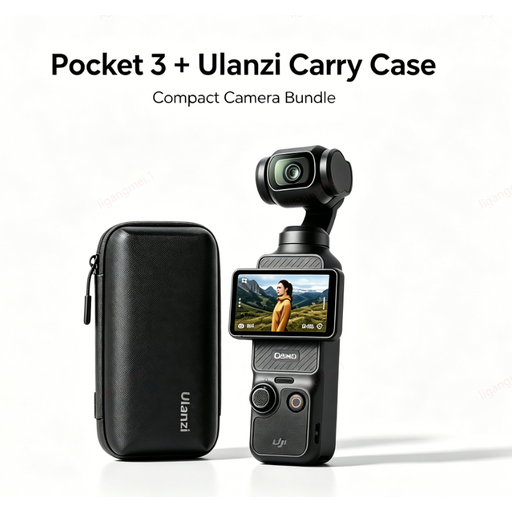 No image available
A compact camera with a carry bag for anyone who wants to take a small filming set-up on the go; the product information mentions stabilisation.
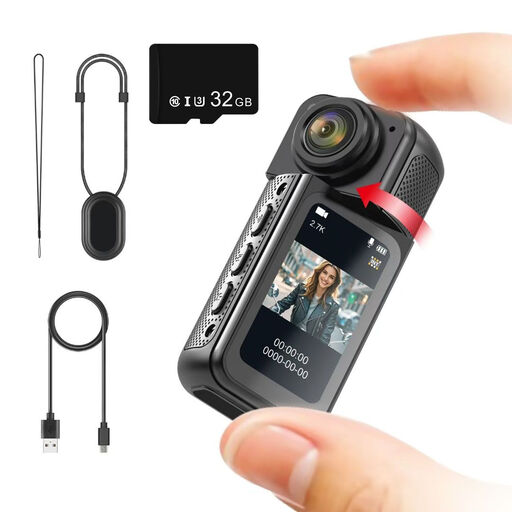 No image available
The rotatable lens may be useful if you want to adjust the filming angle as you record; check separately whether the close-up mode is suitable for flowers.
The title lists 2.7K, a 180° rotatable lens, a 1.47-inch IPS screen and an included 32 GB memory card.
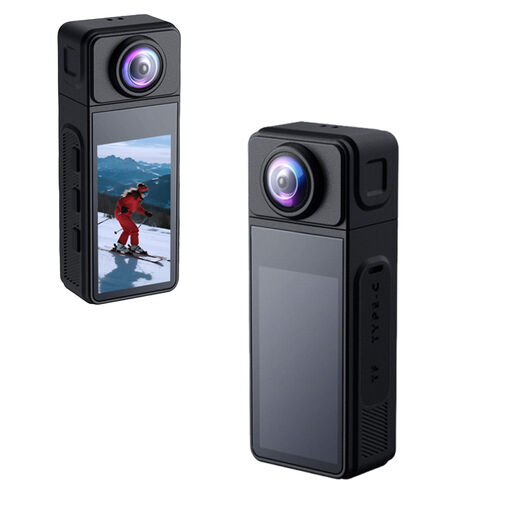 No image available
The title mentions a rotatable lens and magnetic attachment for a compact set-up; check whether the camera can take the flower close-ups you want.
The title lists 2K, a 270° rotatable lens, a 1.86-inch IPS screen, Wi-Fi, an app, a TF card slot and a Type-C connection.
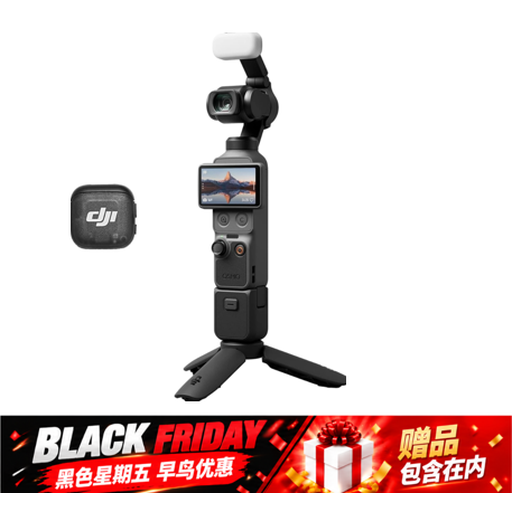 No image available
A Pocket gimbal camera with a grip, for anyone looking for a portable camera to take on the go. The video specifications listed don’t, by themselves, tell you anything about macro photography.
The product title lists a 1-inch CMOS sensor, 4K/240fps video, 3-axis stabilisation and 2× lossless zoom.
 No image available
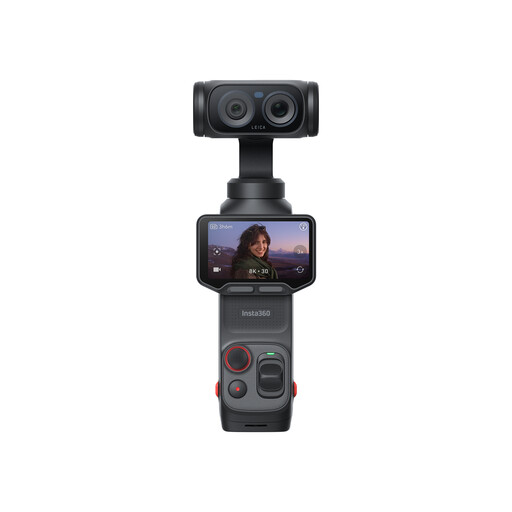
The product information describes a handheld vlogging camera with two lenses; before using it for flower photography, check that its close-up capabilities suit your subject.
No. Compare the maximum magnification of the specific lens or close-up mode, as well as the space left in front of the lens for light. A short distance alone doesn’t determine how large a flower detail will appear in the frame.
Check that the offer includes the lens you want and that it fits the body. For example, the Canon EOS R50 kit described comes with an RF-S 18-150mm zoom lens, while the RF 35mm macro lens is listed separately. Also check which battery, charging option and memory card come with the kit you choose.
That depends on the nature reserve and the access rules in force. Staatsbosbeheer says that roads and paths are accessible in most of its areas, and any exceptions are shown on the access signs. Check the rules set by the site manager; a camera’s specifications don’t give you permission to walk on vegetation.
Not automatically. ACM ConsuWijzer explains that your statutory guarantee depends on what you could reasonably expect from the product under normal use; the retailer is responsible for this. This is separate from any manufacturer’s or retailer’s guarantee with a specified duration.