
Artist with a colour-critical portfolio
Wants to capture paint and paper tones consistently and is prepared to use a neutral reference and edit the images. Canon Europe describes using a grey card as a colour reference.


Start with even lighting and a straight, stable set-up. If your portfolio will only be viewed on a screen, try your phone first. A compact camera may suit you if you want a dedicated camera with a built-in lens, while a mirrorless camera gives you more choice of lens and the option to process RAW files. A higher resolution alone won’t prevent reflections, colour casts or crooked shots.
Wants to capture paint and paper tones consistently and is prepared to use a neutral reference and edit the images. Canon Europe describes using a grey card as a colour reference.
Benefits from a repeatable, straight set-up and control over lighting and reflections when photographing several watercolours. Amateur Photographer explains how lighting set-ups and reflections affect art reproduction.
Wants to see whether an existing phone and simple lighting provide enough detail before buying a camera. Adobe Express explains how to adjust focus and exposure when taking photos with a phone.
| What to consider | What to look for when buying | Who is this most relevant to? |
|---|---|---|
| Paint and paper colours | Check for RAW support and whether you can process the files. Take a shot with a neutral reference under your chosen lighting. | If I need paint and paper tones to remain recognisable, I want to assess colour and white balance carefully; around 36% of consumers put colour accuracy first. |
| Straight, evenly lit shots | Check that you can point the camera straight and keep it stable, and position the lighting without reflections reaching the lens. | When photographing several works, I want a repeatable set-up to control changes in perspective and uneven lighting; around 29% of consumers give this the highest priority. |
| Paper and brushwork detail | Assess a test shot at the intended portfolio size and check the lens and sharpness across the whole page. | If I want to crop the image or use a larger version, the detail retained in the file matters; around 21% of consumers prioritise preserving detail. |
| Keeping extra costs down | Take a test shot with your phone first. If you’re buying a camera body separately, check which lens and set-up you’ll still need. | For an occasional digital portfolio, I want to see whether my existing equipment will do the job first; around 14% of consumers prioritise keeping extra costs down. |
Consumentenbond highlights factors such as intended use, ease of adjustment, zoom range and image quality when choosing a camera. For watercolours, lighting and a neutral colour reference are also important: more megapixels won’t correct reflections or uneven lighting.
Resolution won’t tell you whether a watercolour has been photographed straight, in focus and without reflections. Assess a test image at the size you need for your portfolio and improve the set-up first. Amateur Photographer explains the importance of even lighting and avoiding reflections.
A camera body sold on its own doesn’t automatically include a lens. Check the full model code, mount, lens and bundle contents before you choose.
You may need to buy a suitable lens, stable mount or lighting separately. Also consider the space needed and the time it takes to set up your shot.
A Joybuy listing for the Sony ILCE-6400A mentions both a lens and ‘Body Only’. As a result, it doesn’t clearly confirm which lens is included.
Check the exact model code and confirm the bundle contents before choosing based on the listing.
Canon offers both a mirrorless camera with an interchangeable lens and a compact camera with a built-in lens to consider.
The Fujifilm X-M5 is a mirrorless camera for anyone who wants to process RAW files and choose or check the right X lens themselves.
The Sony Alpha 6400, also known as the ILCE-6400A, is a mirrorless camera option with an E-mount.
These cameras are options to consider for documenting watercolours. Take a test shot to see whether the level of detail and controls suit your portfolio.
 No image available
This bundle may suit you if you’re looking for a dedicated camera for documenting your work. Assess the results with a test shot of your watercolour.
The bundle description lists a DJI Pocket 3 camera and a Ulanzi storage case.
 No image available
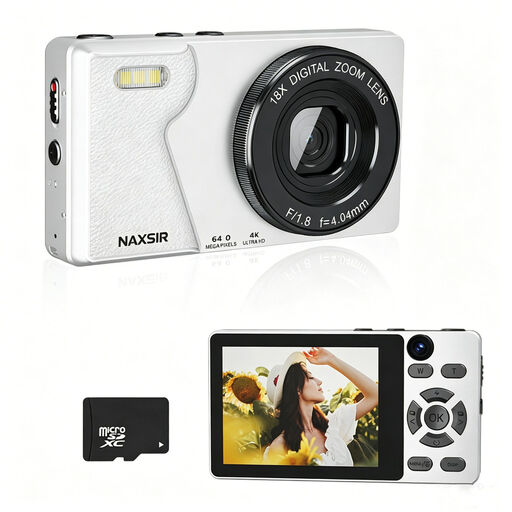
If you’re considering this camera for portfolio photos, take a test shot to check whether the detail and controls suit your work.
The product information lists 64 MP photo resolution, 18× digital zoom, autofocus and a 32 GB memory card included.
 No image available
This compact camera is an option for documenting your work. Take a test shot to see how your watercolour looks in your portfolio.
The product description lists a 1-inch CMOS sensor and 10-bit D-Log M for colour grading. These specifications alone don’t confirm colour accuracy when photographing watercolours.
 No image available
If you’re considering a compact camera, take a photo of your own work to check whether the result shows enough detail at your intended portfolio size.
The product title lists 44 MP and 16× zoom.
 No image available
The listed zoom kit may suit you if you’re looking for a mirrorless camera with a lens. Check what’s included and assess the sharpness with a test shot.
The product information lists a 24.2-megapixel APS-C sensor and a vari-angle touchscreen. According to the description, an adapter and charger are not included.
No. First, take a straight test shot with your existing phone in soft, even light. Assess the file at the size at which your portfolio will be viewed. RAW and manual controls depend on your phone and app.
Point the camera straight at the flat artwork, keep it stable and position the lighting so the page is evenly lit without reflections reaching the lens. Amateur Photographer recommends paying attention to even lighting and the position of light sources when photographing art. If the work is behind glass, take a test shot first.
RAW files give you room to assess the white balance during processing, but they don’t guarantee a match with the original. Adobe explains how to adjust white balance using a known neutral surface. Make sure you also use a suitable reference under the same lighting.
For a standard online consumer purchase in the Netherlands, you generally have a statutory 14-day cooling-off period after delivery, subject to applicable exceptions. ACM ConsuWijzer explains the cooling-off period. If a product doesn’t meet what you could reasonably expect when used normally, you also have statutory rights against the seller. ACM ConsuWijzer explains that the seller must resolve the problem free of charge, for example through a repair, replacement or refund.
You need the artist’s permission to use someone else’s copyright-protected work publicly. According to the Dutch Government, this also applies when you photograph the work. You must assess the rights to any other elements in the photo separately.