
Filming small watch components
If you want to capture screws and moving parts clearly, a suitable lens, precise focusing and enough space in front of the camera are key. Sony notes that macro photography requires precise focusing.


Start by working out how large the smallest parts need to appear in the frame, then check the magnification and focusing distance of the exact camera-and-lens combination. A mirrorless camera with a suitable macro lens gives you different framing options, while a compact camera means less separate equipment to manage. A pocket camera is mainly an option for wider shots, not necessarily for tiny details. Also allow enough room for your hands, the camera and the lighting.
If you want to capture screws and moving parts clearly, a suitable lens, precise focusing and enough space in front of the camera are key. Sony notes that macro photography requires precise focusing.
If you want a fixed camera angle in a cramped workspace, consider the space needed for the camera, lighting, your hands and tools together. A lens’s minimum working distance can be just as important as its magnification.
If you want to keep your equipment straightforward, check the complete setup: the camera, a suitable lens and any accessories you need. The Consumers’ Association highlights an extra battery and memory card as some of the things to consider when buying a camera.
| What to consider | What should you check? | Who is this important for? |
|---|---|---|
| Small parts in the frame | Magnification, focusing distance and a test frame using a part of a similar size. | If I want to film screws or gears clearly, I’ll look at the lens and framing first; around 36% of consumers prioritise magnification for detail. |
| Lighting and focus | Test the focus and exposure with the lighting you can actually fit on your desk. | If I want to keep a particular part in focus while repairing it, I’ll consider lighting and focus together; around 29% of consumers prioritise this. |
| Desk space | Measure where the camera and light can go, and check the working distance and viewing angle from that position. | If I want to move my hands and tools freely, I’ll start by choosing a workable camera angle; around 21% of consumers prioritise having room to work. |
| Complete setup and recording time | Check which lens, mount, lighting, memory card and power supply are included, and which video mode you want to use. | If I want to record long takes without discovering halfway through that something is missing, I’ll check the complete setup; around 14% of consumers make this their top priority. |
The lens information listed is based on manufacturers’ specifications. On its own, it doesn’t tell you how a complete camera setup will show watch components on video. Where possible, test your setup in the place where you’ll be doing the repairs.
Maximum magnification varies from lens to lens. Canon gives different magnification figures for the RF-S 18-45mm kit zoom and the separate RF 35mm macro lens.
Check which lens actually comes with the set you’ve chosen, and compare its stated magnification with the size of the parts you want to film.
At its closest setting, a lens may leave little room between the lens, your hands, tools and lighting. Sony gives the SEL30M35 a working distance of 2.4 cm from the front of the lens at this setting.
Check both the magnification and working distance, and test the camera angle in the space where you plan to work.
OM SYSTEM lists a microscope mode on the Tough TG-7 for photos from 1 cm away, and documents the video function separately. This doesn’t confirm that the 1 cm distance also applies to the video mode you want to use.
Test the camera using the exact close-up setting and video mode you plan to use.
A gimbal doesn’t tell you how large a small screw will appear in the frame. DJI gives the Osmo Pocket 3 a focusing range starting at 0.2 m.
Use a test frame of a similar-sized part to see whether the camera captures the detail you need.
Mirrorless cameras with interchangeable RF lenses, including options for close-up shots.
Mirrorless cameras with interchangeable E-mount lenses; choose the camera body and a suitable macro lens together.
The Osmo Pocket 3 is a compact option for wider shots of your workbench or for explaining what you’re doing during a repair.
The Tough TG-7 combines a compact camera with a manufacturer-described close-up photo mode and a separate video function.
This selection of Joybuy products is aimed at video recording. For close-ups of watch components, check whether the focus and framing on each model suit your working distance.
 No image available
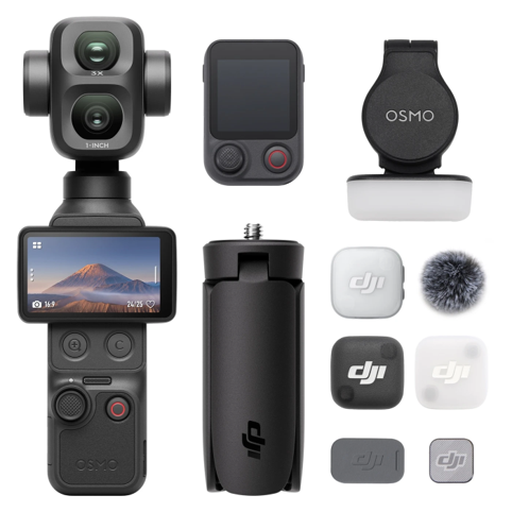
A pocket vlog camera to consider for video recording; the product information doesn’t confirm that it’s suitable for close-ups of small watch components.
The product information lists a 1-inch sensor and 4K/240fps in slow-motion mode.
 No image available
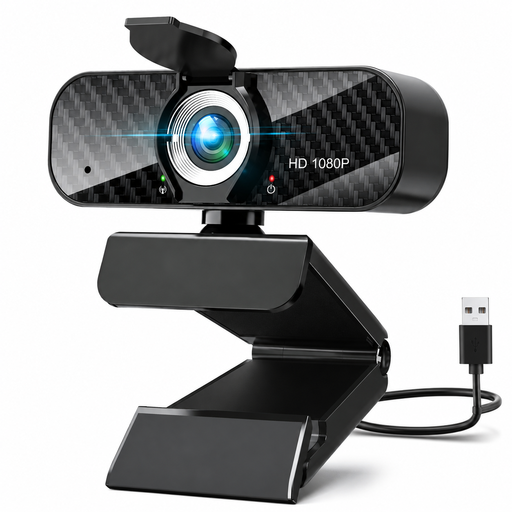
A webcam for a recording setup by your PC; the listed webcam features don’t prove that small parts will appear large enough in the frame.
The product information lists 1080p, 30 fps, autofocus, USB plug-and-play and a flexible tripod stand.
 No image available
A pocket camera for video recording; check separately whether the framing is suitable for the small parts you want to film.
The product name lists a 1-inch CMOS sensor, 4K/240fps, 3-axis stabilisation, 2× lossless zoom, 107 GB of built-in storage and a rotating 2-inch screen.
 No image available
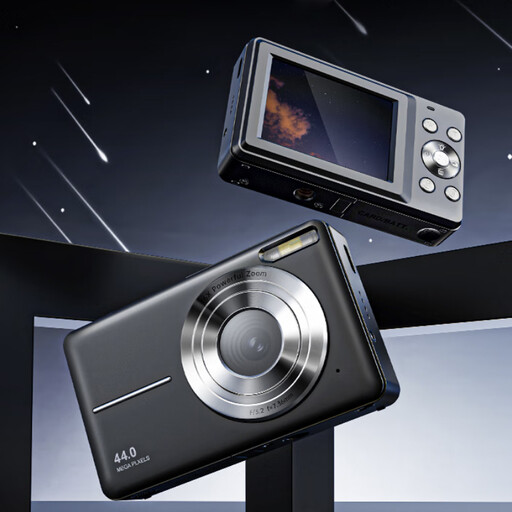
A pocket camera for photos and video; the listed features don’t automatically show that it’s suitable for macro video of a watch.
The product name lists 4K, 44 MP and 16× zoom; the product information mentions autofocus and digital zoom.
 No image available
According to the product information, this camera is designed for wider shots of a repair. DJI gives a focusing range starting at 0.2 m, so check the framing before choosing it for small parts.
The product name lists a 1-inch CMOS sensor and 4K/120fps video. The product information mentions 3-axis stabilisation and a rotating 2-inch touchscreen.
No. The 4K label alone doesn’t tell you how large the screw will appear in the frame. Compare the magnification and focusing distance of the exact lens or camera; Canon and Sony publish different specifications for their lenses.
Test the camera position above or at an angle beside your workspace, with your hands and light in their usual places. Sony gives the SEL30M35 a working distance of 2.4 cm from the front of the lens at its closest setting; check whether your setup leaves enough room.
Check that the lens, memory card, mount and power supply you need are actually included with the set you choose. According to ACM ConsuWijzer, a standard online consumer purchase usually comes with a statutory 14-day cooling-off period from delivery. Your statutory guarantee also depends on what you could reasonably expect from the product, rather than one fixed period applying to all cameras.
Not without taking privacy rules into account. The Dutch Data Protection Authority considers recognisable people to be personal data; the exception for personal or household use doesn’t automatically apply to public sharing. Keep the people you live with out of shot, or check which legal basis and privacy requirements apply before publishing.