
Vintage glassware sellers
You want to take consistent shots that show the shape and character of each piece, without reflections dominating the image.


For straightforward close-ups without changing lenses, a compact camera with a macro mode is a practical option. A mirrorless camera gives you more freedom to choose a lens for wider shots or detailed photos. When photographing glassware, consider space for lighting and reflections; for small details, compare the magnification and working distance of the specific lens. Focus stacking can help you capture a stationary object in sharp focus from front to back.
You want to take consistent shots that show the shape and character of each piece, without reflections dominating the image.
You want to capture hallmarks, decoration or small display pieces clearly, so you pay close attention to magnification and working distance.
You want to get started easily without changing lenses often, or have more control with a tripod and a focus stack.
First choose between a fixed lens and an interchangeable-lens system. Then decide which magnification, working distance and focusing options suit your photos.
Best for: anyone who wants to photograph small objects without choosing a separate lens.
Bear in mind: the fixed lens limits your ability to use different lenses later on.
Best for: anyone who mainly photographs whole glass pieces, groups of objects and a variety of compositions.
Bear in mind: a camera body without a lens is not a complete setup; check the close-up capabilities of your chosen zoom lens too.
Best for: anyone who wants to fill the frame with small hallmarks, decorations or other details.
Bear in mind: your lens choice can affect the working distance and the space available for lighting.
| What to consider | What to look for when buying | Who should consider this? |
|---|---|---|
| Reflections and lighting | Consider the working distance and whether there is room to position lights; check for reflections from your intended shooting angle. | When I photograph glassware, I want to avoid lights or the camera showing up as distracting reflections. Around 36% of consumers give controlling reflections their top priority. |
| Magnifying small details | Compare the magnification and working distance of the specific lens or close-up mode; check whether the mirrorless camera kit includes the lens you need. | For hallmarks and decorations, I want to know whether the lens can focus close enough while leaving enough room to frame the shot. Capturing small details is a top priority for around 29% of consumers. |
| Sharpness from front to back | Check whether the exact camera model offers focus bracketing or focus stacking, and whether it combines the images in-camera. | With a stationary object, I sometimes want the details at both the front and back to be sharp; a focus stack takes extra time to shoot and requires a stable setup. Around 21% of consumers give depth of field their top priority. |
| Complete camera setup | Compare what is included in the specific kit and factor in any extra lenses, lighting and a tripod when making your choice. | I want to know in advance whether I can start taking photos straight away or need another lens. Around 14% of consumers prioritise a simple, complete setup. |
The Canon EOS R50 body pack reviewed does not include a lens, while the OM SYSTEM TG-7 has a fixed lens. A body without a lens is not ready to use for photography.
Before buying, check what is included in the specific kit and whether the lens is suitable for both wider shots and detailed photos.
You may need a separate lens for close-ups. Also allow for any extra lighting or a tripod your setup may require.
A short working distance can make it harder to position lights around reflective glass. Magnification alone does not tell you whether you can fit the whole object in the frame.
Compare the magnification, working distance and framing you want for the specific lens or close-up mode.
Reflective glass can show the camera or photographer. Sony notes that the shooting angle and the positioning of the camera and lights need careful consideration; a different camera body will not remove reflections by itself. Canon recommends using a tripod for consistent product photos.
Test the shooting angle and lighting. Then check whether focus bracketing or focus stacking could be useful for your stationary subject.
Depending on your chosen approach, you may need to include a tripod or additional lighting in your setup.
The TG-7 is a compact camera with a fixed zoom lens and a microscope macro mode.
The EOS R50 is a mirrorless camera body with an interchangeable lens; the RF 35mm F1.8 MACRO IS STM is a close-up lens available separately.
The NIKKOR Z MC 50mm f/2.8 is a separate macro lens for the Z system.
The E-mount macro lenses offer options for photographing small objects and details.
The FUJINON XF30mmF2.8 R LM WR Macro is a separate lens for the X system.
This Joybuy option is a camera with a storage case. Check whether the close-up capabilities and working distance of the specific model suit your photos of glassware and small objects.
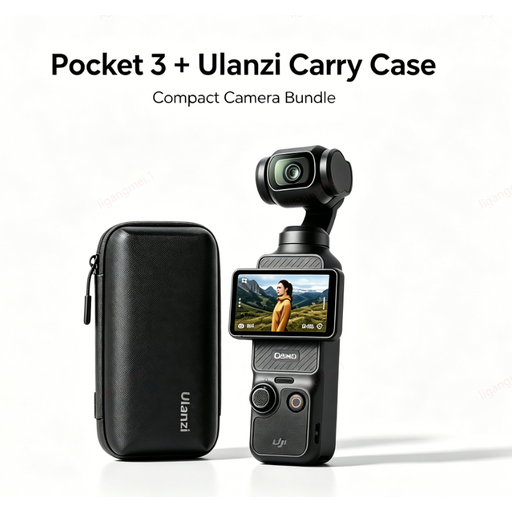 No image available
The product name lists a camera with a storage case; check whether the specific model meets your requirements for close-ups, working distance and lighting.
Product name: DJI Pocket 3 camera. Listed accessory: Ulanzi Custom Storage Carry Case.
No, not if you mainly take photos of whole glasses or wider shots. For small hallmarks that need to fill the frame, compare the maximum magnification and working distance of the specific lens; a mirrorless camera body does not offer macro magnification on its own.
Check the reflection from your chosen shooting angle and, if necessary, adjust the angle or the positioning of the camera and lights. Sony notes that the camera or photographer may be visible in reflective subjects; changing the camera body will not eliminate this property of glass.
Focus stacking can be useful when photographing a stationary small object that cannot be kept sharp from front to back in a single shot. The Canon EOS R50 and OM SYSTEM TG-7 manuals describe focus bracketing and combining shots; check the instructions for the specific model.
For a consumer purchase in the Netherlands, the seller is responsible for the statutory guarantee if the camera does not meet what you could reasonably expect from it under normal use. ACM ConsuWijzer states that the law does not set a fixed guarantee period of exactly two years; the product and purchase circumstances matter.
As a consumer, you generally have 14 days from delivery to cancel an online purchase without giving a reason. ACM ConsuWijzer lists some exceptions, so check whether any apply to your purchase.