
Collectors interested in small glass details
If you want to capture engravings or signs of use in detail, check the magnification offered by your chosen lens. Nikon and Sony publish magnification specifications for the macro lenses mentioned here.


Start with the smallest detail you want to photograph, then choose a suitable lens with the right magnification and mount for your camera. When photographing glass, the position of the light and background matter too: a camera with more features won’t automatically eliminate distracting reflections.
If you want to capture engravings or signs of use in detail, check the magnification offered by your chosen lens. Nikon and Sony publish magnification specifications for the macro lenses mentioned here.
If you want to show both the shape and surface details, lighting and reflections matter just as much as the camera. Consumentenbond highlights intended use as a factor when choosing a camera, while CameraGuru discusses lighting setups for glass.
If you want to match a camera body, lens and other essentials, check the mount and exactly what’s included in a kit. Canon lists the EOS R50 as compatible with the separately sold RF 100mm F2.8L Macro IS USM.
| What to consider | What should you check? | Who is this important for? |
|---|---|---|
| Magnification for details | Check the maximum magnification and mount of the exact lens you’re considering, and decide which detail you want to fill the frame. | If I want to capture engravings or small signs of use so they fill the frame, I look at the lens first, not just the camera body. Around 33% of consumers prioritise magnification for small details. |
| Light and reflections | Take test shots with the light and background in different positions. Decide whether transparency or the outline should take priority. | If reflections hide details or the edge of the glass disappears, I want to be able to adjust the lighting setup first. Around 27% of consumers say controlling reflections is their main concern. |
| Depth of field | Check whether the camera body offers focus bracketing and how to process the series of shots. Keep the glass and camera steady. | If a close-up includes parts at different distances, I want to be able to judge whether a focus stack will work with my workflow. Around 20% of consumers prioritise depth of field for close-ups. |
| Complete setup | Check that the camera body and lens are compatible, and confirm exactly what’s included in a kit. | If I still need to choose some components, I want to know which lens fits my camera body and what I already own. Around 20% of consumers focus mainly on the complete setup. |
A camera body’s resolution doesn’t tell you how large a small detail will appear on the sensor with your chosen lens.
First decide which detail you want to capture, then check the lens’s magnification and mount.
The stated distance isn’t measured from the front of the lens. As a result, a lens that focuses close to the glass may make it harder to position the light.
Check how the manufacturer measures the distance and assess how much room your setup leaves between the lens and the glass.
Reflections and visible glass edges depend in part on the lighting and background setup. Changing the camera body won’t automatically change that setup.
First, take test shots with the light moved and a different background. Then consider whether you still need a particular camera feature or lens.
An unnecessary camera body upgrade could take money away from a suitable lighting setup.
An EOS R system worth exploring if you want to combine in-camera focus bracketing with a compatible macro lens.
A Z system to consider if the NIKKOR Z MC 50mm f/2.8 suits the close-up photography you have in mind.
An E-mount option to compare, paired with the FE 90mm F2.8 Macro G OSS as a separate macro lens.
An X-mount option to consider if you want to choose the X-S20 body first, then find a suitable lens.
This selection includes cameras for vlogging or photography, as well as a camera body. For vintage glass, check separately that your chosen model and lens are suitable for the magnification, focus distance and lighting setup you need.
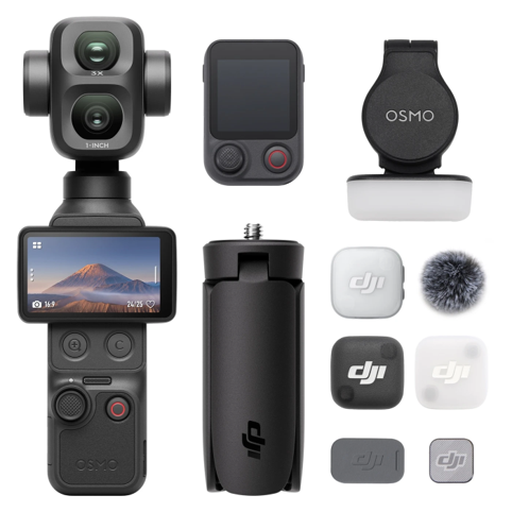 No image available
The product name identifies this as the Osmo Pocket 4P Vlog Combo. For glass close-ups, check that the model and your setup can achieve the magnification you want.
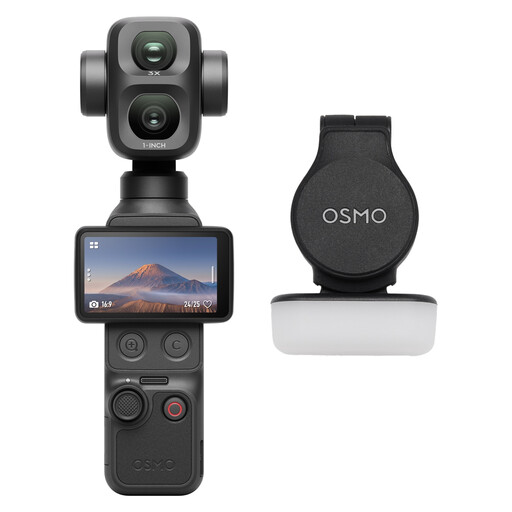 No image available
The product name identifies this as the Standard Combo. Check whether this camera and your chosen shooting setup are suitable for the details you want to show in the glass.
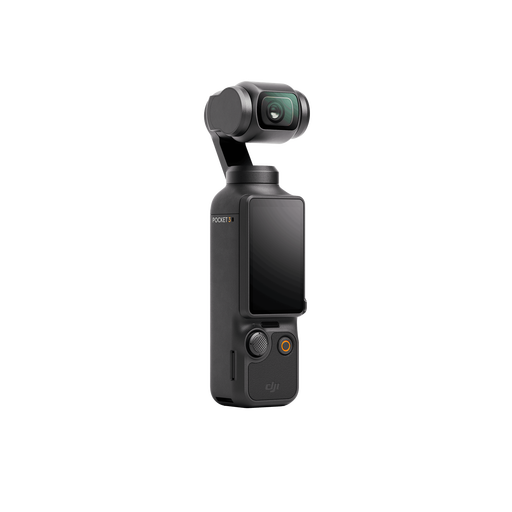 No image available
The product name lists a 1-inch CMOS sensor, 4K/120fps, 3-axis stabilisation, fast focusing and a microphone. These features don’t confirm what magnification you can achieve for glass details.
 No image available
The product name lists a 1-inch CMOS sensor, 4K/120fps, 3-axis stabilisation, fast focusing and a 2-inch rotating touchscreen. Check separately that the camera suits the close-up distance and level of detail you need.
 No image available
The product information lists an APS-C sensor and compatibility with Sony E-mount lenses. This is a camera body, so check which separate lens offers the magnification you want.
No, it depends on what you want to show. You don’t necessarily need 1:1 magnification for an entire vase, but the magnification of your chosen lens can be an important factor if you want to capture a small surface detail.
Start by taking test shots and moving the light and background. A bright-field setup, as described by CameraGuru, emphasises transparency, while dark-field lighting can bring out the outline and shape. Keep the camera steady as you adjust the setup.
For small details, you need to consider the camera body and a suitable lens together. Check the mount, the magnification of the exact lens and what’s included in any kit on offer. A camera body specification doesn’t confirm the magnification of an unspecified lens.
The Dutch government (Rijksoverheid) states that you’re entitled to a product that works properly and that many applicable online distance purchases come with a 14-day cooling-off period. Check who the seller is and which terms apply to your specific purchase; buying from a private individual is a different case.
Not without permission. According to the Dutch government (Rijksoverheid), you need the creator’s permission to share other people’s copyright-protected photos publicly. You may make a private copy for your own use, but you can’t distribute it. This applies to reusing other people’s photos, not to every glass object you photograph.