Who is this guide for?

Vintage glassware sellers

You want overview shots that clearly show the shape, colour and edges. A thoughtful lighting setup and colour control can matter more than a high camera specification alone. Broncolor discusses lighting transparent objects; Nikon USA and the Consumers’ Association cover white balance and what to look for in cameras.

Collectors interested in glass details

You want to capture engravings, maker’s marks or signs of use at a large enough size. So check the magnification of the exact lens; Canon Netherlands and Nikon Netherlands list specifications for individual macro lenses.

Photographers with a small home setup

You’re looking for a manageable combination of camera, subject and artificial light, without adding unnecessary lenses or lighting. The Consumers’ Association explains the difference between fixed and interchangeable lenses; Canon Netherlands provides product specifications for compact and system cameras.

What should you consider when choosing?

Your current camera and a different lighting setup

Choose this if: your current camera already captures the glass or detail at a large enough size, but reflections or inconsistent colours are a problem.

Keep in mind: you’ll need to adjust the lighting and reflective surfaces first. If a detail still appears too small, look into what the lens can do.

Compact camera with a fixed lens

Choose this if: you don’t want to change lenses and the built-in lens can capture the whole piece of glass and the details you want.

Keep in mind: the lens is fixed to the camera, so check its close-up capabilities for your subject before you buy.

System camera with a suitable lens

Choose this if: you want to take overview shots as well as close-up photos of small engravings or maker’s marks, and you want the option to change lenses.

Keep in mind: check the mount, magnification and contents of the exact combination. A macro lens isn’t automatically included in a camera kit.

What to consider What should you check? Who is this important for?
Reflections and the shape of the glass See how light passes through the glass and how the light source, background and camera position affect reflections. More light from the front isn’t automatically better; Broncolor explains why lighting transparent objects matters. If I mainly want to capture the shape and edges of whole pieces of glass clearly, I want to be able to adjust the lighting setup first. Around 29% of consumers prioritise reflection control when making this choice.
Small engravings and maker’s marks Check the maximum magnification and mount of the exact lens, as well as how much space you have around the glass. Nikon Netherlands lists 1:1 for the NIKKOR Z MC 50mm f/2.8; Canon Netherlands lists 0.5× for the standalone RF 85mm F2 MACRO IS STM. If I want to capture small maker’s marks or engravings at a large size, I focus on the lens rather than just the camera body. Around 29% of consumers prioritise magnifying fine details.
Colour under artificial light Check how to set the white balance and take test shots under your own lighting. Nikon USA discusses white balance; Nikon Netherlands explains how to test shutter speeds for banding caused by high-frequency LED lighting. When I take several photos under the same lights, I want to be able to assess colours using consistent settings. Around 24% of consumers give colour consistency top priority.
Complete setup Compare fixed and interchangeable lenses, and check exactly what’s included in the kit. Nikon Netherlands describes a Z50II kit with two zoom lenses; check separately whether the lens you want is included in the offer. If I want to get started without any uncertainty about extra lenses, I check the whole kit and what I already own. Around 18% of consumers prioritise a simple, complete setup.

Common buying mistakes

  • Focusing only on the camera body

    The macro magnifications mentioned apply to specific lenses and don’t automatically apply to every lens that fits a body.

    Check the mount, the magnification of the exact lens and what’s actually included in the camera kit.

  • Expecting a different camera to remove reflections automatically

    With transparent glass, it also matters how light passes through the subject and which reflections are created by the setup.

    First, try different positions for the light and background with your current camera.

    A controlled lighting setup may require more space or equipment.

  • Mistaking a manufacturer’s warranty for the full statutory guarantee

    ACM ConsuWijzer distinguishes between the statutory guarantee and an additional retailer’s or manufacturer’s warranty.

    Keep your proof of purchase and contact the retailer if a product develops a fault too soon under normal use.

Camera brands to consider

Canon

Canon offers both system cameras with interchangeable RF lenses and compact cameras with a fixed lens.

  • Canon Netherlands lists an RF mount for the EOS R50 and describes its compatibility with the standalone RF 85mm F2 MACRO IS STM.
  • The manufacturer lists 0.5× magnification for that macro lens. This isn’t a specification for every R50 kit; the PowerShot G7 X Mark III has a fixed lens.

Nikon

The Z50II is a system camera; for small details, a separate macro lens may be worth considering.

  • Nikon Netherlands lists 1:1 magnification for the NIKKOR Z MC 50mm f/2.8.
  • A Z50II kit described by Nikon includes other zoom lenses. Check the exact kit and whether it includes the macro lens you want.

OM SYSTEM

The OM-5 Mark II is a system camera with a focus stacking feature listed by the manufacturer.

  • Focus stacking may be useful if you want to examine small details with greater depth of field.
  • The feature doesn’t mean that every photo of glass will automatically be sharper. Check the lens and the conditions for using it with the exact kit.

Joybuy cameras

These Joybuy cameras are featured here based on their stated camera functions. For each model, check that the lens, magnification and controls suit your glassware and lighting setup.
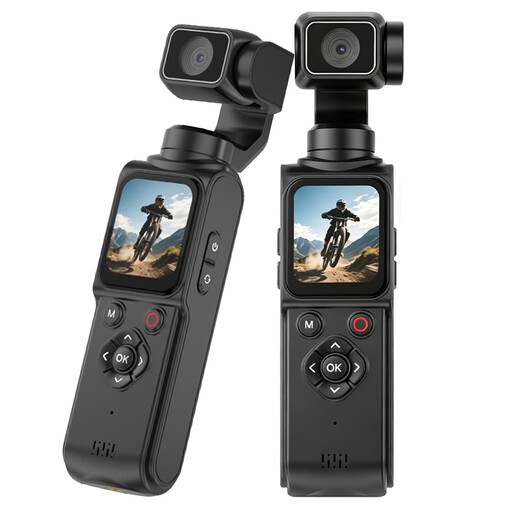
KINSI Mini Vlog Camera 4K with 64 MP, rotating lens, touchscreen and mini tripod

KINSI Mini Vlog Camera 4K, 64 MP, 330° Rotatable Lens, 1.72 inch Touchscreen, Tripod and Type-C

The included mini tripod may be useful if you want a steady composition. The product title doesn’t say whether the camera is suitable for capturing small engravings or controlling reflections.

The product title lists 4K, 64 MP, a 330° rotating lens, a 1.72 inch touchscreen, a mini tripod and Type-C.

Joybuy

KOMERY G7 5K camera with 80 MP and 18X zoom

KOMERY G7 5K, 80MP, 18X Zoom, White

The stated zoom may be useful if you want to try different compositions. Check whether you can achieve the framing you want with your own subject.

The product title lists 5K, 80 MP, 18X zoom and the colour White. These details alone don’t tell you what magnification is suitable for engravings.

Joybuy
Sony ZV-E10 with 16–50mm zoom lens, Black

Sony ZV-E10 + 16-50mm Zoom, Black

The included 16–50mm zoom lens may be useful if you want to try different compositions. Check separately whether it meets your close-up needs.

The product title lists a Sony ZV-E10 with a 16–50mm zoom lens in Black.

Joybuy
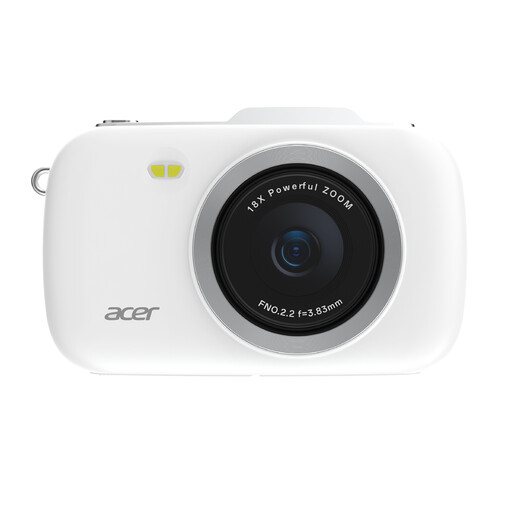
KOMERY G7-A 4K camera with 80 MP and 18X zoom

KOMERY G7-A 4K, 80MP, 18X Zoom, White

The stated zoom may be useful if you want to try different compositions. Check whether you can achieve the framing you want with your own subject.

The product title lists 4K, 80 MP, 18X zoom and the colour White. These details alone don’t tell you what magnification is suitable for engravings.

Joybuy

Frequently asked questions

Do I need a 1:1 macro lens for every piece of vintage glass?

No, not for every overview shot. First decide whether you want to capture the whole piece of glass or make a small maker’s mark fill the frame. Nikon Netherlands lists 1:1 for a specific, separate macro lens; it isn’t a requirement for every photo of glass.

How should I get started photographing glass under artificial light?

Set up your camera and glass on a stable surface and take a test shot. Move the light or background until the contours you want are visible, adjust the white balance to suit your lighting, then compare photos taken with the same setup.

What can I try if LED lighting creates bands in my photos?

Try a different shutter speed and check the manual for your exact camera model to see whether it has a flicker reduction feature. Nikon Netherlands describes fine-tuning shutter speeds to reduce banding caused by high-frequency LED lighting; this doesn’t confirm that the feature is available on every camera model.

What warranty and cooling-off period apply to an online purchase in the Netherlands?

According to ACM ConsuWijzer, statutory guarantees apply in addition to any retailer’s warranty: a product should last as long as you can reasonably expect under normal use. Online purchases generally come with a cooling-off period that ends 14 days after delivery; check the applicable exceptions and returns policy.

Can I publish photos of my glassware?

According to the Dutch government, copyright generally arises automatically for the creator of a photo they’ve taken themselves. This doesn’t give you blanket permission to use other people’s photos. This general information doesn’t automatically confirm whether you may or may not use photos showing protected designs or trade marks; check if you need advice on a specific case.
