A compact camera with a close-up mode is a good fit if you want to photograph cards without separate lenses. A mirrorless camera gives you more choice of lenses, but the standard zoom it comes with isn’t automatically suitable for extreme close-ups. Start with a stable composition and adjustable lighting, then check the exposure on the card itself: Canon Netherlands warns that automatic metering can make a scene with lots of dark tones look too bright.
Who is this buying guide for?
Card sellers taking lots of photos
If you want to photograph lots of cards from the same angle, a fixed setup can help. Visibility and reflections are also worth considering. Canon Netherlands describes a tripod as a useful way to keep your composition consistent.
Collectors checking the details
If you want to show corners, edges or the surface separately, consider the close-up range and the direction of the light. PSA notes that some imperfections only become visible when you tilt a card under the light.
Beginners looking for a simple start
If you don’t want to choose a camera body, separate lens and several accessories straight away, consider how many components you’ll need. A fixed lens does, however, limit your options if you want to choose a different lens later.
What should you look for when choosing?
Compact camera with close-up mode
A good fit if: you want to photograph cards and small details without separate lenses. According to OM SYSTEM, the OM SYSTEM Tough TG-7 has macro modes and supports RAW shooting.
The trade-off: the fixed lens limits your future lens choices, and the specifications alone won’t tell you how foil, text or corners will look in your lighting setup.
Mirrorless camera with a standard zoom
A good fit if: you mainly photograph full cards in a fixed setup and want the option of choosing another lens later.
The trade-off: check the magnification of the included lens. For the Canon RF-S 18–45mm, Canon Netherlands lists a maximum magnification of 0.16× at 45 mm with autofocus, or 0.26× with manual focus.
Mirrorless camera with a separate macro lens
A good fit if: you want to capture small print details or damage in close-up and are considering an additional lens.
The trade-off: the Nikon Z50II kit includes a 16–50mm zoom, not the separate NIKKOR Z DX MC 35mm f/1.7 macro lens. Nikon lists a maximum reproduction ratio of 0.67× for that macro lens.
| What to consider |
What to look for |
Who is this important for? |
| Reflections and exposure |
Check whether you can adjust the exposure and move the light source. |
When photographing glossy cards, I want the text and surface to remain visible without glare hiding details. Around 31% of consumers put managing reflections at the top of their buying priorities. |
| Small card details |
Compare the magnification of the exact lens or close-up mode, and check whether the whole card still fits in the frame you want. |
For close-ups of corners, edges or the surface, I want to know what the lens can capture at my shooting distance. Around 25% of consumers put small card details at the top of their list. |
| Consistent shots |
Check whether you can position the camera securely and use the screen from that position. |
When photographing lots of cards in a row, I want to keep the composition and background consistent. Around 25% of consumers prioritise a repeatable workflow. |
| Simple setup |
Check exactly what’s included in the kit, and account separately for any macro lens, tripod and lighting you may need. |
If I want to get started with fewer separate components, I want to know in advance which lens is actually included. Around 19% of consumers prioritise simplicity and keeping the number of components down. |
Common buying mistakes
-
Assuming a dark background means the exposure is right
Automatic metering can make a scene with lots of dark tones look too bright; reflections can also hide details on the card.
Check a test shot on the card itself, and adjust the exposure or direction of the light if needed.
-
Assuming a mirrorless camera kit includes a macro lens
The Canon and Nikon kits mentioned come with a standard zoom. The NIKKOR Z DX MC 35mm f/1.7 is a separate lens, not the lens included in the Z50II kit mentioned here.
Check the exact kit contents and the magnification specifications of the lens you’re actually buying.
You may need a separate macro lens to get the magnification you want. The components you’ll need depend on the combination you choose.
-
Relying on a straight-on overview shot to show the card’s condition
According to PSA, some subtle imperfections only become visible when you tilt the card under the light.
As well as an overview shot, take targeted close-ups and adjust the direction of the light when the card’s condition matters.
Camera brands to consider
Canon
The EOS R50 kit with the RF-S 18–45mm is a mirrorless camera with a standard zoom.
- Canon lists a 24.2 MP APS-C sensor for the EOS R50.
- The magnification of the RF-S 18–45mm depends on the focal length and focusing mode; this kit does not automatically include a separate macro lens.
Nikon
The Z50II is available as a kit with a standard zoom; a separate DX macro lens is another lens option.
- Nikon lists 20.9 million effective pixels for the Z50II and a maximum reproduction ratio of 0.67× for the NIKKOR Z DX MC 35mm f/1.7.
- The macro lens mentioned is not the 16–50mm zoom included in the Z50II kit.
OM SYSTEM
The Tough TG-7 is a compact camera with a fixed lens and macro shooting modes.
- According to OM SYSTEM, the TG-7 supports RAW shooting and macro modes, and has a 12MP sensor.
- The lens is not interchangeable; these features are not the result of a comparative real-world test for trading cards.
Sony
The ZV-E10 II is an APS-C mirrorless camera for anyone looking to create video content as well as card photos.
- Sony lists approximately 26.0 MP for the ZV-E10 II’s sensor.
- Bundles may contain different components; the sensor specifications don’t tell you what close-up results you’ll get with the included lens.
Fujifilm
The X-S20 is an interchangeable-lens camera with adjustable exposure.
- Fujifilm lists 26.1 million effective pixels, RAW shooting and exposure compensation for the X-S20.
- The camera body specifications don’t determine how much magnification a lens offers; check the lens you choose.
Cameras at Joybuy
These cameras are designed for photography and content creation. Check each model to make sure its lens, controls and accessories suit your card setup.
 No image available
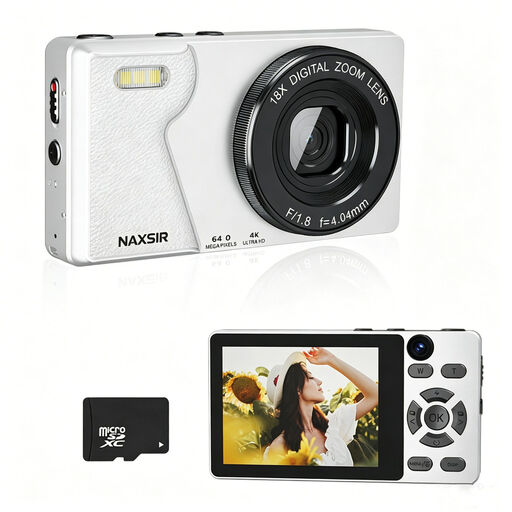
NAXSIR 4K digital camera, 32 GB card
If you’re looking for a compact camera for photos, check with test shots that card details and reflections are visible.
The product title lists 64 MP photo resolution, autofocus and 18× digital zoom. It also mentions an included 32 GB memory card; digital zoom alone doesn’t tell you what close-up results to expect.
View at Joybuy
 No image available
KOMERY G7 5K digital camera, white
If you’re considering this camera for card photos, first check with test shots that the details you want are sharp and large enough in the frame.
The product title lists 80 MP and 18× zoom. It doesn’t specify whether this zoom is optical.
View at Joybuy
 No image available
Komery W6 camera
If you’re looking for a camera for photos and videos, take a test shot to see how well it captures the card in your setup.
The product title lists 12× optical zoom, Wi-Fi and 64 MP.
View at Joybuy
 No image available
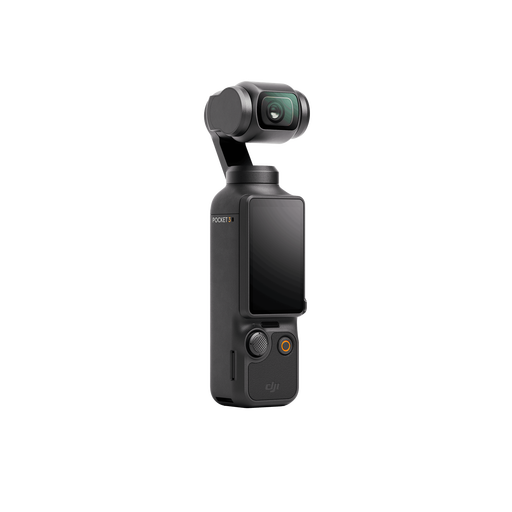
DJI Osmo Pocket 3 Creator Combo
If you want to make vlog videos as well as take photos, check whether this compact camera design suits the fixed card setup you have in mind.
The product title lists a 1-inch CMOS sensor, 4K/120fps video and an included microphone.
View at Joybuy
 No image available
DJI Osmo Pocket 3
If you’re looking for a compact camera setup, check whether the screen and controls are easy to use from the position you’ll be photographing your cards in.
The product title lists a 1-inch CMOS sensor, 4K/120fps video and a 2-inch rotatable touchscreen.
View at Joybuy
Frequently asked questions
How do you photograph a glossy card against a dark background?
Set the camera up securely and check test shots as you move the light source. Canon Netherlands explains that automatic metering can make a scene with lots of dark tones look too bright. Also check whether glare is hiding important areas. PSA notes that some imperfections only become visible when you tilt the card under the light.
Do you need a macro lens to photograph a whole card?
Not necessarily. Start by checking whether the lens captures the whole card sharply and at a large enough size from your shooting distance. If you want to photograph small details separately, compare the magnification of the exact lens. A standard zoom included in a kit is not the same as a separate macro lens.
How do you keep a series of card photos consistent?
Keep the camera, composition and background in the same place throughout the series, and check the focus and reflections on each card. Canon Netherlands describes a tripod as a way to maintain a consistent composition and reduce camera shake.
What are your rights when you buy a camera online in the Netherlands?
Many online purchases from a business come with a 14-day cooling-off period; exactly how this applies depends on the purchase. The Dutch government also states that products are covered by a statutory guarantee, with no fixed statutory guarantee period in the Netherlands. What you can expect if a product is faulty depends on the circumstances; a commercial guarantee does not replace your statutory rights.


