
Seller of detailed miniatures
You want to show small details individually, so framing, lens magnification and working distance matter. Sony explains that working distance is the space between the front of the lens and the subject.


Start with the framing you need. A kit zoom may be enough for a full-figure shot, while a separate macro lens can offer greater magnification for small details. A compact camera with a close-up mode is an option if you’d rather not change lenses, but check that the short working distance leaves enough room for your lighting. Compare the depth of field too, and make sure you have all the components you need for your complete setup.
You want to show small details individually, so framing, lens magnification and working distance matter. Sony explains that working distance is the space between the front of the lens and the subject.
You want to photograph lots of figures from similar angles, with consistent colours. A fixed setup and consistent lighting help keep photos comparable. Canon Nederland explains how to match the white balance to your lighting.
You want to start with overview shots and avoid overlooking a lens or lighting you’ll need. Compare the lens actually included with the framing you’re looking for.
| What to consider | What should you check? | Who is this important for? |
|---|---|---|
| Magnifying small details | Compare the magnification of the exact lens or camera mode, and take a test shot using the framing you want. Check that there’s still room to position your lighting. | If I want to show a small detail on its own and at a larger size, I focus on both magnification and the space in front of the lens. Around 33% of consumers prioritise detail magnification. |
| Repeating colours and framing | Check whether you can set the white balance and whether the camera, background, lighting and figure can be positioned in the same place each time. Also check the image guidelines for the sales channel you use. | With a wide range, I want consistent colours and recognisable angles without having to work everything out again for every photo. Around 27% of consumers prioritise consistency across a product range. |
| Keeping more of the figure in focus | Check whether the specific camera model offers focus bracketing, in-camera stacking or only separate shots. Keep the figure and camera still throughout the sequence. | If I want more of a three-dimensional figure to appear in focus at once, I look at depth of field and how the shots are combined. Around 20% of consumers prioritise depth of field. |
| Putting together the complete setup | Check the exact contents of the box and which combination of camera, lens and lighting you’ll need. Don’t assume the specifications for a separate lens apply to a different kit. | Before I get started, I want to know which components I actually need and whether I’ll have to add another lens later. Around 20% of consumers prioritise the total cost of getting started. |
Magnification applies to the specific lens, not automatically to the camera body or brand. Canon lists magnification of up to 0.5× for the separate RF 35mm F1.8 MACRO IS STM; Nikon and Sony specify 1:1 for the NIKKOR Z MC 50mm f/2.8 and SEL30M35 discussed here.
Compare the specifications of the lens you actually plan to use with a test shot framed around your figure.
If the kit lens can’t achieve the framing you want, you may need an additional lens.
Focusing distance is measured from the image sensor. For the SEL30M35 at maximum magnification, Sony gives a working distance of around 2.4 cm in front of the lens. That’s the space available for positioning lighting around your subject.
Check the working distance at the magnification you need, and test whether your lighting casts shadows on the figure.
Focus bracketing takes shots at different focus points. It doesn’t automatically mean the camera combines them into one final image.
Check which shooting and stacking features are available on the exact model.
Combining and checking multiple files may take extra editing time.
The Tough TG-7 is a compact camera with a fixed lens and a microscope mode. It’s an option if you want to try close-ups without choosing a separate macro lens.
The EOS R50 with RF-S 18-45mm is a mirrorless camera kit for overview shots, with the option to choose another compatible lens later.
The Z50II body can be paired with a separate NIKKOR Z MC 50mm f/2.8 if magnification and lens choice are important to you.
A compatible Sony E-mount camera, such as the ZV-E10 II, can be paired with the separate APS-C E 30mm F3.5 Macro SEL30M35.
These cameras offer different photography, zoom or shooting features. Check each model’s lens, working distance and settings to make sure they’re suitable for close-ups of small figures.
 No image available
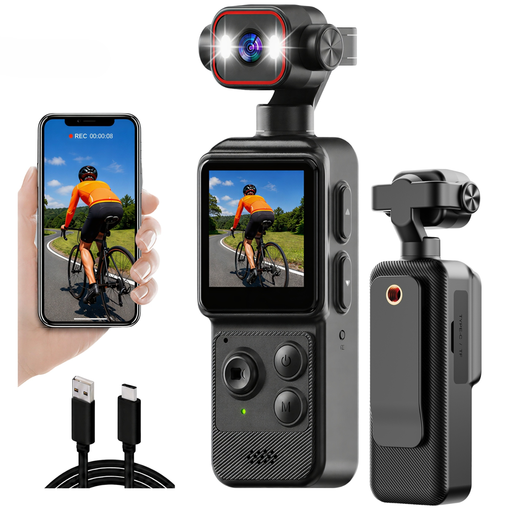
Could suit a compact setup. Check whether the wide-angle lens and framing are suitable for your figures.
The product name lists 4K, a 1.54-inch screen, a 140° wide-angle lens, app control, LED light and a 1200 mAh battery.
 No image available
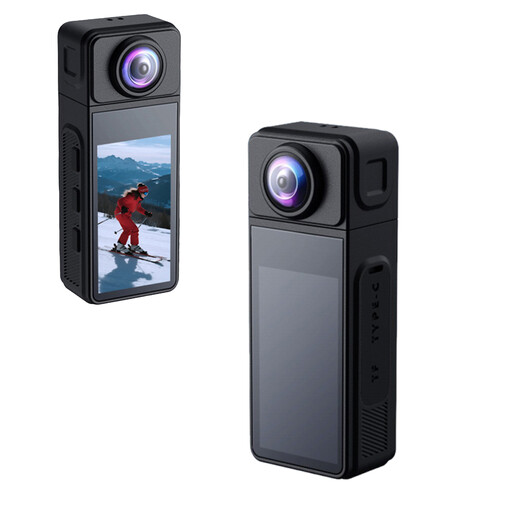
The listed tripod socket could be useful for a fixed shooting setup. Check whether the camera and lens offer the framing you want.
The product name lists a 270° rotating wide-angle lens and a magnetic body with electronic image stabilisation. The product description mentions a tripod socket and photo mode.
 No image available
Could be worth considering if you want to compare different framings. Check whether the zoom setting and focus suit the distance to your figures.
The product name lists 12× optical zoom, 4K, 64 MP and Wi-Fi.
 No image available
The kit zoom can be a starting point for overview shots. Check whether the included lens can achieve the close-up framing you want.
The product description lists a 24.2 MP APS-C sensor and a Product Showcase Setting. The kit includes a 16-50mm zoom lens.
 No image available
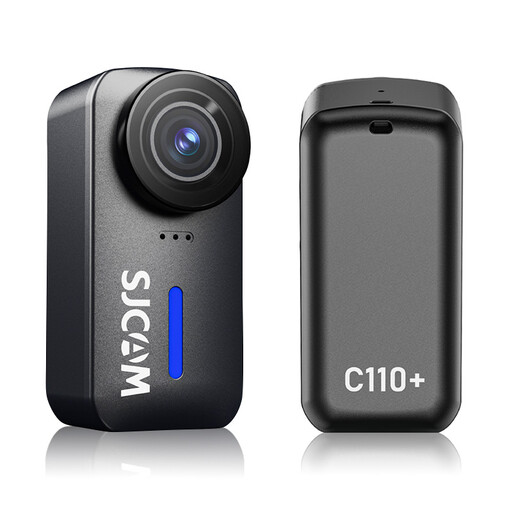
The listed white balance settings could be useful for repeat shots under similar lighting. Check the lens angle against the framing you want.
The product name lists a 170° lens angle. The product description mentions photos of up to 20 MP and adjustable white balance.
No, not if you mainly photograph complete figures. A kit zoom may be enough for that; a separate macro lens is more useful when you want to show small details at a larger size. Compare the magnification of the exact lens with the framing you want.
Keep the camera and figure still, and assess the depth of field at your chosen shooting distance. Focus bracketing takes multiple shots at different focus points. Check whether the exact camera model combines them automatically or whether you’ll need to edit them afterwards.
Check the actual contents of the kit and whether you’ll need an extra lens, lighting or support. According to the Dutch government, statutory consumer guarantees are different from an additional manufacturer’s warranty. For sales between businesses, the consumer rules on statutory guarantees don’t apply, so the contract terms are relevant. Follow the instructions for the exact camera and lens when caring for your equipment.
Your photos must accurately show the figure for sale and its relevant features. Ondernemersplein, part of the Netherlands Enterprise Agency, states that online sellers must not mislead customers and must provide clear, accurate information. Also check the separate image guidelines for each sales platform you use; these guidelines aren’t automatically legal requirements for your own online shop.