
Town-square and architecture photographer
Wants to fit façades, the square and the sky into a single frame, while being able to assess exposure in changing light. Nikon Netherlands explains how lighting conditions and metering affect your shot.


First, choose the field of view you need from your usual position, then consider how you want to handle strong contrasts between sunlight and shade. Nikon Netherlands describes metering and exposure bracketing as ways to assess exposure; bracketing works best with mostly static scenes. A mirrorless camera lets you choose a lens, while a compact camera largely fixes your lens choice. So check whether the deal includes a lens that suits the kind of town-square photos you want to take.
Wants to fit façades, the square and the sky into a single frame, while being able to assess exposure in changing light. Nikon Netherlands explains how lighting conditions and metering affect your shot.
Wants to react quickly while out and about, without carrying lots of kit. A fixed wide-angle lens and a built-in zoom offer different ways to frame your shot, as seen with the Ricoh GR IV and Sony RX100 VII.
Wants to keep taking photos as the light fades or capture passers-by. Consider stabilisation, the lens available and shutter speed separately. Fujifilm X Series Netherlands describes stabilisation for the X-S20, while Nikon Netherlands specifies a zoom kit for the Z50II.
Choose this if: you want to frame both the square and its details from a fixed position, and might want to change lenses later.
The trade-off: a body without a suitable lens won’t get you far; an extra lens means carrying more kit.
Choose this if: you take spontaneous street photos on the move and a fixed field of view of around 28 mm full-frame equivalent suits your compositions, as with the Ricoh GR IV.
The trade-off: the fixed lens has no optical zoom for distant subjects.
Choose this if: you want to switch between wide views and distant subjects without changing lenses. Sony specifies a 24–200 mm full-frame equivalent range for the RX100 VII.
The trade-off: the shortest focal length does not give you the same field of view as a separate ultra-wide-angle lens.
| What to consider | What to look for | Who is this important to? |
|---|---|---|
| Exposure control | Check the metering and exposure settings; consider exposure bracketing mainly for mostly static scenes. | If I want to preserve important highlights and shadows as sunlight and shade change, exposure control comes first. Around 33% of consumers rank exposure control as their top priority. |
| Field of view and lens choice | Check that the included lens captures the view of the square you want from your position and fits the camera body. | If I want to capture the whole square from where I’m standing, I focus on the framing and the lens included in the kit. Around 27% of consumers rank field of view as their top priority. |
| Low light and movement | Assess stabilisation for camera shake separately from the shutter speed needed for moving people. | When I’m shooting as the light fades or photographing passers-by, I don’t want to rely on stabilisation alone for sharpness. Around 20% of consumers put low light or movement first. |
| Portability | Consider whether you’d rather carry one fixed lens or a built-in zoom, or leave room for interchangeable lenses. | If I want to carry as little separate kit as possible on a city walk, the convenience of one complete camera matters a lot. Around 20% of consumers rank portability as their top priority. |
The body alone doesn’t determine how much of the square fits in the frame. A body-only deal and a lens kit may contain different components.
Check exactly what’s included in the kit, the lens mount and the field of view you need from your position.
Stabilisation can help reduce camera shake, but it won’t stop a moving passer-by from appearing blurred.
For people in motion, also consider the shutter speed you need; think of stabilisation mainly as a way to counter your own camera movement.
The Ricoh GR IV has a fixed field of view of around 28 mm full-frame equivalent; the Sony RX100 VII has a built-in zoom that starts at 24 mm full-frame equivalent.
Before you choose, decide whether you mainly want a wide view or also want to photograph distant details.
The EOS R50 is an APS-C mirrorless camera that you can pair with a suitable RF or RF-S lens.
The Z50II is also available as a kit with the NIKKOR Z DX 16-50mm VR zoom lens.
The X-S20 is a mirrorless camera for anyone who values in-body stabilisation and the choice of separate lenses.
The GR IV is a compact camera with a fixed field of view, made for spontaneous city photography.
The RX100 VII is a compact camera with a built-in zoom, so you can frame subjects at different distances without changing lenses.
These cameras are suited to photography on the move. There’s also a mirrorless camera with a zoom lens for anyone who wants to frame their shots in different ways.
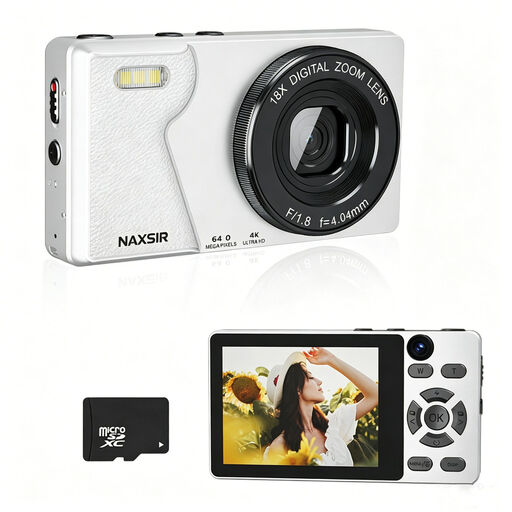 No image available
A compact camera for anyone who wants to take photos on a walk and use digital zoom.
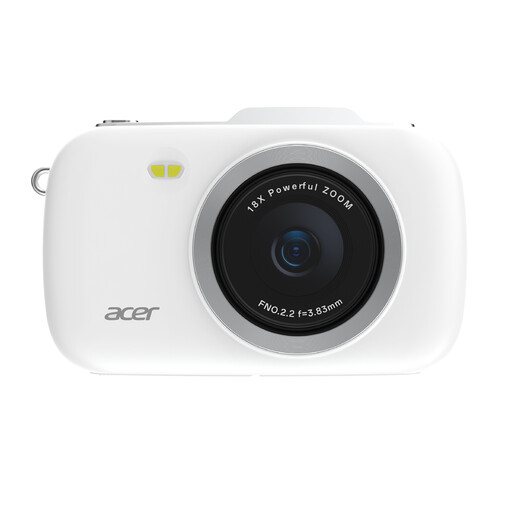 No image available
A point-and-shoot camera for anyone who wants to take a separate camera along for photography on the move.
 No image available
A pocket camera for anyone looking for a compact camera to take photos on days out.
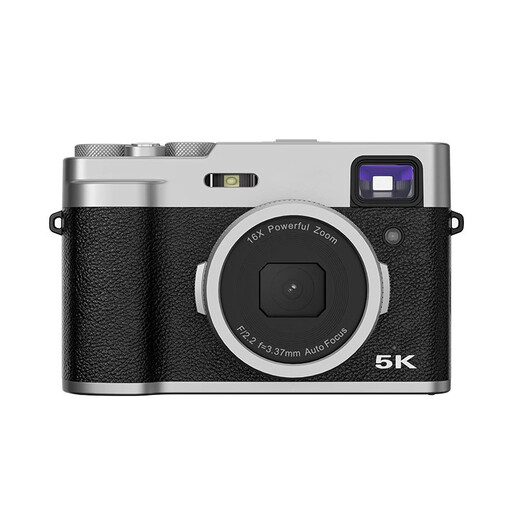 No image available
A compact camera for everyday photography and days out.
 No image available
A mirrorless camera with a zoom lens for anyone who wants to change their framing while taking photos.
Check the exposure on the spot and adjust the metering or exposure if needed. Nikon Netherlands describes exposure bracketing as a way to capture highlights and shadows separately; combining these shots is more difficult when people are moving.
No. Stabilisation helps reduce camera shake, but you also need to consider shutter speed and the available light when photographing someone who’s moving. Fujifilm’s stated stabilisation rating for the X-S20 isn’t a guarantee for every situation.
Check whether the deal includes a lens, whether it fits the body and whether its field of view is wide enough from your position. Take test shots in sunlight and shade, and follow the chosen model’s manual for guidance on the battery and lens.
Report the fault to the retailer. ACM ConsuWijzer explains that your statutory guarantee applies alongside any manufacturer’s or retailer’s warranty. Under the applicable terms, the retailer must resolve issues if a product doesn’t perform as you could reasonably expect under normal use.
Not without considering the circumstances. Auteursrecht.nl explains that someone in a portrait not taken on commission may object to its publication on reasonable grounds, such as privacy; different consent rules apply to a commissioned portrait. This doesn’t mean every photo of a square is automatically allowed or prohibited.