
Maker demonstrating fine details
You show stitches, thread and hand movements at a fixed worktable, and want to adjust the framing and focus to suit your shot.


For a fixed shot of fine stitching, choose a camera set-up that lets you adjust the lens, distance and mounting position to suit your worktable. A mirrorless camera with an interchangeable lens gives you that flexibility. A compact camera with a fixed lens may suit you if you’d rather not change lenses, while a gimbal camera is most relevant if you also film while moving. Test focus, framing, exposure and sound recording by your window, using a complete repair step. MOJOGEAR and Soofos offer advice on overhead filming and instructional videos.
You show stitches, thread and hand movements at a fixed worktable, and want to adjust the framing and focus to suit your shot.
You talk while your hands are busy and want to check in advance that your voice is clear and the recording keeps running.
You film above your worktable and from other angles, so portability and how quickly you can set up the camera are important.
Choose this if: you film small movements and want to adjust the lens and camera height to suit your work surface.
Bear in mind: the camera body alone doesn’t determine how close you can shoot; the lens and mounting position matter too.
Choose this if: you want to avoid changing lenses and use the built-in zoom to frame both the full repair and close-up details.
Bear in mind: a short minimum focusing distance at the wide-angle end doesn’t mean the camera will focus just as close at the telephoto end. Sony lists around 8 cm at wide angle and around 100 cm at telephoto for the RX100 VII, measured from the front of the lens.
Choose this if: you film moving demonstrations as well as fixed shots at a table.
Bear in mind: a gimbal isn’t a substitute for mounting the camera above the table. DJI specifies a minimum focusing distance of 0.2 m for the Osmo Pocket 3, so check that the stitches look large enough in the frame from that distance.
| What to consider | What to look for when buying | Who is this important for? |
|---|---|---|
| Showing small repairs clearly | Test focus and framing together, with the camera at the intended height and both hands in the shot. | If I want to show fine stitches clearly without my hands leaving the frame, I check the footage from my usual workspace; around 29% of consumers prioritise detail above all else. |
| Window light and fabric colour | Record test shots of light and dark fabric, and check exposure and white balance as the light changes. | With changing window light, I want to assess the fabric colour and details; around 23% of consumers put colour and exposure first. |
| Clear explanations | Check for a microphone input or a suitable separate recording option, then listen back to a test clip while you work. | If I explain things while sewing, I want my voice to be easy to understand in the recording; around 18% of consumers prioritise clear instructions. |
| Recording a complete lesson | Test your chosen video mode for the length of a full lesson and check the power and storage options. | If I want to record a repair step in one continuous take, I check in advance that my chosen set-up will run for long enough; around 18% of consumers prioritise recording time. |
| Changing the camera angle | Decide how often you’ll film handheld, and check the mounting position and focusing distance for each set-up. | If I switch between a table shot and other angles, I consider how easy the set-up is to assemble; around 12% of consumers prioritise a flexible set-up. |
The focusing distance can vary depending on the zoom setting. Sony lists around 8 cm at wide angle and around 100 cm at telephoto for the RX100 VII, measured from the front of the lens. So being able to shoot close up at one setting doesn’t necessarily tell you what’s possible at another.
Test the distance and framing you need together, with a real repair on the table.
When filming from above, the mounting position, view of the task, lighting and sound are all separate parts of the set-up.
Make a list in advance of what you need for your worktable set-up, then check what’s included in the exact kit. You may need to buy a mount, suitable lens, microphone, power supply or memory card separately.
Stabilisation while moving doesn’t determine whether small stitches will look large enough from your working distance.
For a fixed lesson set-up, prioritise framing and focus. Consider a gimbal mainly if you also film while moving.
The EOS R50 and EOS R50 V are different cameras with interchangeable RF lenses. Your choice of lens still matters when shooting details from your working distance.
The ZV-E10 II has interchangeable lenses, while the RX100 VII is a separate compact camera with a fixed zoom lens.
The Nikon Z 30 is a mirrorless camera for video makers who want to choose their own lens for their set-up.
The Osmo Pocket 3 combines a fixed lens with a mechanical gimbal, making it an option for creators who also want to film while moving.
The LUMIX G100D with 12–32mm kit lens is an interchangeable-lens camera that is also featured in a Dutch guide to instructional videos.
These Joybuy products are cameras for video recording. Check whether each model’s lens, working distance and mounting options suit your textile repair lesson.
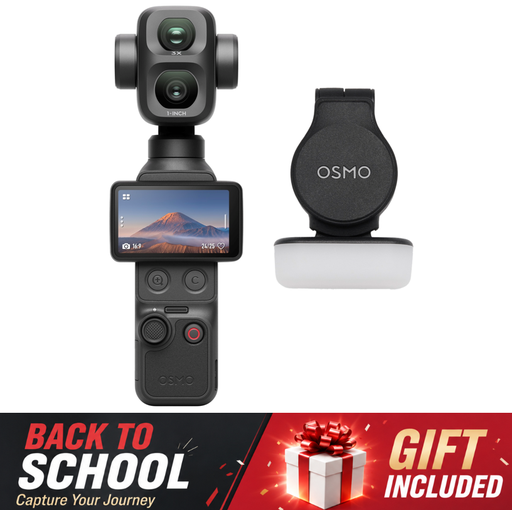 No image available
This may suit you if you’re looking for a compact camera set-up. Test whether the fixed angle of view shows your stitches and both hands clearly enough.
 No image available
The title mentions a rotating screen and 2× lossless zoom. Make a test recording to see whether the framing works from your worktable.
The title lists 107GB of built-in storage and 4K/240fps. Check that your chosen video mode suits the recording time and level of detail you need.
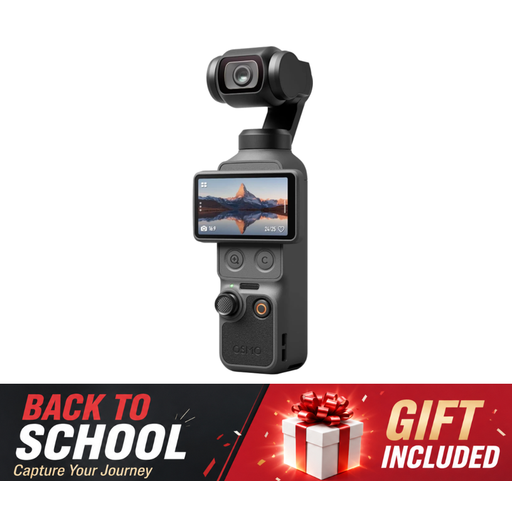 No image available
The title mentions a rotating screen and 2× lossless zoom, which may help you choose the framing you need. Test it from your planned camera distance.
The title lists 107GB of built-in storage and 4K/240fps. Check that the storage and video mode you choose are suitable for recording a complete lesson.
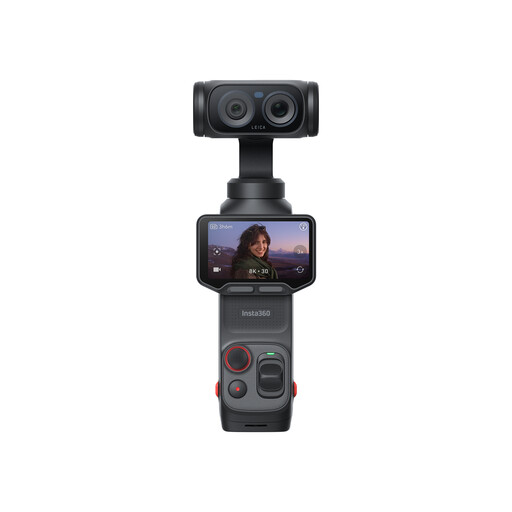 No image available
The title identifies this as the Standard Bundle. Before choosing, check whether the angle of view and mounting options suit a fixed shot above your worktable.
No image available
The title says a microphone is included. Check that your explanations are clear in the recording with your chosen set-up.
The title mentions 3-axis stabilisation and 4K/120fps. Test whether the fixed angle of view is suitable for the details you want to film at your worktable.
Don’t choose based on the 4K label alone. First check that the stitches are sharp and large enough from your camera distance, and that both hands stay in shot. Then test the result in the video mode you plan to use.
Secure the camera above your work surface and record a test clip using the light and dark fabrics you work with. Check the exposure and white balance, then review the image again when the natural light changes. Canon Netherlands explains that natural light can change colour.
When you buy as a consumer in the Netherlands, you have a statutory guarantee in addition to any manufacturer’s warranty. If, under normal use, the product stops meeting what you could reasonably expect sooner than it should, the seller must offer a solution free of charge. ACM ConsuWijzer explains this consumer right.
When you buy from a business at a distance, you’ll usually have a 14-day cooling-off period. The terms that apply depend on the purchase, so check them with the seller in advance. The Dutch government explains this cooling-off period for distance selling.
If you film and publish identifiable people on behalf of a business or organisation, the Dutch Data Protection Authority says the GDPR applies and you need a lawful basis, such as consent. The rules that apply depend on who you film and how you use the footage. Filming only your own hands is not the same as publishing footage of identifiable students.