
Glaze maker comparing colours
You photograph several test pieces and want to compare colour differences, so repeatable lighting and white balance are important. Nikon recommends keeping the light as constant as possible for consistent white balance.


When you want to compare glaze colours between sessions, consistent lighting and white balance are important; Nikon recommends keeping the light as constant as possible. For fine details, it also matters how large the test piece appears with your chosen lens or close-up mode. A compact camera with a fixed lens can save you from changing lenses, while an interchangeable-lens camera offers more choice but may need extra space or a separate macro lens.
You photograph several test pieces and want to compare colour differences, so repeatable lighting and white balance are important. Nikon recommends keeping the light as constant as possible for consistent white balance.
You want to show local effects or texture up close. Compare the magnification and working distance of the exact camera-and-lens combination you plan to use; Canon and Nikon list different specifications for their individual macro lenses.
You want to frame the test piece without the camera, tripod and light source taking up more room than you have. The Consumers’ Association (Consumentenbond) highlights camera size and ease of use as factors to consider when choosing a camera.
Good for: trying both wide shots and close-ups without changing lenses. OM SYSTEM lists macro modes and RAW shooting for the Tough TG-7.
Trade-off: the fixed lens limits your choice of lenses later on; a macro function alone doesn’t show how accurately glaze colours will be reproduced.
Good for: mainly taking wide shots and adjusting the framing. The Canon EOS R50 kit and Nikon Z50II kit each include a standard zoom lens.
Trade-off: focusing distance and magnification depend on the lens and zoom setting; Canon and Nikon publish these details separately for the lenses mentioned.
Good for: capturing small texture details so they fill the frame. Canon lists magnification of up to 1:2 for the RF 35mm F1.8 MACRO IS STM; Nikon lists 1:1 for the NIKKOR Z MC 50mm f/2.8.
Trade-off: these lenses are separate products from the standard zoom kits mentioned above; also check the working distance and space available for lighting.
| What to consider | What should you check? | Who should pay particular attention? |
|---|---|---|
| Consistent colour reproduction | Check whether you can set the white balance, and keep the lighting as consistent as possible between shots. | If I’m comparing glaze colours between sessions, I want to keep the lighting and white balance as consistent as possible. Around 33% of consumers give colour consistency top priority. |
| Capturing fine details sharply | Compare the magnification and focusing distance of the exact lens or close-up mode. | If I want small effects or textures to fill the frame, I look at the magnification and whether I can focus on the important area. Around 27% of consumers prioritise capturing fine details. |
| Framing the whole test piece | Measure the test piece and available camera distance; check the framing with the lens you plan to use. | With limited table space, I want to frame the whole test piece without having to move my lighting or support. Around 20% of consumers prioritise framing that fits the available space. |
| A practical, complete kit | Check what’s included in the kit, the lens mount, and whether you’ll need a macro lens, support or lighting. | If I want to get started without unnecessary extras, I check what the kit actually includes. Around 20% of consumers prioritise simplicity and a straightforward kit. |
Focusing distance and maximum magnification are different properties. With a zoom lens, focusing specifications can also vary by zoom setting and focusing mode.
Check the dimensions of your test piece to see whether the detail you want to capture will actually appear large enough in the frame.
The Canon and Nikon kits mentioned include a standard zoom, not the separate macro lenses discussed here.
Check the full kit contents and lens compatibility. Depending on your set-up, a macro lens, support or extra lighting may need to be bought separately.
Changes in lighting or white balance can affect colour reproduction between photo sessions.
Keep the lighting as consistent as possible and check the white balance when conditions change.
The Tough TG-7 offers a fixed-lens option with built-in close-up modes. OM SYSTEM also lists RAW shooting.
The Canon EOS R50 with the RF-S 18–45mm kit lens offers a standard zoom option. The RF 35mm F1.8 MACRO IS STM is a separate macro lens.
The Nikon Z50II with the NIKKOR Z DX 16–50mm is a standard zoom option; the NIKKOR Z MC 50mm f/2.8 is a separate macro lens.
Here are cameras for a range of photography needs. For each model, check whether the lens, close-up capabilities and set-up are right for your glaze tests.
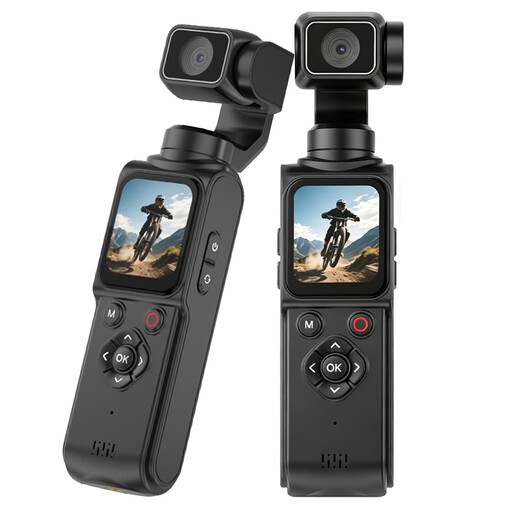 No image available
The stated 64 MP may be relevant if you’re choosing based on that specification; check the framing and close-up capabilities for your test piece.
The product name lists a 330° rotating lens and a 1.72-inch touchscreen.
 No image available
The zoom can help you adjust the framing; check separately whether the camera can capture the detail in focus from the distance available to you.
The product name lists 12X optical zoom, 4K and 64MP.
 No image available
Check that the camera and your planned set-up are suitable for photographing a stationary test piece.
The product name lists a 1-inch CMOS sensor, 4K/120fps video and 3-axis stabilisation.
 No image available
The included zoom lens offers a choice of focal lengths; check the framing and working distance you need with this lens.
The product name lists a 16–50mm zoom lens.
 No image available
Check that the zoom lens suits the space between the camera and the test piece, and that its close-up performance meets your needs.
The product name lists a 16–50mm f/3.5-5.6 OSS II lens.
Use the same lighting set-up as far as possible, and check the white balance when the light changes. Nikon explains that white balance affects colour reproduction; this doesn’t prove that any particular camera model will reproduce glaze colours exactly.
Not necessarily for a wide shot. First decide how small the detail is that you want to show up close, then check the magnification of the exact lens. Canon lists a maximum of 1:2 for the RF 35mm F1.8 MACRO IS STM; Nikon lists a 1:1 ratio for the NIKKOR Z MC 50mm f/2.8.
Set the camera up securely, choose a simple background and move a light source around to bring out the texture you want. Nikon recommends using a tripod for macro photography.
Check whether the kit includes a lens and, if so, which one. The Canon and Nikon kits mentioned include a standard zoom; the macro lenses discussed are separate products. Also consider whether your set-up needs support or extra lighting.
According to the Dutch government, if a product is faulty, the seller must provide a solution. The Netherlands doesn’t have one fixed statutory guarantee period that applies to all products. For distance purchases from a professional seller, you can usually change your mind within 14 days; check the terms and any applicable exceptions.