What should you look for in a camera for soup photography?
Start with the colour and lighting in your regular set-up. Then decide how much detail you want to capture and whether you’ll be shooting handheld.
| What to consider |
What to look for |
Who is this most important for? |
| Colour under artificial light |
Check the white balance settings and RAW support; keep the lighting as consistent as possible throughout a series. |
If I’m photographing several bowls under the same lights, I want the soup and tableware to stay true to colour. Around 33% of consumers prioritise colour consistency. |
| Focusing on details |
Compare the lens’s minimum focusing distance, reproduction ratio and working distance. |
If I want small garnishes or textures to fill the frame, the lens needs to focus close enough. Around 27% of consumers prioritise this level of detail. |
| Shooting in a confined space |
Check the weight of the complete set-up and the stabilisation in the camera body and lens; stabilisation won’t freeze movement in your subject. |
When I’m working at a table and can’t always set up a tripod, a manageable set-up matters. Around 20% of consumers prioritise the flexibility to shoot in different ways. |
| Banding caused by LED lights |
Check the shutter speed settings and any anti-flicker features on the exact model, and test it with your own lights. |
If I see bands under my LED lights, I want to be able to try settings that suit that lighting. Around 20% of consumers prioritise reducing LED banding. |
Cameras at Joybuy
This selection includes compact cameras, action cameras and vlogging cameras. Check each model to make sure its lens, focusing distance and controls suit photographing stationary soup under your lights.
 No image available
DJI Osmo Pocket 4P – Standard Combo, black
When photographing a whole bowl, it’s important that the lens gives you the framing and focus you want; check that it’s suitable for this set-up.
The product description lists a 1-inch CMOS sensor and a 20 mm f/2.0 lens.
Joybuy
 No image available
Mini 4K action camera with clip, 1.54-inch display and 140° wide-angle lens
If you mainly want to photograph the whole bowl, check that the wide-angle lens and focusing distance suit the distance and framing you need.
The product name lists 4K, a 1.54-inch display and a 140° wide-angle lens. The product description mentions controls for taking photos.
Joybuy
 No image available
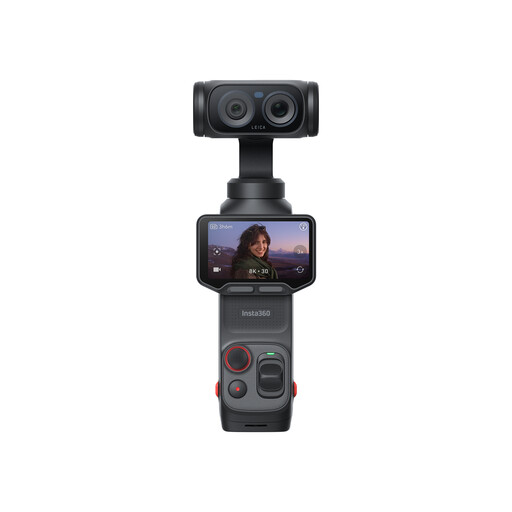
Insta360 Luna Ultra Standard Bundle, Cosmic Black
Minimum focusing distance is still important for close-ups of garnishes; check it before choosing this camera for close-up photography.
The product description lists a 1-inch main sensor, a telephoto lens and 6× optical zoom.
Joybuy
 No image available
Komery X9 4K camera, 64 MP, black
If autofocus and a built-in flash are relevant to your set-up, check that the controls and focusing are suitable for photographing a stationary dish.
The product name lists autofocus and a built-in flash. The stated 18× zoom is digital; the product description warns that this may reduce image quality.
Joybuy
 No image available
DJI Osmo Pocket 3 – vlogging camera
When photographing a stationary bowl, you can check the focus and framing you want in advance; don’t judge it solely by its video features.
The product description lists a 1-inch CMOS sensor, focus for still images and a rotating touchscreen. The stated weight is 179 g.
Joybuy
Frequently asked questions
Do I need to buy a macro lens straight away to photograph a whole bowl of soup?
No. First check whether the lens you plan to use can focus on the whole bowl from the distance available and frame it the way you want. A macro lens is mainly worth considering if you want to magnify small details significantly; Canon Netherlands and FUJIFILM X Netherlands list magnification details for their individual macro lenses.
What can I do if my soup looks too yellow or too blue under artificial light?
Set the white balance to suit the light you’re using and keep the lighting as consistent as possible throughout a series. Nikon Netherlands recommends setting the white balance in advance. With RAW shots, you can also adjust the white balance during editing, if your camera supports that file format.
How can I deal with horizontal bands under LED lights?
First, take a test shot under your own lighting and try a different shutter speed if needed. Check which shutter or anti-flicker feature is available on the exact model and in the shooting mode you’ve chosen; the OM-5 Mark II manual describes Flicker Scan for LED lighting.
What are my consumer rights in the Netherlands when buying a camera online?
When you buy online from a business, you’re often entitled to a 14-day cooling-off period; check which terms and exceptions apply. You’re also entitled to a product that works as it should. According to the Government of the Netherlands, if there’s a problem, the seller—not the manufacturer—is responsible for helping you find a solution.
Can I publish restaurant photos that show identifiable guests or staff?
First, consider the privacy rules that apply to the images: identifiable people in photos count as personal data, so the GDPR may apply. The Dutch Data Protection Authority explains this in relation to images; it only applies when people are identifiable in the photos.


