Who is this choice relevant to?

Soap makers who want to show off texture

If you want to make grains, relief or a stamp fill the frame, compare magnification and the space left in front of the lens for lighting. The specifications from OM SYSTEM, Sony and Canon show why the close-up mode or the exact lens matters.

Soap makers working with variable lighting

If you take photos at different times or in different places, you’ll want to keep the colours consistent between shots. Nikon points out that daylight and lamps with different colour temperatures can affect colour reproduction when used together.

Soap makers sharing a work table

If you need to set up and clear your workspace quickly, consider the size of the complete setup and whether you’ll need to change lenses. A fixed-lens camera and one with interchangeable lenses call for different ways of working.

What should you look for in a camera for soap photography?

Compact camera with close-up mode

Choose this option when: you want to set up quickly at a shared table and take close-ups without changing lenses. OM SYSTEM lists a Microscope mode for the TG-7.

Trade-off: there may be limited space in front of the camera for lighting when you’re working close to the soap.

Mirrorless camera with standard zoom

Choose this option when: you want to frame packaging and workspace shots as well as soap using a zoom lens. Canon and Nikon offer kits with a standard zoom lens.

Trade-off: check the magnification of the included lens; a short minimum focusing distance doesn’t automatically mean high macro magnification.

Mirrorless camera with a dedicated macro lens

Choose this option when: you want small grains, relief or stamps to fill the frame and can choose a suitable macro lens for the camera body.

Trade-off: the lens isn’t necessarily included in the camera kit; also check that the working distance leaves enough room for lighting.

What to consider What should you check? Who is this most important for?
Filling the frame with small details Compare the maximum magnification and working distance of the exact lens or close-up mode. Canon Netherlands lists a maximum of 0,16× at 45 mm with autofocus for the RF-S 18-45mm; according to Sony, the separate SEL30M35 achieves 1:1, with a working distance of 2,4 cm in front of the lens at its closest setting. If I want to show relief or a stamp in close-up, I look at both magnification and the space in front of the lens for lighting. Around 33% of consumers put detail reproduction first.
Colour under variable workspace lighting Check whether you can switch off distracting light sources and whether white balance and, if appropriate, RAW fit your workflow. Nikon advises against unnecessarily mixing light sources with different colour temperatures. When I photograph soap at different times, I want more control over the lighting setup and colour reproduction. Around 27% of consumers give consistent colour top priority.
Setting up quickly on a shared table Measure the space available for the camera, tripod and lighting, including the area in front of the lens. A fixed lens avoids lens changes; assess a mirrorless camera as a complete setup. If I need to clear the table quickly after taking photos, setting up and packing away are important parts of my decision. This is the top priority for around 20% of consumers.
What’s included in the complete kit? Check which lens is actually included and what else you need for the photos you want to take. According to Canon Netherlands Store, the Canon EOS R50 kit includes the RF-S 18-45mm; the separate RF 85mm F2 Macro isn’t included. I want to know in advance whether the included lens can achieve the framing I’m after, so I can put together the right kit. Around 20% of consumers mainly look at what they still need for the photos they have in mind.

Common pitfalls

  • Confusing a short minimum focusing distance with high macro magnification

    Focusing distance and maximum magnification are different properties. A lens can focus close up without making a small detail fill the frame.

    Compare the maximum magnification of the exact lens with the framing you want for your soap details.

  • Assuming a kit includes everything you need for close-ups

    A standard zoom kit may include a different lens from the one you need for high magnification.

    Check what’s in the box for each kit and make a note of any lens or lighting you still need for the photos you want to take.

  • Trying to fix mixed workspace lighting by buying a new camera

    Daylight and lamps with different colour temperatures can produce different colours in the same shot. Simply changing the camera body won’t fix the lighting conditions.

    First, try a repeatable lighting setup and check the white balance before attributing colour differences to the camera.

Brands to compare

Canon

Compare the EOS R50 kit for general soap and packaging shots with a separate macro lens if you want greater magnification.

  • Canon Netherlands Store lists a 24,2 MP APS-C camera and the RF-S 18-45mm in the EOS R50 kit.
  • For the kit lens at 45 mm, Canon Netherlands specifies a maximum of 0,16× with autofocus or 0,26× with manual focus. According to Canon, the separate RF 85mm F2 Macro offers 0,5×.

Nikon

The Z50II with Z DX 16-50mm is worth comparing if you want a standard zoom for wider shots.

  • Nikon describes the kit lens as retractable, weighing 135 g and able to focus from 0,2 m.
  • That minimum focusing distance alone doesn’t prove 1:1 magnification; assess the close-up framing you need separately.

Sony

The α6400 with E-mount can be paired with a separate macro lens for soap details.

  • Sony lists 24,2 MP for the ILCE-6400 and 1:1 magnification for the separate SEL30M35.
  • At the closest setting, the stated working distance in front of the lens is 2,4 cm, which may limit the room available for lighting.

OM SYSTEM

The TG-7 is a compact camera to consider if you want a close-up mode without changing lenses.

  • OM SYSTEM lists a fixed lens and a built-in Microscope mode for the TG-7.
  • Try a test setup to see whether the framing you want and the available space for lighting work for your soap details.

Cameras at Joybuy

These Joybuy camera picks are relevant to soap photography and include a range of zoom and camera systems.

Komery W6 camera with 12× optical zoom

Komery W6 12× Optical Zoom

The stated zoom may be useful if you want to adjust the framing between soap and workspace shots.

The product title lists 12× optical zoom.

View at Joybuy
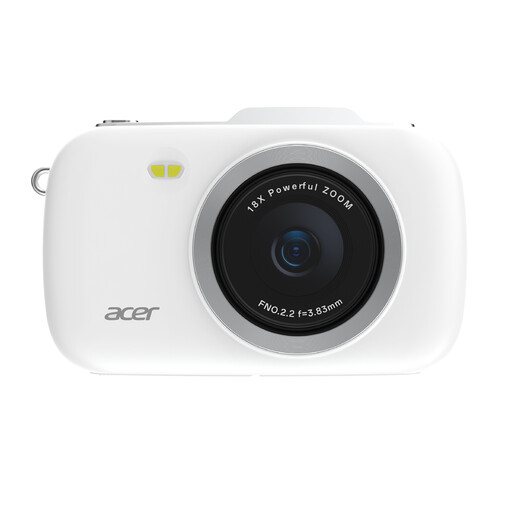
KOMERY G7-A camera, white

KOMERY G7-A 4K 18× Zoom, White

The zoom may be useful if you want to adjust the framing between soap and workspace shots; check separately that the close-up capabilities suit the details you want to capture.

The product title lists 4K and 18× zoom; it doesn’t specify optical zoom.

View at Joybuy

DJI Osmo Pocket 3 camera

DJI Osmo Pocket 3

If you’re considering a compact camera for photos and video, check that its close-up capabilities and setup suit the details you want to capture.

The product title lists a 1-inch CMOS sensor and 4K/120fps video; this video specification alone says nothing about its suitability for macro photography.

View at Joybuy
Sony ZV-E10 with 16-50mm zoom lens

Sony ZV-E10 + 16-50mm Zoom Black

This zoom kit is worth considering if you want to adjust the framing between soap and workspace shots.

The product title lists a 16-50mm zoom lens; check that its close-up capabilities suit the soap details you want to capture.

View at Joybuy
Sony Alpha A6100 with 16-50mm lens

Sony Alpha A6100 + 16-50mm f/3.5-5.6 OSS II

This kit is worth considering if you want to use a zoom lens to frame soap and packaging in different ways.

The product title lists a 16-50mm f/3.5-5.6 OSS II lens; the product description mentions a 24,2 MP APS-C sensor. Check separately whether the lens can capture the detail you want.

View at Joybuy

Frequently asked questions

Do you need to buy a macro lens straight away for soap details?

Not for every photo; start by deciding how you want to frame your shot. Canon Netherlands specifies a maximum of 0,16× at 45 mm with autofocus for the RF-S 18-45mm kit lens, while Sony lists 1:1 for the separate SEL30M35. Choose a dedicated macro lens if you need that magnification and the working distance leaves enough room for lighting.

What can you do if your soap looks a different colour each time under workspace lighting?

First, check whether daylight and workspace lamps are both falling on the soap. Nikon advises removing unnecessary light sources, checking the white balance and using RAW where possible for more scope to make corrections afterwards; this doesn’t guarantee colour-accurate photos.

What returns and warranty rules apply if you’re buying for your soap business?

For a consumer purchase made at a distance, you’ll generally have up to 14 days after delivery to change your mind; the seller is your point of contact for your statutory guarantee. ACM ConsuWijzer warns that an agreement used mainly or exclusively for business purposes isn’t covered by consumer protection. So first establish whether you’re buying as a consumer or a business, and check the applicable terms and conditions.

Can you include identifiable colleagues in commercial soap photos?

If you take photos of identifiable people on behalf of a business and publish them for commercial purposes, the GDPR applies, according to the Dutch Data Protection Authority. Keep the shot focused on the soap, or establish the legal basis for using identifiable images before publication.
