Start with a lighting setup and a camera that lets you control the white balance: a more expensive camera body won’t automatically correct a colour cast caused by artificial light. A standard zoom may be enough for whole bars of soap, as long as you can get the framing you want. For small embossed details, the magnification and working distance of a suitable lens matter more than the camera specifications alone. A tripod helps you photograph multiple products with the same composition.
Who is this buying guide for?
Soap maker working with different colours
You photograph soaps in different colours under artificial light for an online shop or social media, and want to manage colour casts and differences between shots. Canon Netherlands and Sony Netherlands explain how white balance helps when shooting under artificial light.
Maker who wants to show soap details
You want to capture small features, such as embossing or surface texture, on their own. The magnification and working distance of the specific lens are important considerations, as Sony Netherlands and Canon Netherlands explain.
Maker with a regular product range
You regularly photograph several bars of soap and want a repeatable composition without spending more than necessary on a camera body or lens. Canon Netherlands recommends a tripod as a way to keep product compositions consistent.
What should you look for when buying?
| What to consider |
What should you check? |
Who is this important for? |
| Colour under artificial light |
Check the white balance settings, RAW support on the exact model, and whether you can keep the light source and settings consistent. |
If I want to capture different soap colours accurately, I look at the white balance and use a consistent lighting setup. Around 33% of consumers say colour accuracy is their top purchasing priority. |
| Small details |
Compare the maximum magnification, working distance and mount for each lens; don’t rely on the word ‘macro’ alone. |
If you want to capture stamps, embossing or cut surfaces in close-up, you’ll also need to consider how much room you have for lighting. Around 27% of consumers prioritise detail shots. |
| Repeatable composition |
Check whether you can set up the camera securely and reuse the same framing and settings. |
If I’m photographing a range of soap varieties, I want to keep the framing consistent with ease. Around 20% of consumers rank repeatability as their top priority. |
| Total cost of the kit |
Check exactly what’s included in the kit and whether any macro lens you’re considering is compatible with the camera. |
If you want to manage the cost of the complete setup, look beyond the camera body and check which lens is included. Around 20% of consumers prioritise the total cost of the kit. |
Buying pitfalls
-
Assuming ‘macro’ in the product name guarantees the magnification you need
Maximum magnification applies to the specific lens, not the camera body. Canon specifies a maximum magnification of 1:2 for the RF 35mm F1.8 MACRO IS STM; Nikon, Sony and Fujifilm specify 1:1 for the macro lenses mentioned.
Decide which detail you want to photograph, then compare the magnification, working distance and mount of the lens on offer.
-
Expecting a new camera body to fix colour casts caused by artificial light
Artificial light can affect the colours in your photos. Canon Netherlands, for example, describes a yellow cast under artificial light and a green cast under fluorescent light.
First, try using a consistent lighting setup and check the white balance with your current equipment. Then consider which camera feature you still need.
-
Comparing only the camera body and overlooking what’s in the kit
The camera body alone doesn’t determine which close-ups are possible: the included lens also affects magnification. A standard zoom isn’t automatically equivalent to a separate macro lens.
Before buying, note down the full model and lens names, then compare the kit on offer with what you need for your photos.
Camera brands to consider
Canon
The EOS R50 is a compact APS-C mirrorless camera. The RF 35mm F1.8 MACRO IS STM is a separate lens for close-ups.
- Canon specifies a maximum magnification of 1:2 for this lens, which may be enough for some soap details.
- Check the framing you need, and don’t assume the lens is included with an EOS R50 kit. These are manufacturer specifications, not an independent comparison.
Nikon
The Z50II is a Z-series mirrorless camera. The separate NIKKOR Z MC 50mm f/2.8 is an option for close-ups.
- Nikon specifies 1:1 magnification for this lens.
- Nikon notes that the front of the lens can be just a few centimetres from the subject during close-ups. Allow room for lighting; this feature applies to the lens, not every Z50II kit.
Sony
The α6400A with E-mount is an interchangeable-lens camera. Sony also offers the separate E 30mm F3.5 Macro.
- Sony specifies 1:1 magnification for the macro lens mentioned.
- Check the full ILCE-6400A variant and whether the offer includes a camera body or a lens kit. The short working distance of a macro lens can affect where you place your lighting.
Fujifilm
The X-S20 uses the Fujifilm X mount and, according to Fujifilm, supports RAW. The separate XF30mmF2.8 R LM WR Macro is an option for close-ups.
- Fujifilm specifies 1:1 magnification for this lens.
- The stated minimum focusing distance is 10 cm; this isn’t the same as the clear space in front of the lens. Check the kit on offer separately.
Panasonic
The LUMIX G100D is described as a Micro Four Thirds kit with a 12–32mm lens. The LUMIX G H-HS030 macro lens is sold separately.
- The separate H-HS030 lens is worth considering as an option for close-ups.
- The kit mentioned isn’t the same as a kit with a macro lens. Check which lens is included with the product on offer.
Cameras at Joybuy
This selection of Joybuy products includes cameras for photography and models with a zoom lens. For each offer, check exactly what’s included in the kit and whether the controls and lens suit photographing soap under artificial light.
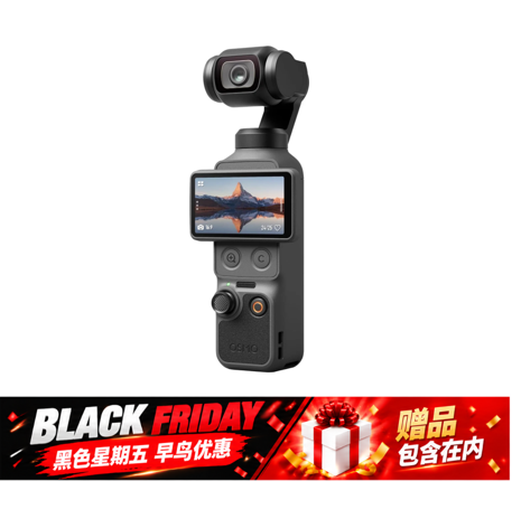 No image available
DJI Osmo Pocket 4 Standard Combo
A camera for photography; check separately whether its controls suit your product setup.
The product name lists a 1″ CMOS sensor, 2× lossless zoom, 4K/240fps and 107GB of built-in storage.
View at Joybuy
 No image available
Komery W6 digital camera
The stated zoom may be useful if you want to compare different framings; check whether the lens gives you the composition you want for soap photography.
The product name lists 12× optical zoom, Wi-Fi and 4K. The product information also lists a 64MP sensor.
View at Joybuy
 No image available
DJI Osmo Pocket 3
A camera for photography; check whether its features and controls suit the way you take product photos.
The product name lists a 1″ CMOS sensor, 4K/120fps video, fast focusing and a 2″ rotating touchscreen.
View at Joybuy
 No image available
Sony ZV-E10 + 16–50mm Zoom Black
The included zoom lens offers a range of focal lengths, so you can choose your framing; check whether it can capture the crop of the soap you want.
The product information lists a 24.2MP APS-C sensor and a Product Showcase setting.
View at Joybuy
 No image available
Sony Alpha A6100 + 16–50mm f/3.5–5.6 OSS II
The kit includes a 16–50mm zoom lens, according to the product name; check whether the zoom range suits the compositions you want.
The product information lists a 24.2MP APS-C sensor.
View at Joybuy
Frequently asked questions
Do I need a 1:1 macro lens straight away to photograph a whole bar of soap?
No, not just because you’re photographing soap. First decide how large you want the whole bar or the smallest detail to appear in the frame, then compare the magnification and working distance of the specific lens. 1:1 magnification is most relevant when you want to capture a small detail at a larger size.
How can I stop soap looking a different colour in photos under artificial light?
Keep the lighting as consistent as possible and check the white balance. Canon Netherlands explains that artificial light can create a yellow cast, while fluorescent light can create a green cast. RAW can give you more scope to adjust the white balance afterwards, but it doesn’t replace checking the colours.
How can I photograph lots of soap varieties in the same way on the same table?
A tripod and a fixed background help keep the framing consistent between shots. Check the composition and lighting for each variety, even if the camera stays in the same place.
What warranty and cooling-off period apply when buying a camera online in the Netherlands?
When you buy as a consumer, the product must meet what you can reasonably expect; according to the Dutch Government, there is no general fixed statutory warranty period. For consumers, online purchases usually come with a 14-day cooling-off period from delivery. Business.gov.nl explains that this cooling-off period doesn’t apply to a business purchase made by an entrepreneur.


