
Creating complete set displays
You want to show cards, envelopes and matching items in a series of overview shots, all with the same framing.


For overview shots of complete stationery sets, it’s best to try your smartphone first, using a fixed shooting position and even lighting. A dedicated camera with a suitable lens is worth considering if you want to capture small details up close. If so, also think about the lens, working distance and room for lighting.
You want to show cards, envelopes and matching items in a series of overview shots, all with the same framing.
You want to photograph print, lettering or paper texture on its own and at a larger scale; the lens and working distance then become important.
You photograph several sets and need paper and ink colours to look consistent under different lighting conditions.
Choose this option: if you mainly photograph complete sets laid flat, try using a fixed shooting position and even lighting first.
Bear in mind: check with your own subjects whether small details appear large enough in the frame.
Choose this option: if you want to use a dedicated camera without changing lenses.
Bear in mind: a fixed lens means you can’t add a separate macro lens later.
Choose this option: if you want to adjust the framing and might want to use a different lens later.
Bear in mind: check which lens is included. The camera body alone won’t tell you whether you can fill the frame with small details.
Choose this option: if you want small lettering, paper texture or embellishments to appear large in the frame.
Bear in mind: check the magnification and working distance. A short working distance can leave less room for lighting, and close-ups have a shallower depth of field.
| What to consider | What should you check? | Who is this important for? |
|---|---|---|
| Repeatable overview shots | Check whether you can securely position the camera or phone above the whole work surface, and whether your preferred framing fits. | If you want to show complete sets with the same framing every time, look for a stable position and enough room for the whole set. Around 31% of consumers prioritise complete sets. |
| Small design details | Compare the magnification of your chosen lens, its compatible mount and its working distance. | If you want to capture small lettering or paper texture up close, make sure the lens is suitable and leaves room for lighting. Around 25% of consumers prioritise magnifying details. |
| Colour consistency | Compare the white balance options and assess test shots under the lighting you use. | If you’re photographing several sets, you’ll want to capture paper and ink colours under similar conditions; around 25% of consumers make colour consistency their top priority. |
| Cost and ease of use | Check what you already own and which lens or accessories are actually included in the bundle you’re considering. | If you want to make the most of your existing equipment or get started easily, look at the full bundle rather than just the camera body. Around 19% of consumers prioritise simplicity and ease of purchase. |
The magnification you want depends on the lens you choose; it isn’t automatically available with every camera that has the same lens mount.
Check exactly what’s included in the bundle, the lens mount and the maximum magnification before choosing a complete set-up. A suitable lens may need to be bought separately.
With the Sony E 30 mm F3.5 Macro, the minimum working distance is 2.4 cm from the front of the lens, while the minimum focusing distance is 9.5 cm. These measurements describe different distances. Sony lists both values.
For close-ups, check the working distance from the front of the lens specifically, and make sure there’s also room for lighting.
According to Nikon, lighting conditions and white balance affect how colours appear.
Take test shots in lighting that’s as consistent as possible before prioritising extra camera features. You may need to adjust your lighting or shooting location.
Canon offers an interchangeable-lens option with the EOS R50, as well as a compact camera with a fixed lens, the PowerShot G7 X Mark III.
The α6400 uses Sony’s E-mount, so you can choose a compatible lens for the set or detail shots you want to take.
The Z50II is a mirrorless camera; the NIKKOR Z MC 50mm f/2.8 is a separate Z-mount macro lens you can compare it with.
The products featured range from compact cameras to mirrorless cameras with a kit lens. Check each model to see whether its lens and shooting set-up are suitable for complete overhead shots or close-ups of small details.
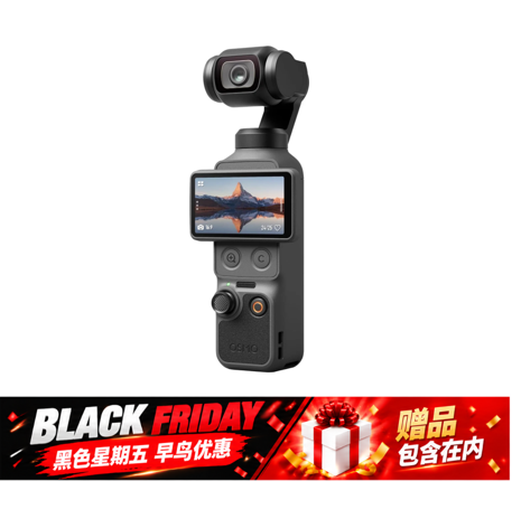 No image available
This compact camera could be a good fit if you’re looking for a small shooting set-up; check whether it gives you the framing you want for your own sets.
The product name lists a 1″ CMOS sensor, 2× lossless zoom, 107 GB of built-in storage and a 2″ rotatable screen.
 No image available
This camera could be an option if you want to try different compositions; check whether you can achieve the framing you want with your own subjects.
The product name lists 64 MP, 12× optical zoom and Wi-Fi.
 No image available
This compact camera could work well with a small photography set-up; check whether its fixed camera design suits the overhead shots you want to take.
The product name lists a 1″ CMOS sensor, 4K/120fps video, 3-axis stabilisation and a 2″ rotatable touchscreen.
 No image available
This mirrorless camera kit could suit you if you want an interchangeable lens and a zoom lens; check whether the included lens works for the framing you want.
The product description lists an APS-C sensor, Sony E-mount, 24.2 MP, a vari-angle LCD screen and a 16–50 mm lens.
 No image available
This mirrorless camera kit could suit you if you’re looking for an interchangeable-lens camera; check whether the included lens meets your close-up needs.
The product description lists a 24.2 MP sensor, 4K video, an electronic viewfinder and an included 16–50 mm lens.
No, not if you’re only taking overview shots. First, check whether your current lens can capture the whole set from the shooting height you have available. Consider a macro lens if you want to capture small details up close.
Keep your camera set-up and background the same, and use consistent lighting if possible. Check the white balance again if the lighting changes; this advice doesn’t guarantee exact colour reproduction.
No. According to the Dutch government, there’s no fixed statutory warranty period in the Netherlands; you’re entitled to a product that meets what you could reasonably expect. When buying at a distance, you’ll often have a 14-day cooling-off period. Check the applicable terms and who the seller is.
Bear in mind that, as the Dutch Data Protection Authority explains, identifiable people in photos count as personal data, so privacy rules are relevant when you publish them. This doesn’t apply to photos showing stationery only.