If you mainly want to photograph small parts without changing lenses, compare a compact camera with a built-in close-up mode. If you’d like more choice of framing and lenses, a mirrorless camera with a suitable lens may be a better fit for your setup. Just check the magnification and the space between the lens and the tool: being able to focus up close doesn’t automatically leave room for lighting.
Who is this choice relevant to?
Photographing small tool details
You might want to bring tips, teeth or joints into close view. Compare the magnification of the close-up mode or lens you’re considering, rather than looking only at the number of megapixels. OM SYSTEM says the TG-7’s microscope mode can focus from 1 cm.
Making things with limited table space
You need room for both the tool and your lighting. Sony distinguishes between the focusing distance measured from the sensor and the working distance from the front of the lens, so consider how much space the lens takes up in front of your subject.
Taking repeatable product photos
You photograph different items in a fixed setup and want to adjust the framing and lighting without having to rebuild the shot each time. A tripod can help keep the framing steady while you move the subject or light.
What should you look for when choosing?
Start with the size of the smallest detail you want to capture. Then decide whether a built-in close-up option or an interchangeable lens is a better fit for your table setup.
Compact camera with close-up mode
A good fit if: you regularly photograph small details and would rather not change lenses. OM SYSTEM says the TG-7 can focus from 1 cm.
Bear in mind: a very short working distance can make it tricky to position your lighting, and the lens cannot be changed.
Mirrorless camera with standard zoom
A good fit if: you mainly want to frame complete tools and may want to use other lenses later. Canon lists RF and RF-S support for the EOS R50; Sony uses the E-mount for the ZV-E10.
Bear in mind: a standard zoom does not necessarily offer the same magnification as a dedicated macro lens.
Mirrorless camera with macro lens
A good fit if: you want to bring small markings or joints into close view and are considering a dedicated lens. Canon specifies up to 0.5× magnification for the RF 35mm F1.8 MACRO IS STM; Sony and Nikon specify 1:1 for the macro lenses mentioned here.
Bear in mind: check the mount and the space in front of the lens. Sony lists a working distance of 2,4 cm at the closest setting for the E 30mm F3.5 Macro.
| Buying consideration |
What should you check? |
Who should give this more weight? |
| Magnifying small details |
Compare the maximum magnification of the exact lens or close-up mode. |
If I want to capture small teeth or markings in close view, I focus on actual magnification; around 33% of consumers prioritise magnifying details. |
| Space on the table |
Check both the focusing distance and the lens’s working distance. |
If the camera and light need to fit on a small table, the free space in front of the lens matters; around 27% of consumers give setup space their highest priority. |
| Light, colour and sharpness |
Allow room for stable support and diffused light; check the white balance and focusing options. |
If I’m photographing metal and parts with depth, I want to control the light and colour; around 20% of consumers prioritise this. |
| A repeatable setup |
Check the camera body, included lens and mount as one complete kit. |
If I want to photograph several tools with similar framing, a consistent workflow and room to expand are important; around 20% of consumers give these their highest priority. |
Common buying mistakes
-
Comparing only the minimum focusing distance
This distance doesn’t tell you how much space is left in front of the lens for lighting. Sony distinguishes between the focusing distance measured from the sensor and the working distance from the front of the lens.
For your chosen setup, check the working distance, minimum focusing distance and maximum magnification.
-
Assuming a kit zoom always offers 1:1 magnification
Maximum magnification varies by lens. Canon specifies up to 0.5× for the RF 35mm F1.8 MACRO IS STM, while Sony lists 0.215× for the SELP1650 standard zoom.
Check which lens is actually included in the box and its maximum magnification. If the kit lens doesn’t capture enough detail, you may need a separate lens.
-
Choosing a camera body without planning your table setup
A tripod can help keep your framing steady, while a lens that works close to the subject can make it harder to position your lighting.
Before buying, try setting things up with your largest tool and the lighting in your preferred position.
Also allow space for any separate lighting or stable support you may need.
Brands compared
OM SYSTEM
The Tough TG-7 is a compact camera worth comparing if built-in close-up features matter more to you than interchangeable lenses.
- OM SYSTEM says the TG-7’s microscope mode can focus from 1 cm.
- The LG-1 light guide and extra battery mentioned are part of a specific micro-adventure kit; check what’s included in the offer you’re looking at.
Canon
The EOS R50 is an RF/RF-S mirrorless camera; the RF 35mm F1.8 MACRO IS STM is a separate macro lens.
- Canon specifies 24,2 megapixels for the EOS R50 and up to 0.5× magnification for the RF 35mm F1.8 MACRO IS STM.
- The macro lens isn’t automatically included in an R50 kit. The camera’s sensor alone doesn’t determine how large a detail will appear.
Sony
The ZV-E10 with E-mount can be paired with a standard zoom or a separate E 30mm F3.5 Macro.
- Sony specifies 0.215× magnification for the SELP1650 standard zoom and 1:1 for the SEL30M35 macro lens.
- Sony lists a working distance of 2,4 cm from the front of the lens at the closest setting for the SEL30M35; bear this in mind when positioning your lighting.
Nikon
The Z50II with Z-mount can be paired with the separately available NIKKOR Z MC 50mm f/2.8 for macro photography.
- Nikon specifies 1:1 magnification for the NIKKOR Z MC 50mm f/2.8.
- Nikon lists around 5 cm of space in front of the lens at the minimum focusing distance. Don’t assume these macro features apply to the standard kit lens.
Cameras at Joybuy
Joybuy cameras for photography, from compact models to mirrorless cameras with a standard zoom. For each model, check whether the included lens offers enough close-up magnification for the smallest detail you want to photograph.
 No image available
DJI Osmo Pocket 3
A compact camera for photography and video; the product name mentions fast focusing and a rotating touchscreen. For small details, check its close-up capabilities and the space available for lighting separately.
The product name specifies a 1-inch CMOS sensor and a 2-inch rotating touchscreen.
View at Joybuy
 No image available
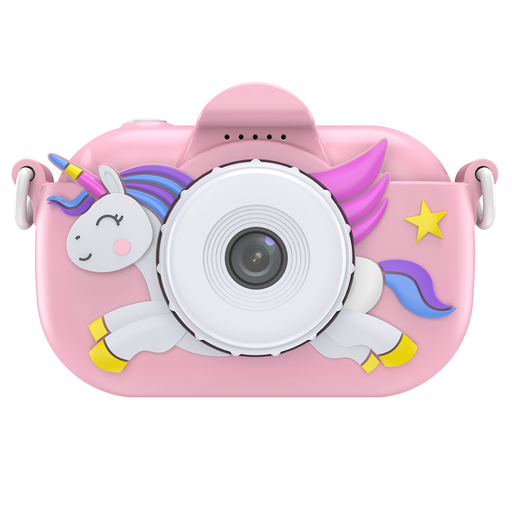
Songdian Kids Camera, pink
The product information describes a compact digital camera for photos and video. Check whether its close-up capabilities suit the small details you want to capture.
The description mentions 1080P photos and video and an autofocus function; these details alone don’t tell you how much small parts can be magnified.
View at Joybuy
 No image available
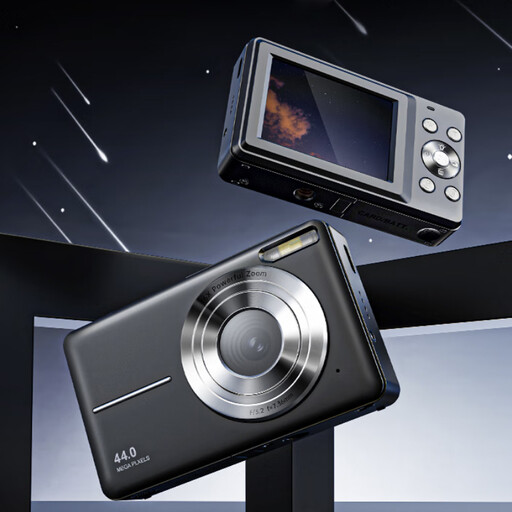
Songdian Pocket Camera 4K 44MP, black
The product name mentions photography and video. Check the magnification and focusing distance before choosing this camera for very small tool details.
The title lists 4K, 44MP and 16× digital zoom. Digital zoom alone doesn’t tell you anything about optical macro magnification.
View at Joybuy
 No image available
Sony Alpha A6100 + 16–50mm f/3.5–5.6 OSS II
A mirrorless camera with the 16–50mm kit zoom named in the product title. For close-ups of small joints, check the lens’s specific magnification and focusing distance.
The product information lists a 24,2 MP APS-C camera, a touchscreen and an electronic viewfinder.
View at Joybuy
 No image available
Sony ZV-E10 + 16–50mm zoom
According to the product information, this mirrorless camera kit includes a 16–50mm zoom. Sony lists a maximum magnification of 0.215× for the SELP1650 standard zoom; check whether that’s enough for your smallest detail.
The product information lists a vari-angle touchscreen and a Product Showcase setting. The zoom isn’t a 1:1 macro lens, so also consider how much space will be left for lighting.
View at Joybuy
Frequently asked questions
Is the minimum focusing distance the same as the space I need for my light?
No. The focusing distance is measured from the sensor, while the working distance is measured from the subject to the front of the lens. Compare both distances for your table setup.
Do I need to buy a macro lens separately for a mirrorless camera kit?
Only if the included lens doesn’t offer enough magnification for your smallest detail. Sony specifies 0.215× for the SELP1650 zoom and 1:1 for the separate SEL30M35 macro lens; check which lens comes with the kit.
How can I keep a series of tool photos looking consistent?
A tripod helps keep your framing steady while you move objects or lights. Check the white balance again if the lighting changes.
What if my camera breaks after the manufacturer’s warranty has expired?
For purchases made by consumers in the Netherlands, statutory guarantees are separate from the manufacturer’s warranty. According to ACM ConsuWijzer, the seller is responsible for providing a solution if the product doesn’t do what you could reasonably expect under normal use; there isn’t one fixed statutory guarantee period for every camera.


