Who is this camera guide for?

Figurine detail photographer

You want to capture small textures or tool marks in close-up. Magnification and space for lighting may matter more than a wide zoom range. Manufacturers such as Canon, Nikon and Sony specify magnification for individual macro lenses.

Photographer of overall views

You want to frame the whole sculpture in context on a small table, then capture the details. When choosing a camera, the Dutch Consumers’ Association recommends considering factors such as your subject and the size of the camera.

Photographer creating a consistent series

You photograph several still figurines and want to control the viewpoint, lighting and focus throughout the series. A stable setup can help you keep the framing consistent while adjusting the subject or lighting.

What should you look for when choosing?

Compact camera with a close-up mode

Good for: photographing small details without changing lenses, as long as you can also fit the whole sculpture in the frame from a practical distance.

Keep in mind: the lens is fixed. Check that the camera and lighting won’t get in each other’s way during close-up shots.

Bridge camera with a fixed zoom lens

Good for: switching between an overall view and a close-up without fitting a different lens.

Keep in mind: check that you can achieve the framing you want at each zoom setting and shooting distance. A stated close-up capability won’t necessarily apply at every focal length.

Mirrorless camera with a macro lens

Good for: choosing a lens to suit the size of your sculpture and the magnification you want.

Keep in mind: assess the camera body, lens and any kit lens as one complete set. A macro lens may have a short working distance, leaving less room for lighting.

What to consider What should you check? Who should pay particular attention?
Magnifying small details Check the maximum magnification of the exact lens, as well as the working distance from the front of the lens. If I want to fill the frame with texture or tool marks, I look at magnification and space for lighting. Around 33% of consumers prioritise filling the frame with details.
Framing the whole sculpture Measure the available distance to the subject and check the framing at the zoom setting you intend to use. If I want to show the whole shape on a small table, I first want to know whether it will fit in the frame from the distance I have available. Around 27% of consumers want to frame the whole sculpture.
Getting the relief in focus Check which parts are in focus with your chosen aperture and focusing settings, and see what any focus feature does. For a still figurine with raised details, I want the depth of the subject to be in focus, not just one plane. Around 20% of consumers prioritise keeping the relief in focus.
A repeatable setup Check which lens is included and whether there’s room on the table for a tripod and lighting. If I want to photograph several figurines, it helps to be able to set up the framing and lighting in the same way each time. Around 20% of consumers prioritise a complete setup they can repeat.

Common pitfalls

  • Assuming ‘macro’ or ‘1 cm’ means there’s enough room for lighting

    A close-up capability doesn’t tell you how much space will be left around the sculpture. For the E 30mm F3.5 Macro, Sony states that at the closest setting there’s 2,4 cm between the front of the lens and the subject.

    Compare the working distance for the framing you want, and plan where the camera and lights can go on the table.

    You may need a different lighting setup to get the result you want.

  • Mistaking a mirrorless camera body or standard kit for a complete macro setup

    The magnification figures quoted apply to specific lenses, not automatically to every lens that fits the same camera body.

    Check the full product name, lens mount and what’s included in the set before you choose.

    A suitable macro lens may need to be bought separately.

  • Expecting one plane of focus to show all the relief in sharp detail

    Canon explains that close-ups can have a shallow depth of field. Panasonic lists Focus Stacking for the LUMIX DC-FZ82D; this is a model feature, not a guarantee of a particular result.

    Take a test shot and check whether the aperture or a suitable series of focus positions keeps the parts you want in focus.

    A focus stack may take extra time to shoot or process.

Camera brands to compare

OM SYSTEM

The TG-7 is a compact camera option for close-ups without a separate lens.

  • OM SYSTEM lists a microscope mode from 1 cm for the TG-7.
  • The LG-1 light guide and extra battery mentioned are included with the micro adventure kit; check whether they come with the version you choose. A shooting distance of 1 cm doesn’t, by itself, tell you whether you can light or frame the whole sculpture properly.

Panasonic

The LUMIX DC-FZ82D has a fixed zoom lens, making it suitable if you want to switch between an overall view and a close-up without changing lenses.

  • For this model, Panasonic lists 20–1200 mm in 35mm equivalent, a close-up mode and Focus Stacking.
  • Check which zoom setting and shooting distance will give you the framing you want. These specifications aren’t a like-for-like performance test.

Canon

The EOS R50 is an expandable mirrorless camera system. The separate RF 35mm F1.8 MACRO IS STM is one lens option for close-ups.

  • Canon lists an RF mount and focus bracketing for the EOS R50, and up to 1:2 magnification for the RF macro lens mentioned.
  • An EOS R50 body or standard kit won’t automatically include the macro lens mentioned. Assess the lens and body as one complete set.

Nikon

The Z50II is a Nikon Z mirrorless camera. The separate NIKKOR Z MC 50mm f/2.8 offers a way to capture highly magnified details.

  • Nikon specifies 1:1 magnification for the NIKKOR Z MC 50mm f/2.8.
  • That magnification applies to the lens and won’t automatically be included with every Z50II kit. Check the lens and available shooting distance.

Sony

A compatible Sony E-mount mirrorless camera, such as the ZV-E10 II, can be paired with the separate APS-C E 30mm F3.5 Macro.

  • Sony specifies 1:1 magnification for the E 30mm F3.5 Macro.
  • At the closest setting, Sony states that there’s 2,4 cm between the front of the lens and the subject. This may limit where you can position the lighting on a small table. The macro lens is not the 16–50mm kit lens shown with the ZV-E10 II.

Joybuy products

Before buying one of these cameras, check whether its focusing distance is suitable for small sculptures and the space you have on your table.
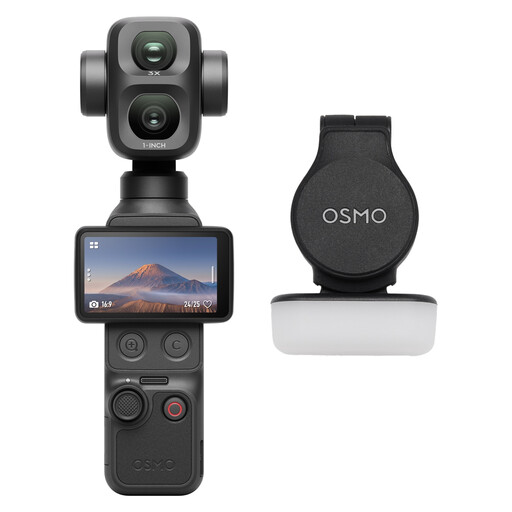
Osmo Pocket 4P Standard Combo, black

Osmo Pocket 4P Standard Combo

Check whether this model can focus from the distance you need on your table.

Version: Standard Combo, black.

View at Joybuy
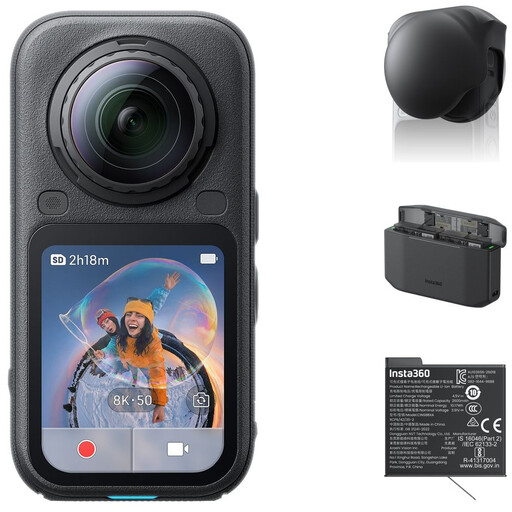
Insta360 X6 All-in-One Bundle

Insta360 X6 All-in-One Bundle

Check whether the camera can focus at the distance you need for your sculptures.

The listed bundle includes the Standard Bundle, Lens Cap, Xtreme Battery and Fast Charge Case.

View at Joybuy
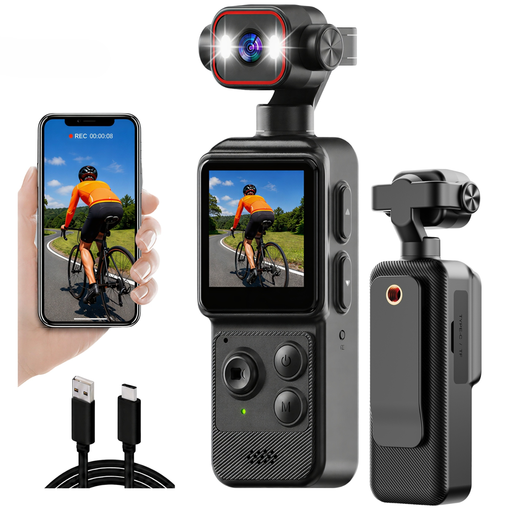
Mini Action Camera 4K with clip

Mini Action Camera 4K with clip

Check the focusing distance and framing before choosing this model for small sculptures.

Listed features: 1,54-inch display, 140° wide angle, app control, LED light and 1200 mAh battery.

View at Joybuy

DJI Osmo Pocket 3 Creator Combo

DJI Osmo Pocket 3 Creator Combo

Check that the focusing distance is suitable for your small subjects and the space you have on the table.

The product name lists a 1-inch CMOS sensor, 3-axis stabilisation and an included microphone.

View at Joybuy
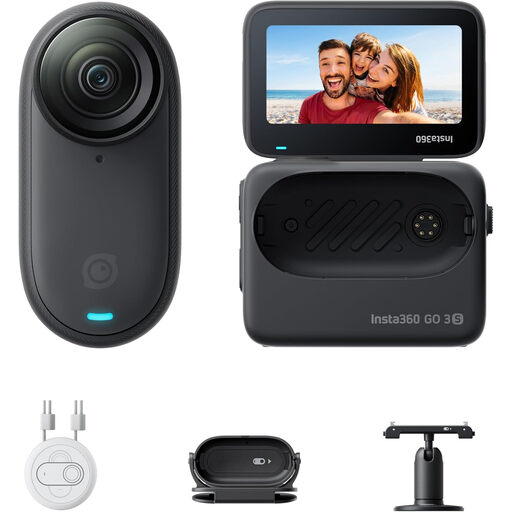
Insta360 GO 3S 128GB

Insta360 GO 3S 128GB

Check whether the camera can focus close enough for the details you want to photograph.

Listed features: 4K, 140-minute battery life and waterproofing to 10 m.

View at Joybuy

Frequently asked questions

Is a focusing distance of 1 cm enough to photograph a whole figurine?

No. That figure describes the close-up capability of a particular camera or mode; it doesn’t automatically mean you’ll get the right framing or have enough room for lighting. Check how the whole sculpture and the detail you want to capture will fit in the space available on your table.

How can I photograph several still figurines with similar framing?

Set up the camera securely and keep its position as consistent as possible. This lets you adjust the subject and lighting without having to reframe every time. After a test shot, check whether the front and back are sufficiently sharp.

Do I need a macro lens for a mirrorless camera?

If you need the magnification offered by a specific macro lens, check whether it’s actually included in the offer. Magnification applies to the lens; a body or kit with a different lens won’t automatically have the same capability.

What if my camera breaks too soon during normal use in the Netherlands?

According to ACM ConsuWijzer, the seller is responsible if a product doesn’t do what you could reasonably expect it to. Depending on the circumstances, the seller may have to repair or replace it free of charge, or refund you. A commercial guarantee does not replace your statutory rights.

Can I change my mind if I buy a camera online from a business?

In many cases, you have 14 days to change your mind when buying at a distance, according to the Dutch government. There are exceptions, so check the seller, product information and applicable returns policy before ordering.
