
Online shop owner
You want to photograph several figurines against the same white background, with consistent framing and exposure. A tripod can help you keep the composition the same, as Canon Europe and MPB explain.


Choose based on the framing you want: a suitable standard lens may be all you need for a full-length figurine, while capturing tiny details calls for a lens with enough magnification. A tripod and controlled lighting help you get consistent results; for a deeply shaped figurine, focus stacking may help if your camera and lens support it. A white background or a more expensive camera won’t automatically give you the right exposure or colour.
You want to photograph several figurines against the same white background, with consistent framing and exposure. A tripod can help you keep the composition the same, as Canon Europe and MPB explain.
You want to bring textures and tiny shapes into close view. The magnification offered by your chosen lens and the space left to light the figurine are important considerations.
You want the front and rear parts to look sharp, and may be able to photograph the stationary figurine at several focus points. If so, check that your camera and lens support the focus stacking feature you want.
Best suited to: photographing both whole figurines and tiny details, with the option to use a different lens later.
Consider: a kit zoom isn’t automatically a macro lens. Check which lens is actually included and how much magnification it offers.
Best suited to: taking close-ups without changing lenses, if the fixed lens meets your needs.
Consider: a short working distance can make it harder to position lights around the figurine.
| What to consider | What should you check? | Who is this important for? |
|---|---|---|
| Magnifying tiny details | Check the maximum magnification of the exact lens and the working distance in front of it. | If I want to fill the frame with tiny textures, I look at magnification and space for lighting. Around 36% of consumers would choose magnifying details as their top buying priority. |
| Keeping the background and colour consistent | Check whether exposure compensation, manual exposure and white balance settings are available, and take some test shots. | If you’re photographing several figurines against the same white background, you’ll want to match the exposure and colour carefully. Around 29% of consumers would put consistency first. |
| Sharpness throughout the depth | Check the depth of field and, if you want to use focus stacking, whether the feature works with your exact camera and lens combination. | If I want both the front and rear parts of a deep figurine to look sharp, I look at depth of field or focus stacking. Around 21% of consumers would make sharpness throughout the depth their top priority. |
| A simple, complete setup | Check which lens is included and whether you’ll need a macro lens, tripod or lighting for the framing you want. | If you’d rather start with a straightforward setup, you’ll want to know in advance what you need to get the shot you want. Around 14% of consumers would consider the simplicity of the complete setup most important. |
Maximum magnification depends on the lens or close-up mode. A standard zoom and a dedicated macro lens can therefore produce different framings.
Before buying, check the lens mount, maximum magnification and working distance in front of the lens. Also check which lens comes with the version you’ve chosen.
For larger details, you may need a dedicated macro lens. Remember to leave room for lighting when setting up, too.
In a predominantly bright scene, automatic metering may make the shot too dark, leaving the background looking grey.
Take test shots with your own lighting and adjust the exposure where needed. At the same time, check that the light details in the figurine remain visible.
The feature and lens need to be compatible. OM SYSTEM lists the M.Zuiko 60mm Macro as compatible with Focus Stacking on the OM-5 Mark II, and notes that the combined image is cropped by around 7% at the edges.
Check compatibility for your combination and test the framing with a stationary figurine, leaving enough room around the edges.
Taking several shots at different focus points takes extra time and may require more room in the frame.
A camera or lens positioned close to the figurine can leave less room for lights. According to the manufacturer, the OM SYSTEM TG-7 can focus from 1 cm; Nikon states that at its closest focusing distance, the Z MC 50mm is around 5 cm from the subject.
Measure the available working space and try out where you can position the lights and any diffusers.
A mirrorless camera with a standard zoom for wider shots, with the option to choose a dedicated macro lens later.
A Z system to compare if you’re considering a mirrorless camera with dedicated macro optics.
The TG-7 has a fixed lens and close-up mode, while the OM-5 Mark II has an interchangeable lens system that can be paired with macro optics.
An E-mount system to consider if you’re looking for an interchangeable lens with 1:1 macro magnification.
An X-mount system to consider if you already have a compatible Fujifilm camera body or want to put the combination together yourself.
The Joybuy products shown are cameras for photography, including compact and action models. For small sculptures, it’s worth checking whether each model can achieve the close-up framing and lighting setup you want.
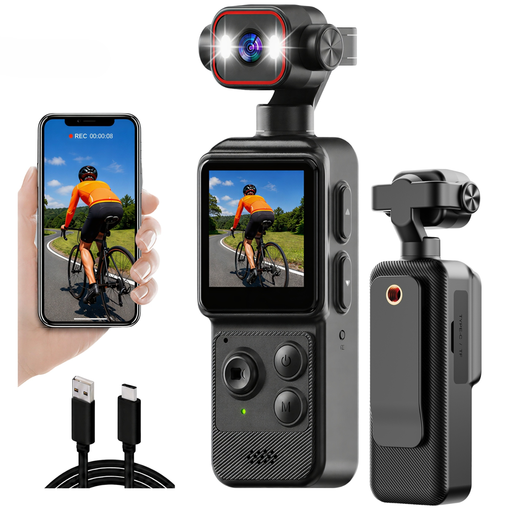 No image available
The listed 140° wide-angle lens is useful if you want a wide shot; check whether it can give you the framing you want for a small figurine.
The product name lists 4K, a 1.54-inch display, a 140° wide-angle lens, app control, an LED light and a 1200 mAh battery.
 No image available
The listed optical zoom may be useful if you want to try different framings without changing lenses; zoom alone doesn’t tell you what close-up framing is possible.
The product name lists 12× optical zoom, 4K, Wi-Fi and 64MP.
 No image available
Consider this model only if its listed camera features suit your photography; check separately whether the close-up distance is right for your figurines.
The product name lists a 1-inch CMOS sensor, 4K/120fps video, 3-axis stabilisation and a 2-inch rotating touchscreen.
 No image available
The product name specifies digital zoom; before choosing this model for close-ups, check whether it can achieve the framing you want for small sculptures.
The product name lists 4K, 44MP and 16× digital zoom. The listed version is pink.
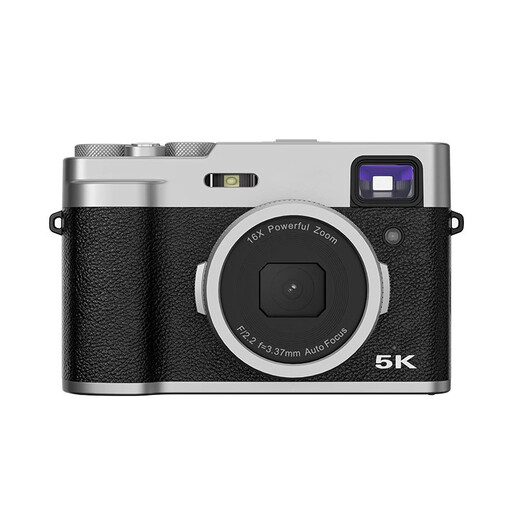 No image available
For close-ups of sculptures, check that the autofocus and working distance suit your subject.
The product name lists 48MP, 5K Ultra HD, a 2.8-inch LCD screen and an optical viewfinder.
In a predominantly bright scene, automatic metering may make the shot too dark. Take a test shot and adjust the exposure compensation or manual exposure if needed; also check that the light details in the figurine remain visible.
No, not if you mainly want to photograph the whole figurine. If you want tiny details to fill the frame, compare the maximum magnification of the exact lens; according to the manufacturers, the Canon RF-S kit zoom and a 1:1 macro lens have different magnification specifications.
Keep the camera, tripod, background and lighting setup in the same place, and check the exposure and white balance with test shots. Canon Europe and MPB explain how a tripod helps you repeat the framing while adjusting the subject or lighting.
No, check that the specific camera and lens are compatible. OM SYSTEM lists the M.Zuiko Digital ED 60mm F2.8 Macro for Focus Stacking on the OM-5 Mark II, and states that around 7% is cropped from the image edges.
According to the Dutch government, online purchases from a business come with a 14-day cooling-off period in many cases; the exact rules depend on the purchase and any exceptions. You’re also entitled to a legal guarantee if a product doesn’t perform as you could reasonably expect under normal use. ACM ConsuWijzer states that the seller is responsible for this.