Who are these camera options suited to?

Maker who wants to show fine details

You want to capture the texture and small parts of a sculpture clearly. So, check the magnification and precise focusing offered by your chosen camera and lens; Canon Europe and Nikon describe these features for macro photography and specific lenses.

Maker who wants consistent product photos

You’re photographing several pieces or views and want to keep your framing consistent. Canon Europe recommends a tripod as a way to achieve consistent product framing.

Beginner who wants a simple setup

You want to take close-up photos without immediately having to put together a camera body and separate macro lens. OM SYSTEM lists a microscope mode for the TG-7; check whether its fixed lens gives you the framing you need.

What should you look for when buying?

Compact camera with close-up mode

Choose this when: you want to photograph small sculptures without separate lenses and the close-up function fills the frame as you want.

Trade-off: the lens is fixed; at very short shooting distances, it can be harder to position the camera and window light well. OM SYSTEM lists a minimum focusing distance of 1 cm for the TG-7.

Mirrorless camera with macro lens

Choose this when: you want more lens options or to magnify small details significantly. Canon lists a maximum magnification of 1:2 for the RF 35mm F1.8 MACRO IS STM; Nikon lists 1:1 for the NIKKOR Z MC 50mm f/2.8 on compatible Z cameras.

Trade-off: a body without a suitable lens isn’t ready for macro photography. These magnification specifications don’t prove that one combination takes better photos than another.

What to consider What to look for Who should consider this?
Filling the frame with detail Compare the maximum magnification and focusing distance of the specific lens or compact camera. If I want to show small details at a larger size, I check whether the lens can focus close enough. Around 33% of consumers prioritise detail.
Stable, repeatable shots Check whether there’s room for a tripod and what shutter-release options the camera offers. If I want to take several views with the same framing, a fixed setup is important. Around 27% of consumers prioritise repeatable shots.
Colour in changing daylight Check RAW support and white balance settings; keep the lighting conditions as consistent as possible. If the material’s colour matters, I want to be able to assess and, if needed, adjust the white balance. Around 20% of consumers prioritise colour reproduction.
Ease of use and a complete setup Check what’s included in the package and, for a mirrorless camera, whether the lens is compatible; then compare the total cost. I don’t want to find out after buying that a suitable lens is missing. Around 20% of consumers prioritise an easy, complete camera purchase.

Common pitfalls

  • Buying just the camera body and expecting to take macro photos

    The Canon EOS R50 body is sold without a lens. The maximum magnification of 1:2 applies to the separate RF 35mm F1.8 MACRO IS STM lens, not the body.

    Check what’s in the box, the lens mount and the magnification of the included or separately chosen lens.

    A compatible lens is a separate part of the setup and should be included in the total cost.

  • Confusing a wide maximum aperture with sharpness across the whole sculpture

    Depth of field is shallow when you’re shooting close up, and opening the aperture wider makes it even shallower.

    Decide whether a single plane of focus is enough. If you need greater depth of field, check the aperture settings and whether focus bracketing is suitable for your camera.

    Taking a series of focus-bracketed shots may require extra shooting time and editing.

  • Assuming a very short focusing distance is always an advantage

    Positioning a camera close to the sculpture can make it harder to get the framing you want or position the window light. The minimum focusing distance alone doesn’t tell you how much of the piece will fit in the photo.

    Test the framing you want and the space around the subject, rather than relying only on the shortest distance in the specifications.

Brands to consider

Canon

Worth considering if you’re looking at an expandable EOS R setup with a separate macro lens.

  • Canon specifies RF and RF-S compatibility for the EOS R50 and a maximum magnification of 1:2 for the RF 35mm F1.8 MACRO IS STM. Canon also lists focus bracketing for the R50.
  • The EOS R50 body on its own doesn’t include a macro lens; these are manufacturer specifications, not an independent comparison with other brands.

OM SYSTEM

Worth considering if you’re looking for a compact camera with built-in close-up features, or already own a compatible camera for a separate macro lens.

  • OM SYSTEM lists a microscope mode, RAW shooting, approximately 12 megapixels and a minimum shooting distance of 1 cm for the TG-7. For the M.Zuiko Digital ED 60mm F2.8 Macro, the manufacturer lists 1:1 magnification on Micro Four Thirds.
  • The 60mm macro lens isn’t the lens on the TG-7: these are separate product options.

Nikon

Worth considering if you own or are looking at a camera in Nikon’s Z system and want a separate lens for capturing small details.

  • Nikon specifies 1:1 magnification for the NIKKOR Z MC 50mm f/2.8 and use with compatible FX- and DX-format Z cameras.
  • The lens on its own isn’t a complete camera setup; check the body and package contents separately.

Cameras on Joybuy for this subject

These Joybuy products are camera options to consider for photographing small sculptures; check whether each model’s focusing distance and the framing you want suit your setup.
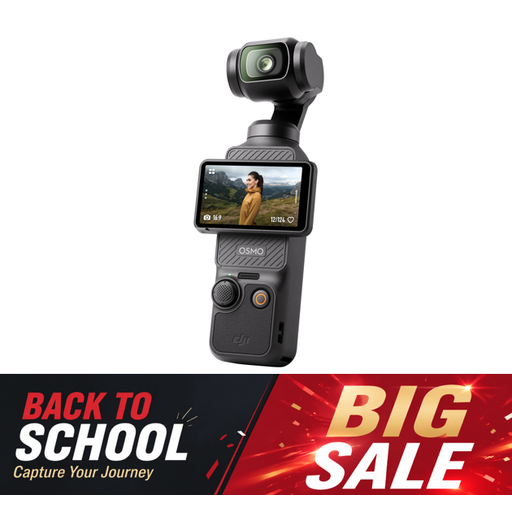
DJI Osmo Pocket 3 camera

DJI Osmo Pocket 3

If you’re considering this camera for sculptures, check that its focusing and framing suit the details you want to photograph.

The product name lists a 1-inch CMOS sensor, 4K/120fps video, 3-axis stabilisation and fast focusing.

View on Joybuy

Songdian Pocket Camera 4K 44MP, pink

Songdian Pocket Camera 4K 44MP, Pink

If you’re considering this pocket camera for small sculptures, check that its lens can focus close enough and frame the piece as you want.

The product name lists 4K, 44MP and 16X Zoom; the variant is Pink.

View on Joybuy

Frequently asked questions

Do you always need a macro lens for a small sculpture?

No, it depends on how much of the frame you want the sculpture to fill. A compact camera with a close-up mode may be suitable if it can make the sculpture large enough in the frame; for small details, you can compare the stated magnification of a suitable macro lens.

How can I soften a dark shadow on the side away from the window?

Try placing a white card or reflector on the darker side to bounce the window light back onto the subject. A tripod can help keep your framing consistent while you adjust the setup.

What can I do in the Netherlands if my camera turns out to be faulty?

Contact the seller to discuss a solution. According to the Dutch government, there’s no fixed statutory guarantee period in the Netherlands; what you can expect from a product depends, among other things, on the product, its price and the information provided. A manufacturer’s guarantee doesn’t replace your statutory rights.

Can I publish photos of someone else’s sculpture?

Don’t assume you’re allowed to publish a photo just because you took it yourself. The Dutch government states that works of art may be protected by copyright, and that protected work can’t simply be used or shared. Whether you need permission to publish a particular photo depends on the work and the rights involved.
